
Last updated November 25, 2026
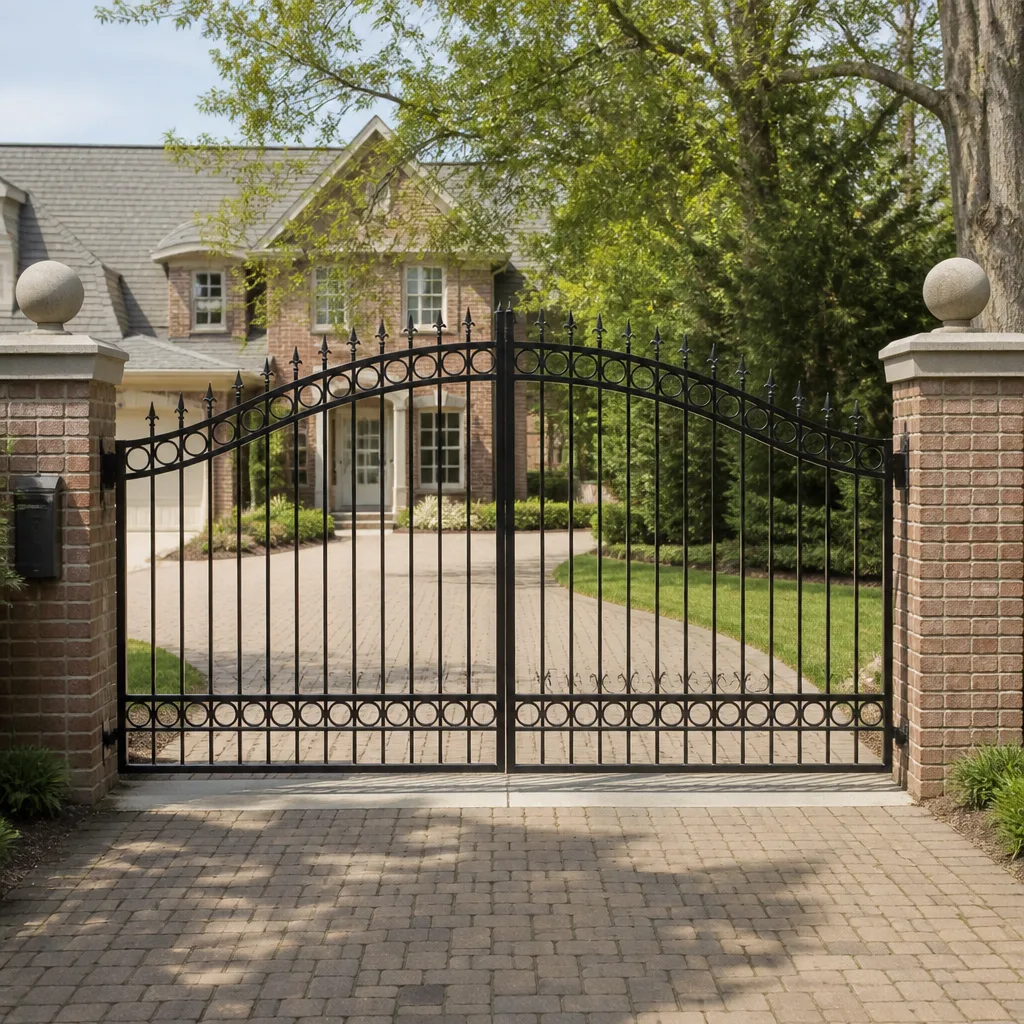 Wrought iron
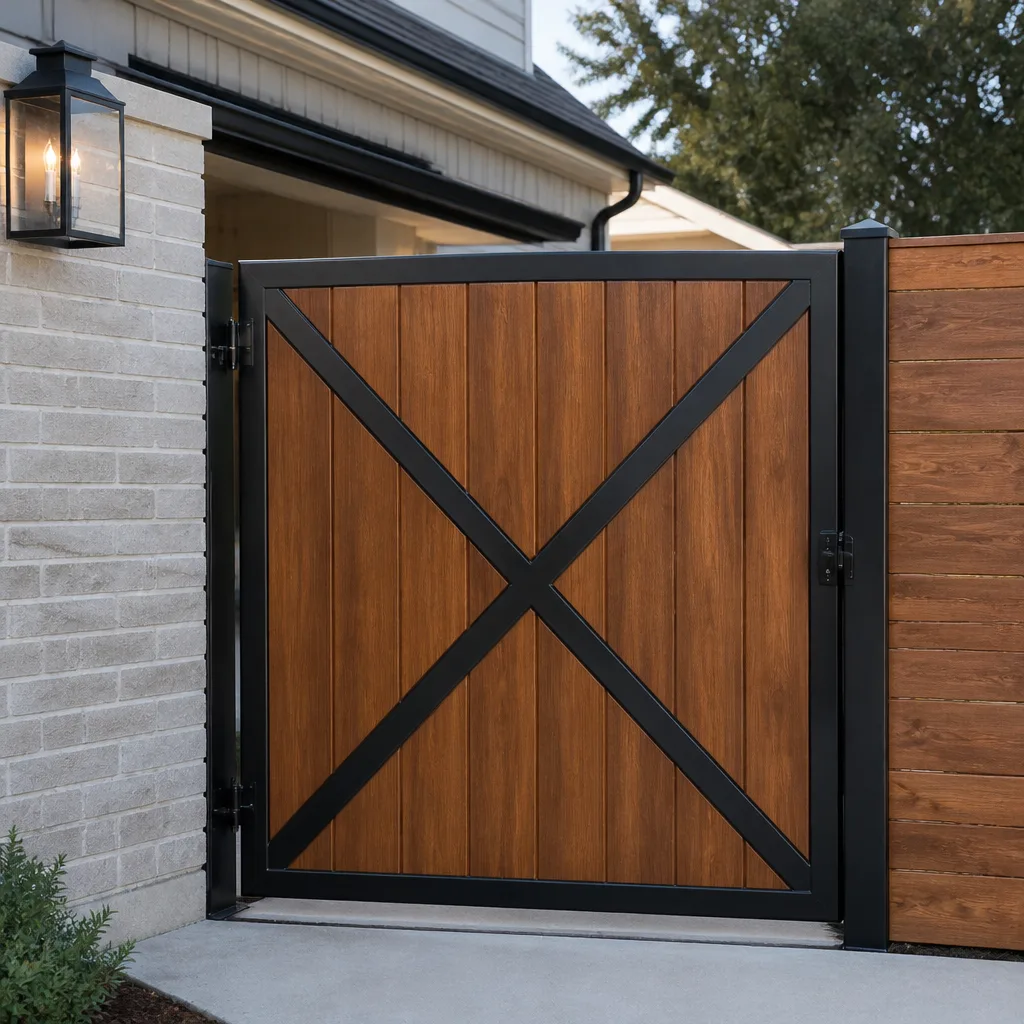 Wood & steel frame
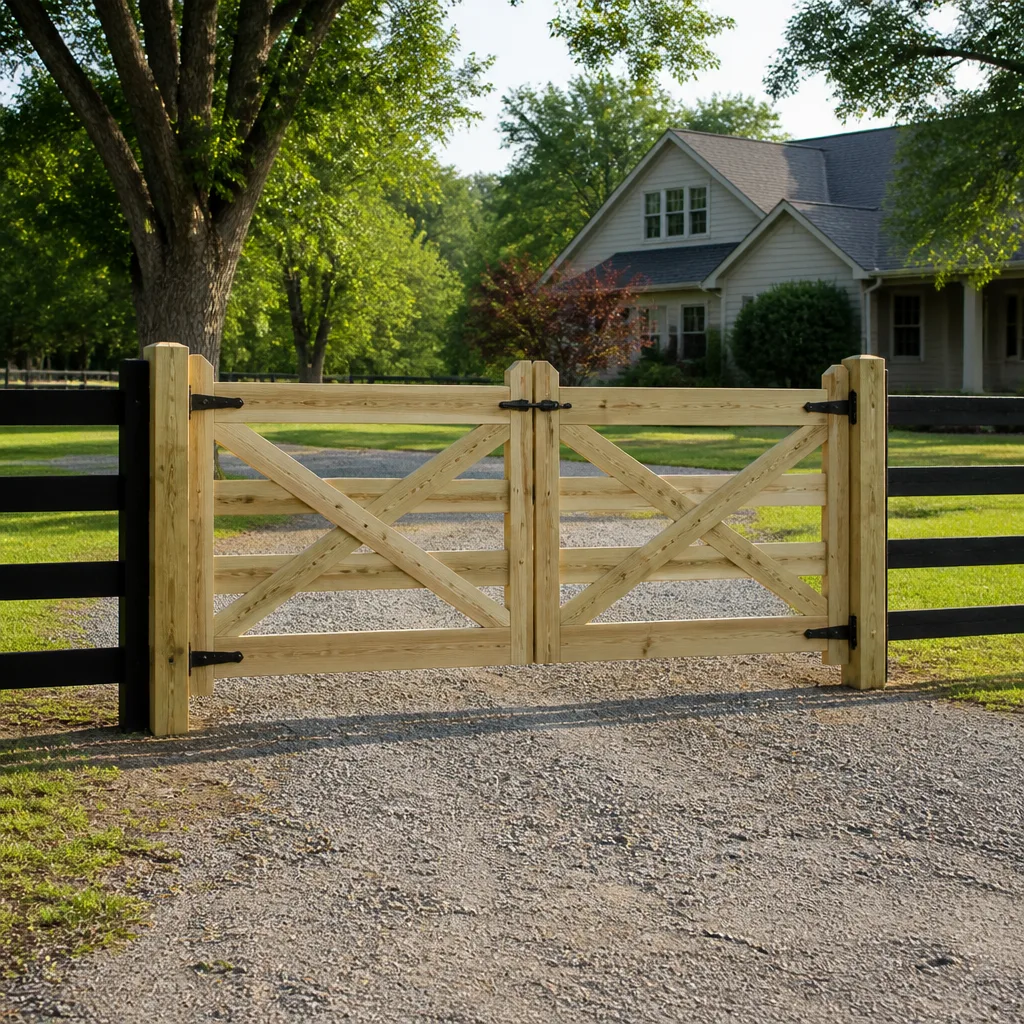 Farm & ranch
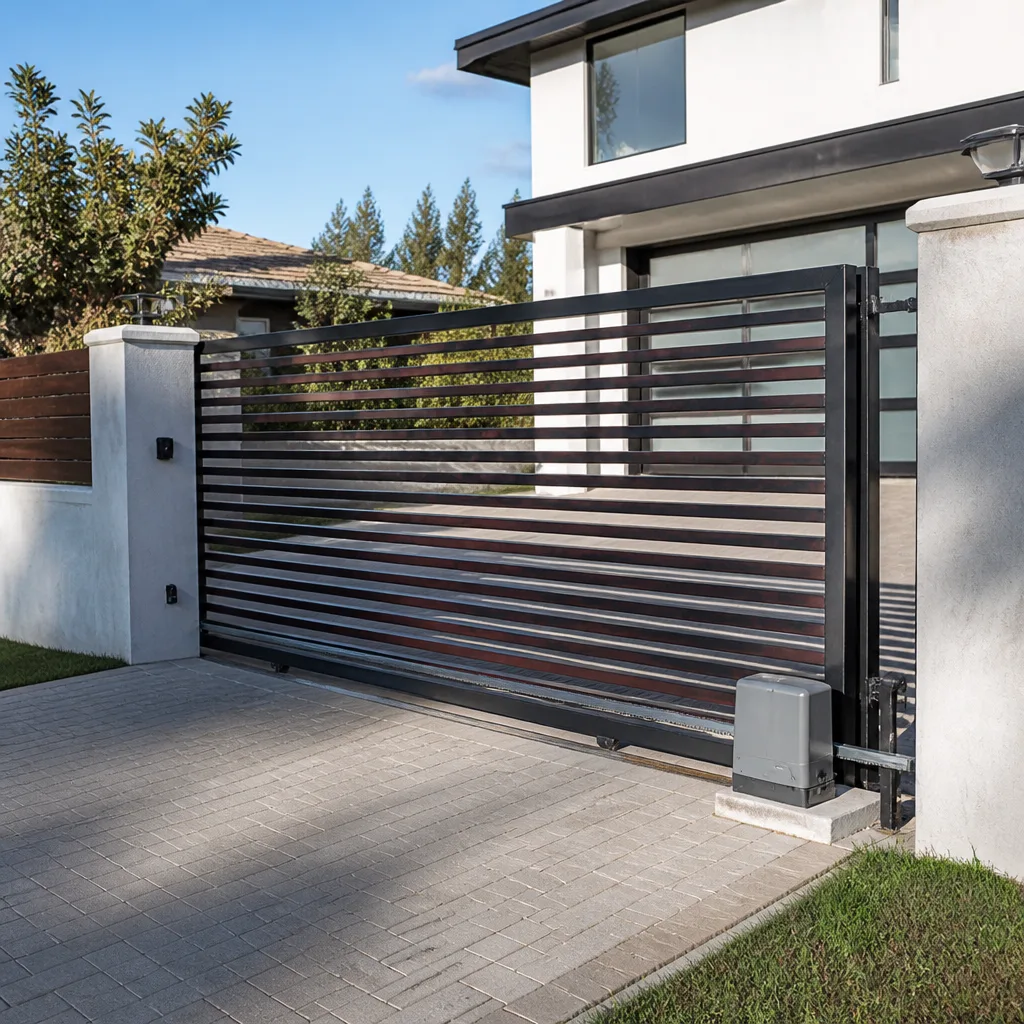 Sliding driveway gates
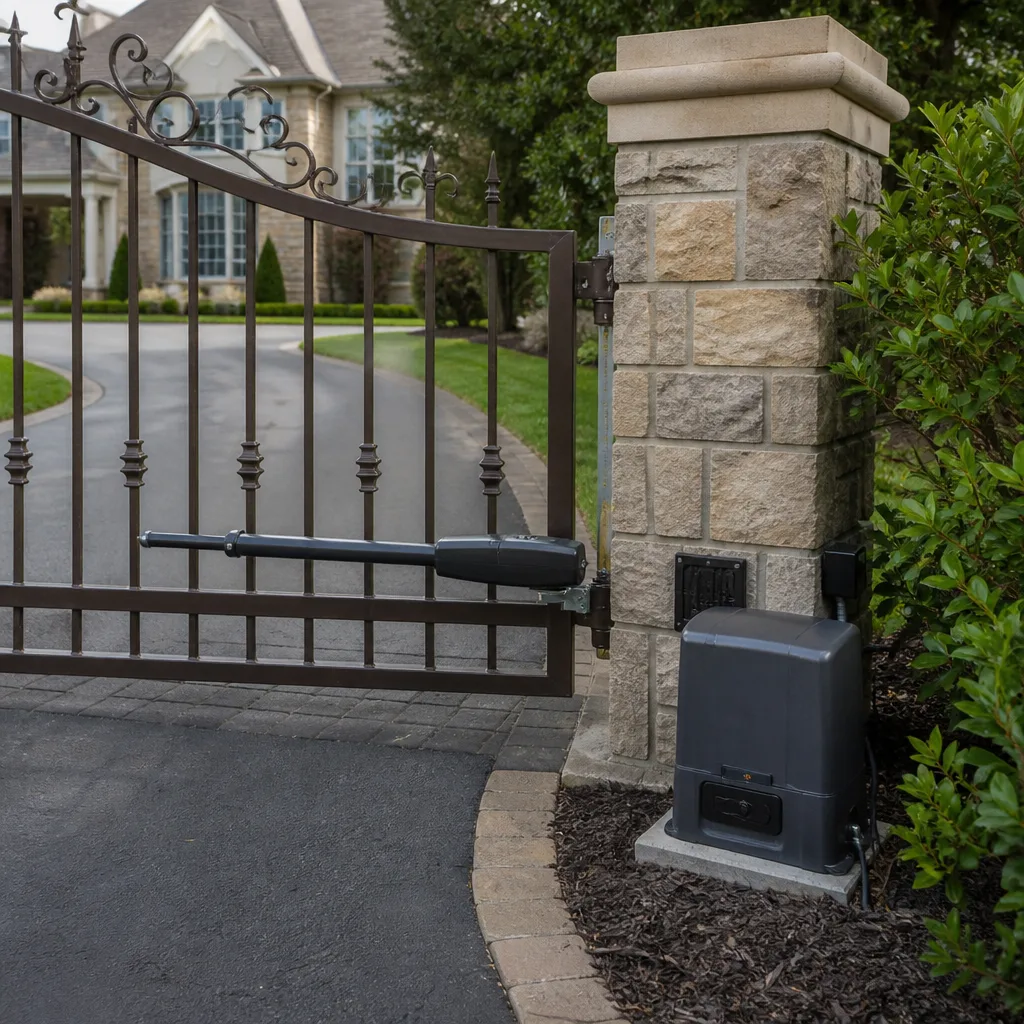 LiftMaster operators
Free on-site gate assessment - hinges, posts, and your LiftMaster or Nice gate operator checked before anything is quoted
The assessment is free and the quote is the invoice.
Get your free estimateGate Repair Warning Signs: A Multnomah Village Homeowner’s Reference Guide
A gate that hesitates half a second before it moves is not warming up. That pause is the drive system telling you it’s working harder than it should, and every extra revolution under load shaves life off the motor. The same logic applies to a gate that groans, one that stops a few inches short of the post, or one whose keypad takes two tries. These are the small operational changes most homeowners rationalize as normal wear. They’re not. This guide catalogs the early warning signs by system type so a Multnomah Village homeowner can act while a repair is still a repair, not a replacement.
Quick Answer
The earliest warning signs of gate trouble are a hesitation or pause before movement, new sounds (grinding, clicking, or a groan that stops), a gate that reverses without being told to, and an opener that beeps or flashes a diagnostic code. Any one of these means something in the drive system, control board, or hardware is under strain. Catch it early and the fix is usually mechanical adjustment or a component swap. Wait until the gate stops entirely and the repair scope often triples.
Styles & brands we work with
- Wrought iron
- Wood & steel frame
- Farm & ranch
- Sliding driveway gates
- LiftMaster operators
Table of Contents
- Sound-Based Diagnostics: What Each Noise Tells You
- Warning Signs Specific to Swing Gates
- Warning Signs Specific to Slide Gates
- Control Board Warning Codes You Can Read Yourself
- Cycle Count and Response Timing: The Wear You Can’t See
- Why a Gate That “Mostly Works” Is Closer to Failure Than One That Stopped
- How Multnomah Village Weather Accelerates Gate Wear
- Common Mistakes to Avoid
Sound-Based Diagnostics: What Each Noise Tells You
Your ears are the cheapest diagnostic tool you own, and on a gate they’re remarkably accurate. The sound a struggling gate makes points to a specific subsystem, and learning to tell the difference saves you from guessing at a problem that has a clear answer.
Grinding
Grinding is mechanical friction that shouldn’t be there. On a swing gate it usually means worn hinge bushings or a hinge pin that’s lost its lubrication, so metal is riding on metal. On a slide gate it often points to a track roller that has seized or a wheel that’s worn flat. Grinding that appears only at the start or end of travel usually means the gate is dragging against its stop or binding at a specific point in the arc.
Clicking
Clicking is different. A rhythmic click that matches the motor’s movement often comes from the drive gear or the limit switch, telling you the gear teeth are worn or the limit mechanism is binding. A single loud click as the gate starts is frequently the operator’s clutch or a relay on the control board engaging under strain. Clicking that gets faster as the gate speeds up points to the motor itself or the gearbox.
Grinding Then Stopping
This signature is the most urgent of the three. Grinding-then-stopping is the sound of a component failing under load and the safety circuit cutting power, or the motor’s thermal protection tripping. It means the system is already protecting itself. Ignore it and the next step is a burned-out motor or a control board that’s taken the fault repeatedly and given up. When you hear grinding that ends in silence, stop cycling the gate and get it looked at.
Warning Signs Specific to Swing Gates
Swing gates fail at the hardware first and the operator second. The mechanical wear happens slowly and quietly, and by the time the opener is blamed, the real culprit is a hinge that’s been binding for months. Watch these indicators:
- Sagging at the free end. A gate that droops away from the post puts the entire weight of the leaf on the operator. The operator then works harder and wears faster.
- Hinge play. Grab the gate at the latch side and try to lift it. Any vertical movement means the hinge bushings are worn and need replacement.
- Dragging at the bottom. If the gate scrapes the ground through part of its travel, the hinge alignment is off or a post has settled.
- A gate that swings freely when disconnected. If the leaf doesn’t move smoothly by hand with the operator disengaged, the problem is mechanical, not electrical.
- Uneven closing. A gate that meets the post at an angle or needs a push to latch means the hinge geometry has shifted.
In Multnomah Village, where many driveways slope gently toward the street, a gate installed on grade can settle over time and throw off hinge alignment. The slope is a normal part of the neighborhood’s terrain, but it means swing gate hardware deserves a check whenever the gate starts to feel stiff.
Warning Signs Specific to Slide Gates
Slide gates have their own failure signatures, and they’re mostly about the track and the rollers. The operator on a slide gate is usually the last thing to fail, which is why diagnosing the track first saves money.
- Rollers worn flat. A flat spot on a track roller makes the gate bump or hesitate once per revolution. You’ll hear a rhythmic thump as it rolls.
- Track debris and misalignment. A track packed with grit or bent out of line forces the motor to push harder. The gate may run fine by hand but struggle under power.
- Gate riding up over the track. If the gate lifts slightly or jumps the rail, the guide rollers are worn or the track has shifted, and the gate can come off entirely.
- Wandering travel. A slide gate that stops at a different point each time usually has a limit switch issue or a slipping drive gear.
- Chain or rack sag. Visible slack or a chain that slaps against the frame means tension is off and the drive is straining.
On a slide gate, a heavy panel that comes off its track is the most serious mechanical hazard in gate work, so if you see the gate lifting or wandering, keep people clear until it’s inspected. A proper repair starts with the footing depth and track alignment, not a new motor.
Control Board Warning Codes You Can Read Yourself
Modern gate openers are diagnostic machines that try to tell you what’s wrong. LiftMaster, Viking, FAAC, and BFT boards all use some form of LED flash code, error display, or audible beep pattern to report faults. You don’t need to interpret every code, but knowing how to read the pattern before you call means the technician can arrive with the right part.
How to Read a Flash Code
- Find the control board inside the operator housing, usually behind a small cover on the top or side of the unit.
- Locate the diagnostic LED, typically labeled “status” or “diag” on the board.
- Count the flashes in a sequence, then the pause, then the next sequence. Each brand uses a different count to mean a different fault.
- Write down the sequence and note whether the gate was opening vs. closing when the code appeared.
- Check the operator’s manual or manufacturer’s code chart to match the sequence to a fault.
Common codes point to a safety edge obstruction, a photo-eye misalignment, a limit switch fault, a motor overload, or a battery or power issue. On LiftMaster and Linear units the codes are often straightforward; on FAAC and BFT systems the diagnostic display may show a number or a colored LED pattern. If you can tell us the brand and the exact flash pattern, we know where to start before we arrive. Bring the code to the call and the conversation gets shorter.
Cycle Count and Response Timing: The Wear You Can’t See
Most gate failures are predictable before they’re visible, and two measurements reveal the wear that mechanical inspection misses: cycle count and response timing.
Many operators track how many open-and-close cycles they’ve run. A gate used five times a day and a gate used fifty times a day may look identical from the driveway, but the second one is aging far faster. If your opener has a cycle counter, use it to understand where the system sits against the manufacturer’s expected life. A high-cycle gate needs servicing on a tighter schedule than a low-cycle one.
Response timing is the other tell. Time how long the gate takes to start moving after the command, and how long the full cycle takes compared to a year ago. A gate that’s added half a second to its startup and a second to its travel is telling you the actuator, motor, and drive are working against resistance. That resistance might be a dry hinge, a worn gear, or a control board delivering less current than it should. None of those get better on their own. Timing is objective, so measure it rather than trusting your memory.
We’ve seen this in Multnomah Village repeatedly: a gate that the homeowner swears runs fine is half a second slower at every cycle than it was the year before, and the fix was a hinge and lubrication, not a new operator. Measuring is what makes the difference.
Why a Gate That “Mostly Works” Is Closer to Failure Than One That Stopped
A gate that has stopped completely is annoying, but it’s also honest. It failed, you know it failed, and you call someone. A gate that “mostly works” is a different animal. It’s still running, so nothing prompts a call, but it’s running under conditions that are steadily worsening the whole system.
Think about what “mostly works” actually means. The gate hesitates at the top of travel but gets there. The keypad takes two attempts. The safety edge occasionally stops the gate a foot short, and you push the remote again. Each of those events is a fault condition the operator is logging and trying to work through, and every one of them adds stress to the motor, the control board, and the mechanical hardware. A gate limping along at 80 percent is actively damaging itself. A gate that stopped at least stopped damaging itself.
The other reason “mostly works” is dangerous is the safety circuits. A gate that reverses unpredictably or fails to detect an obstruction is a crush hazard, and that’s a person-safety issue, not a convenience issue. If your gate “mostly works” but sometimes behaves in a way you can’t predict, treat that as a prompt to get it inspected.
How Multnomah Village Weather Accelerates Gate Wear
Multnomah Village sits in a wet, mild climate with a long rainy season and humid summers, and that pattern is hard on outdoor gate hardware. Moisture works its way into hinge pins, track rollers, and the operator housing, and metal that stays damp between storms corrodes faster than metal that dries out. The neighborhood’s tree canopy also means leaves, moss, and grit collect in tracks and under swing gates, which is one reason slide gate tracks fill faster here than in more open parts of the city.
The seasonal cycle matters too. After a wet winter, hinges and tracks are at their most vulnerable, so a spring inspection catches wear before summer use accelerates it. In late summer the gate has dried out and the metal has been through a full expansion and contraction cycle, so hardware that was tight in spring may have loosened. A gate in Multnomah Village that gets a check at the start of the wet season and again in late spring tends to have fewer surprises than one that’s only looked at when it fails.
We work on the gate you already have, whichever brand is on the housing. Whether your opener says LiftMaster, Viking, FAAC, or BFT, the weather does the same thing to it. If your gate is at the point where a repair might be better than a replacement, we’ll tell you which and why. The bottom line for Multnomah Village homeowners is that a wet climate shortens the interval between hardware checks, so the warning signs matter more here than they do in a drier region.
Common Mistakes to Avoid
- Ignoring a new noise because the gate still works. The noise is the gate telling you what’s about to break. Waiting for failure means paying to fix a secondary problem the noise would have prevented.
- Greasing hinges that need replacement. Lubrication on a worn bushing masks the problem briefly and then accelerates the wear. If the hinge has play, it needs a part, not a can of spray.
- Pushing a binding gate by hand. Forcing a stuck gate damages the operator’s gearbox and can bend the gate frame. Stop and get it inspected instead.
- Adjusting limit switches without checking the track first. Most limit faults on a slide gate trace back to a worn roller or debris in the track, so the switch adjustment fixes nothing.
- Treating a flash code as random. Every flash sequence is a specific fault, and ignoring it lets the same fault repeat until the board or motor gives out.
- Letting a low-voltage battery in a solar or backup unit sit dead. A failing battery stresses the control board every time it tries to charge, and replacement is cheaper than the board.
- Assuming a gate that mostly works is fine because nobody’s complained. A struggling gate is still a repair candidate, and the earlier it’s looked at in Multnomah Village, the less it tends to cost.
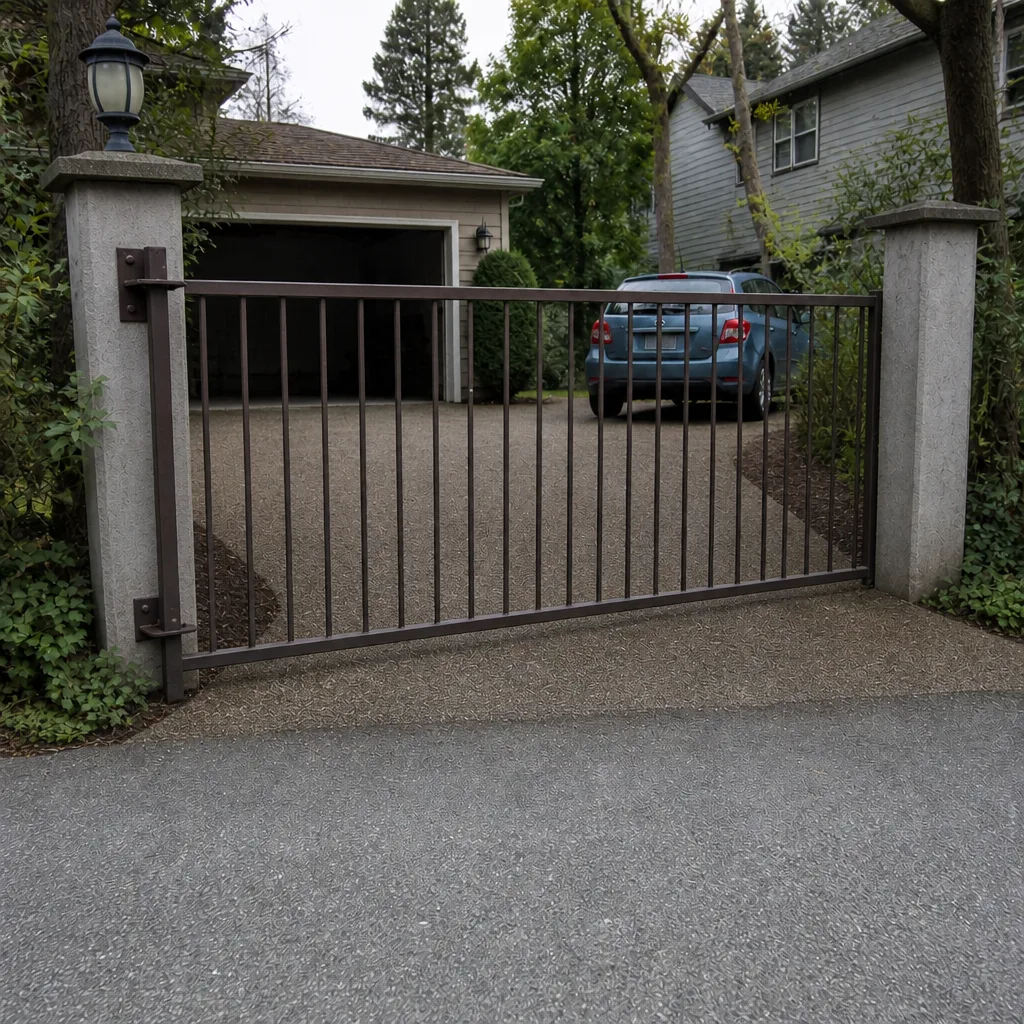
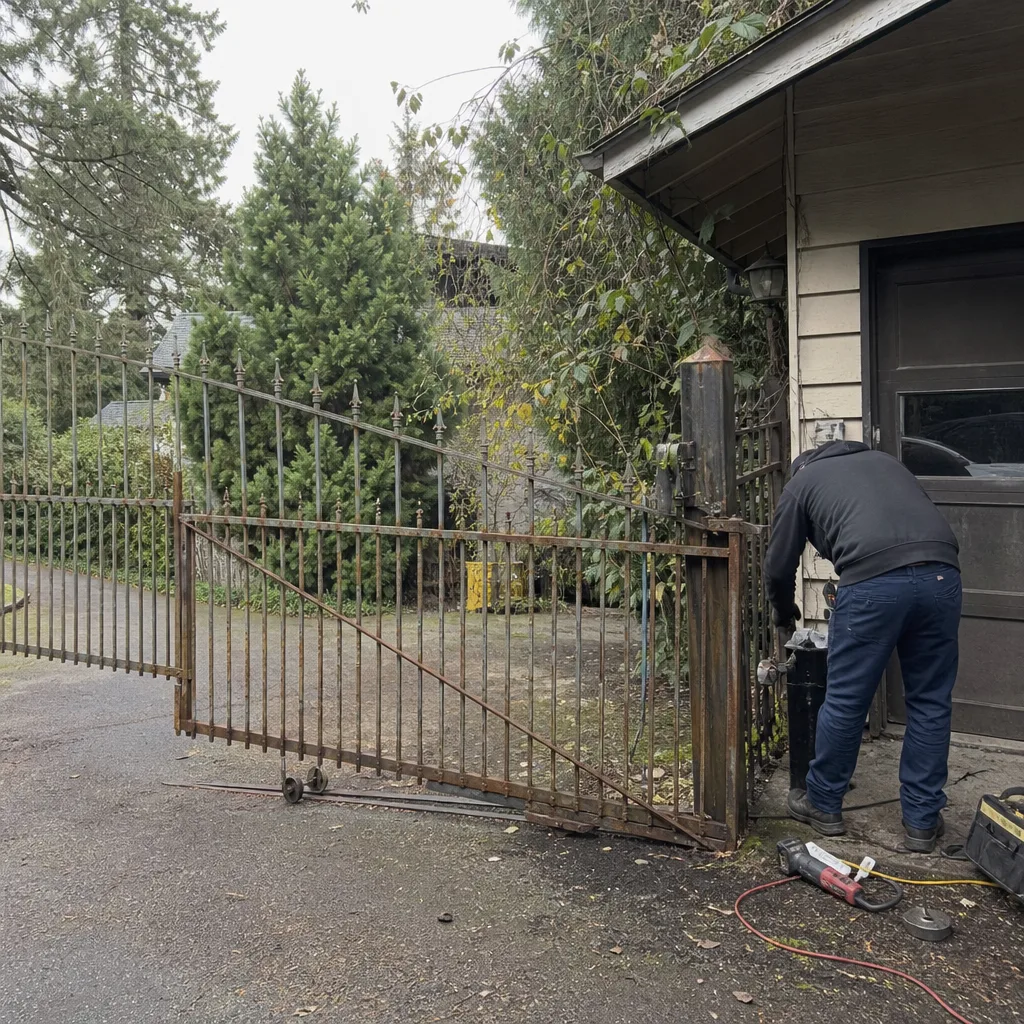
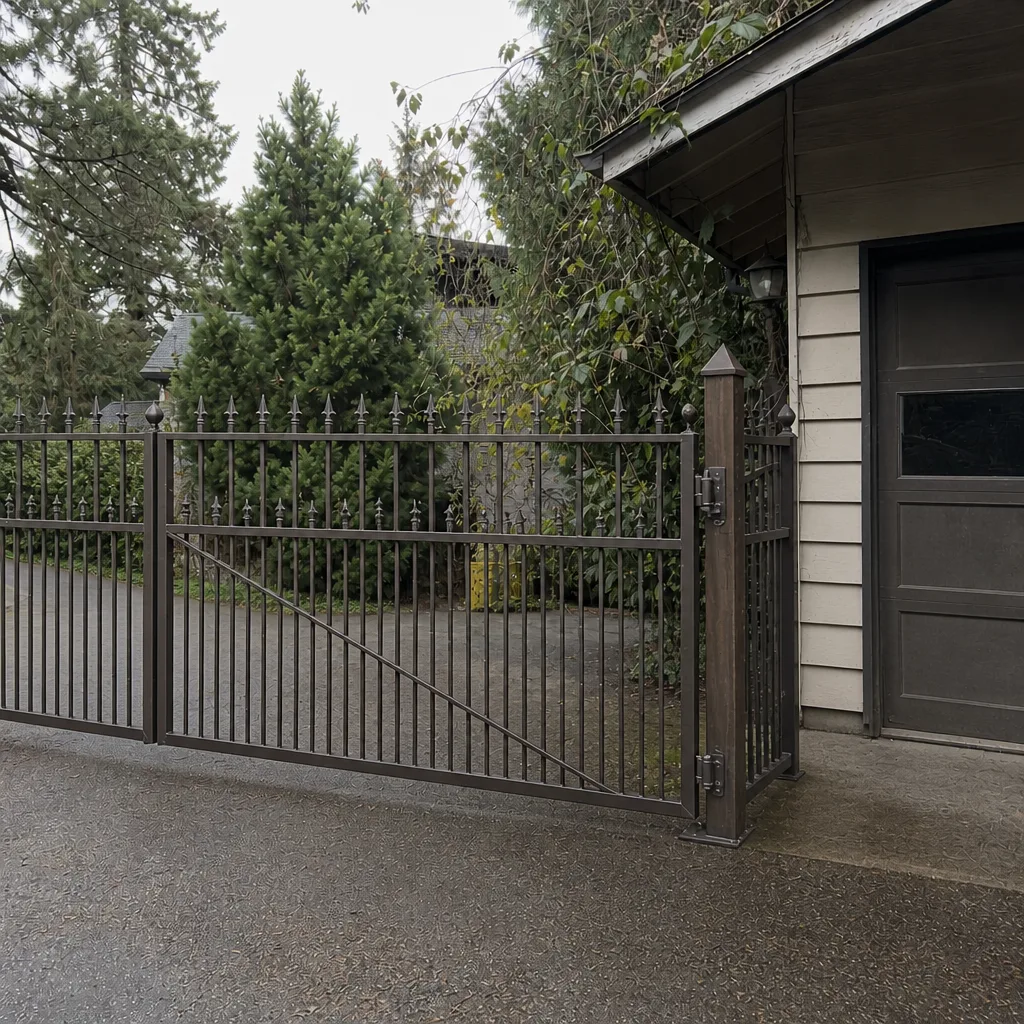
See the difference
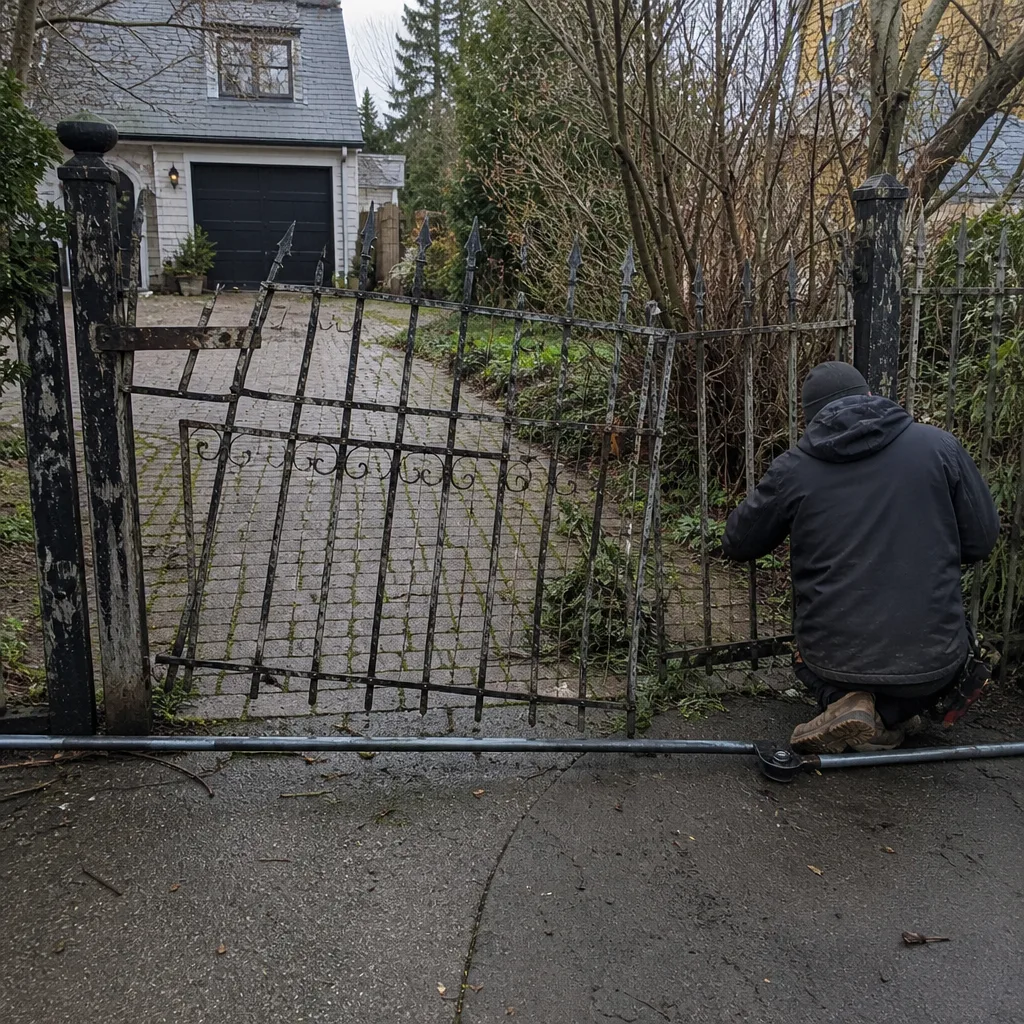 Before
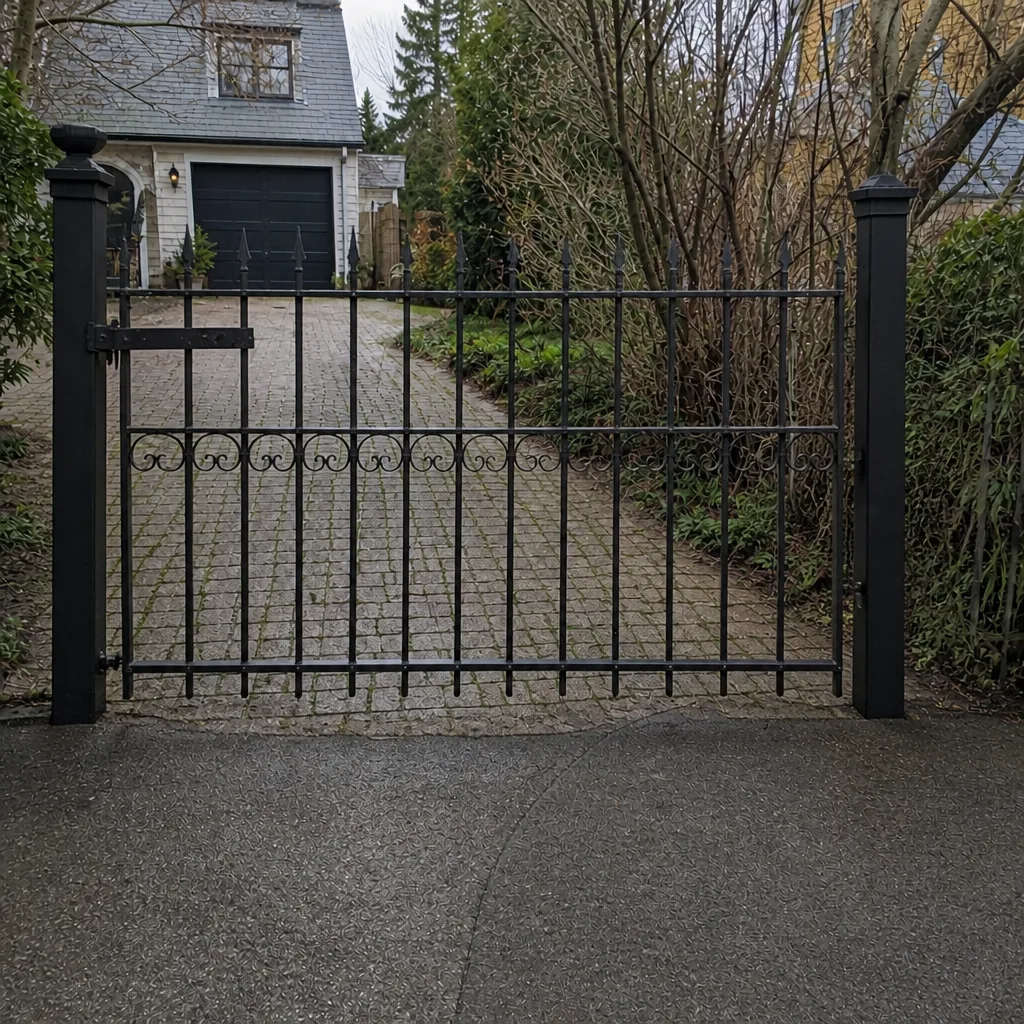 After
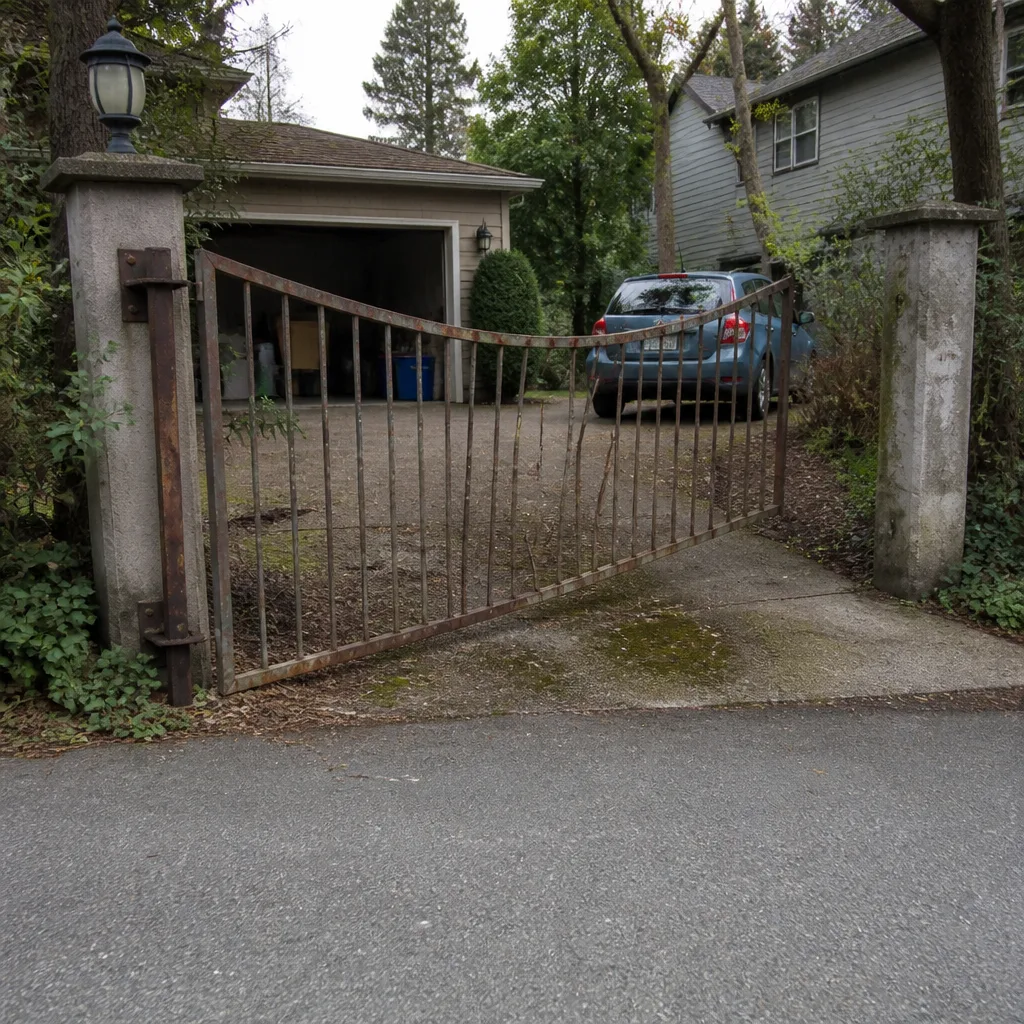 Before
 After
 Before
 After
When to Call a Professional
Call a technician when you hear grinding that ends in a stop, when the gate reverses without an obstruction, when a flash code repeats, or when a hinge or roller has visible play. If the gate wanders off its stop point, lifts on the track, or needs a push to complete travel, that’s a mechanical fault to address before it damages the operator. Any behavior you can’t predict around the safety edges is worth an on-site look. Electrical work on an operator, control board, or wiring is not a homeowner task; the power components inside an electric gate can injure you, so leave the panel closed. Gate Repair Multnomah Village offers free estimates in Multnomah Village. Call (833) 508-9284. Our technicians have up to 14 years of experience, and the local pro is licensed and insured as their state requires. The price is quoted and agreed before any work starts.
Frequently Asked Questions
The first sign is usually a hesitation before movement, a new sound, or a change in how long the gate takes to open. Any of those means the drive system is under added load, and the repair is smaller now than it will be later. Call (833) 508-9284 for an exact quote. Estimates are free.
Yes. We work on LiftMaster, FAAC, BFT, Linear, and other major brands, so a flash pattern is something we can interpret on the spot. Tell us the brand, if you know it, and the pattern you saw, and bring the exact sequence to the call. We answer 24/7.
No. A gate that mostly works is often closer to failure than one that stopped, because it keeps cycling while it’s damaging itself. Get it inspected while the fix is still mechanical.
Grinding that stops the gate is, because the system is already protecting itself and the next failure could be the motor or the board. Grinding without stopping is urgent but not an emergency. Either way, stop cycling the gate and call (833) 508-9284.
We handle both. Electric gate repair, including wiring, control boards, and motor logic, is a core service, and we also program keypads, intercoms, and multi-user access control for homes and property managers. That’s why Gate Repair Multnomah Village covers the full scope rather than handing off the electrical work.
The wet, mild climate keeps hinge pins, rollers, and operator housings damp for much of the year, and the tree cover fills tracks with debris. A gate here benefits from a check at the start of the wet season and again in late spring. For the full gate repair scope, call (833) 508-9284.
The Bottom Line
Gate trouble almost never announces itself with a dramatic failure. It shows up as a half-second hesitation, a new grind, a flash code, or a gate that takes two tries. Those are the signals worth acting on, because a repair caught early stays a repair. If your gate is showing any of the signs in this guide, get it inspected before the inconvenience becomes an emergency. We handle gate motor & opener service, and when a repair no longer makes sense, we can talk honestly about gate installation. Call Gate Repair Multnomah Village at (833) 508-9284 for a free estimate. We answer 24/7. Fast dispatch from 7am to 7pm, Sunday through Friday. Every job is a gate job, and the price is quoted and agreed before any work starts.
Written by the team at Gate Repair Multnomah Village.