
Last updated November 25, 2026
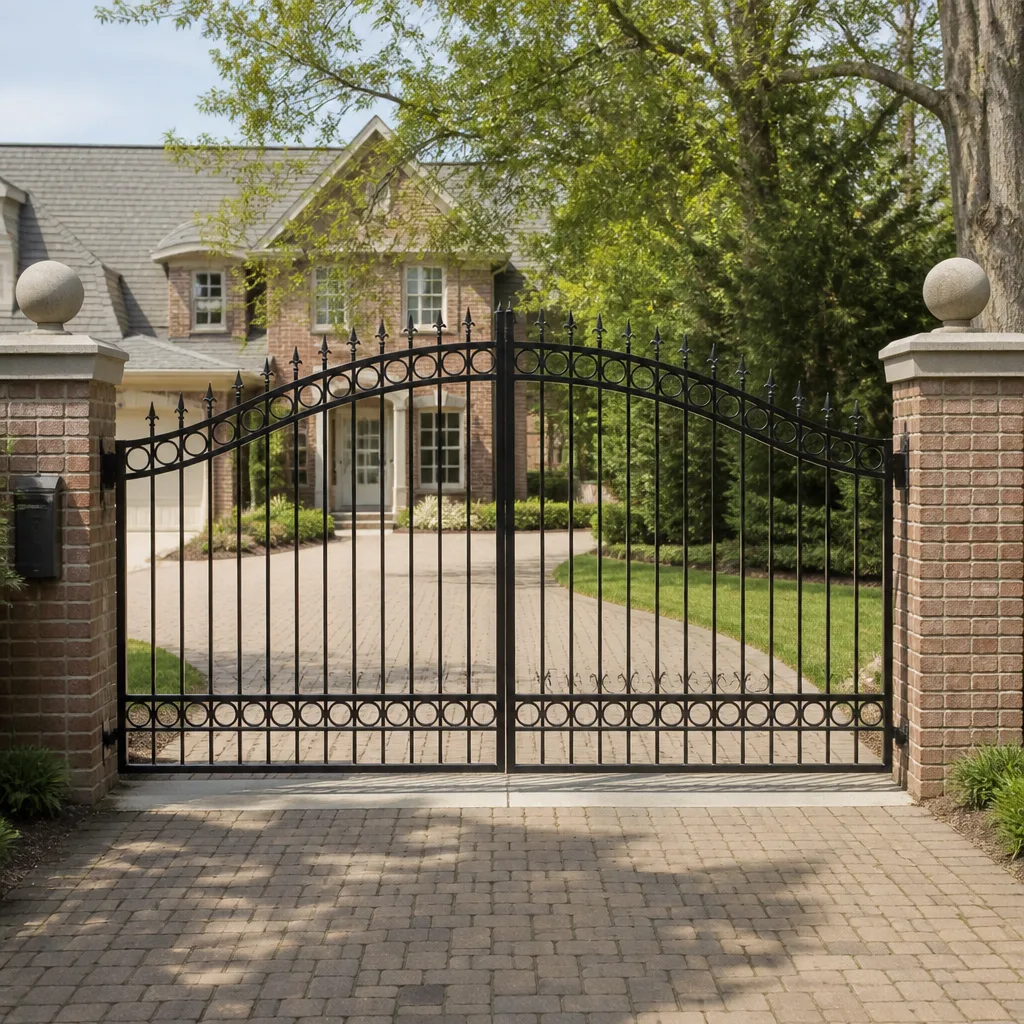 Wrought iron
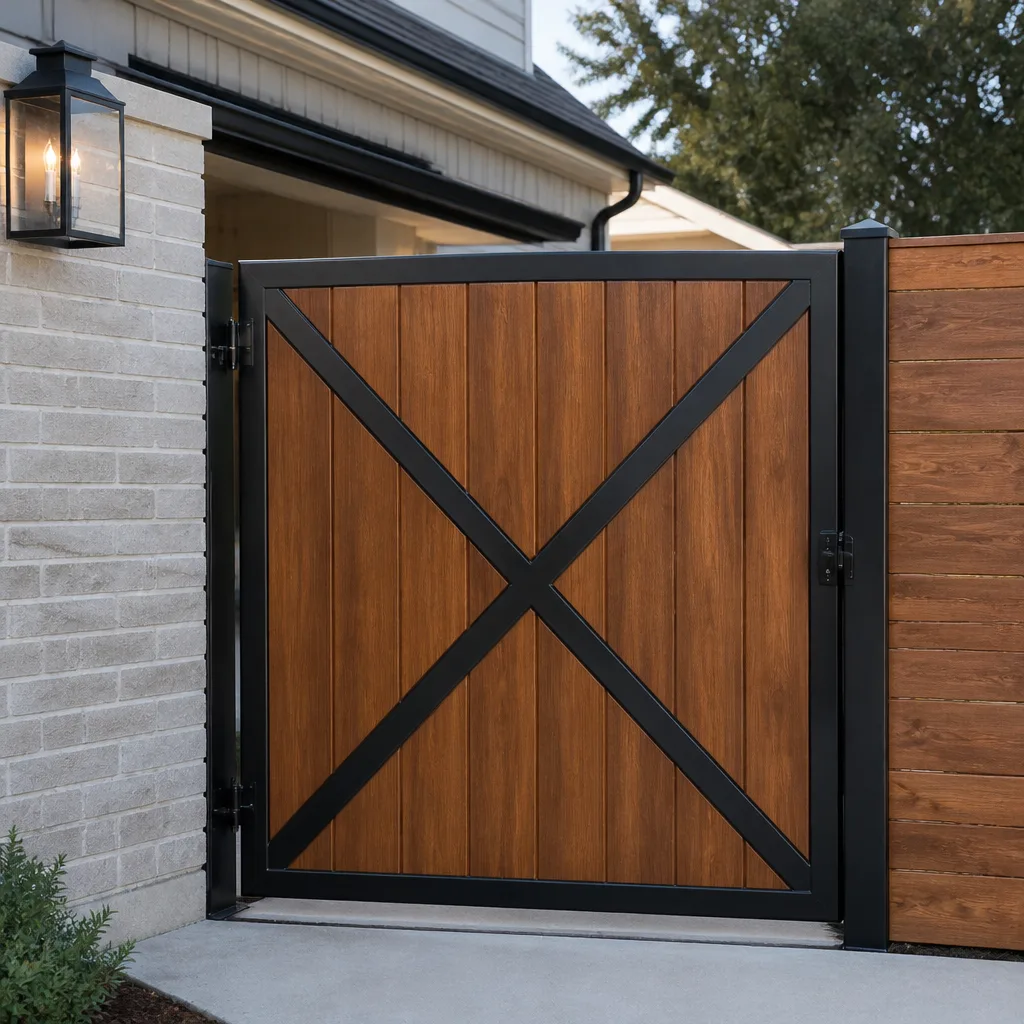 Wood & steel frame
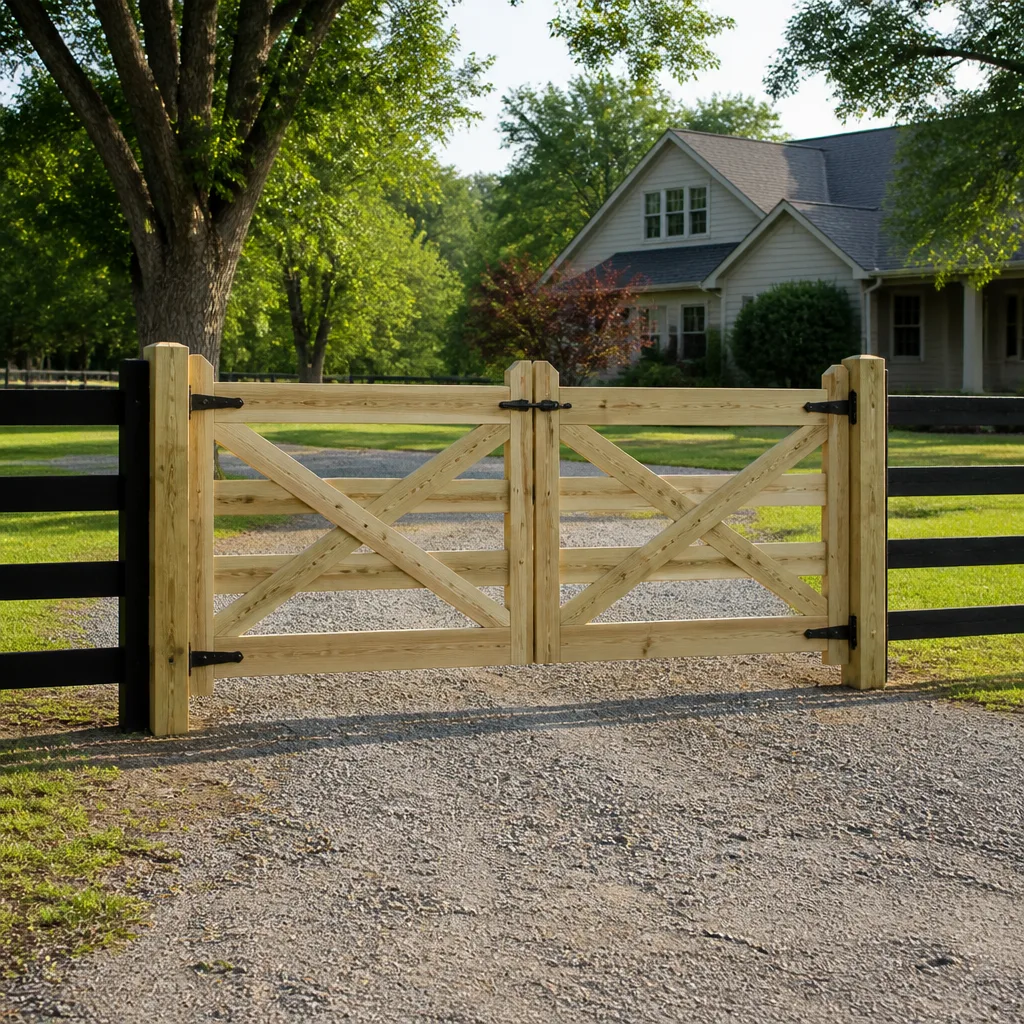 Farm & ranch
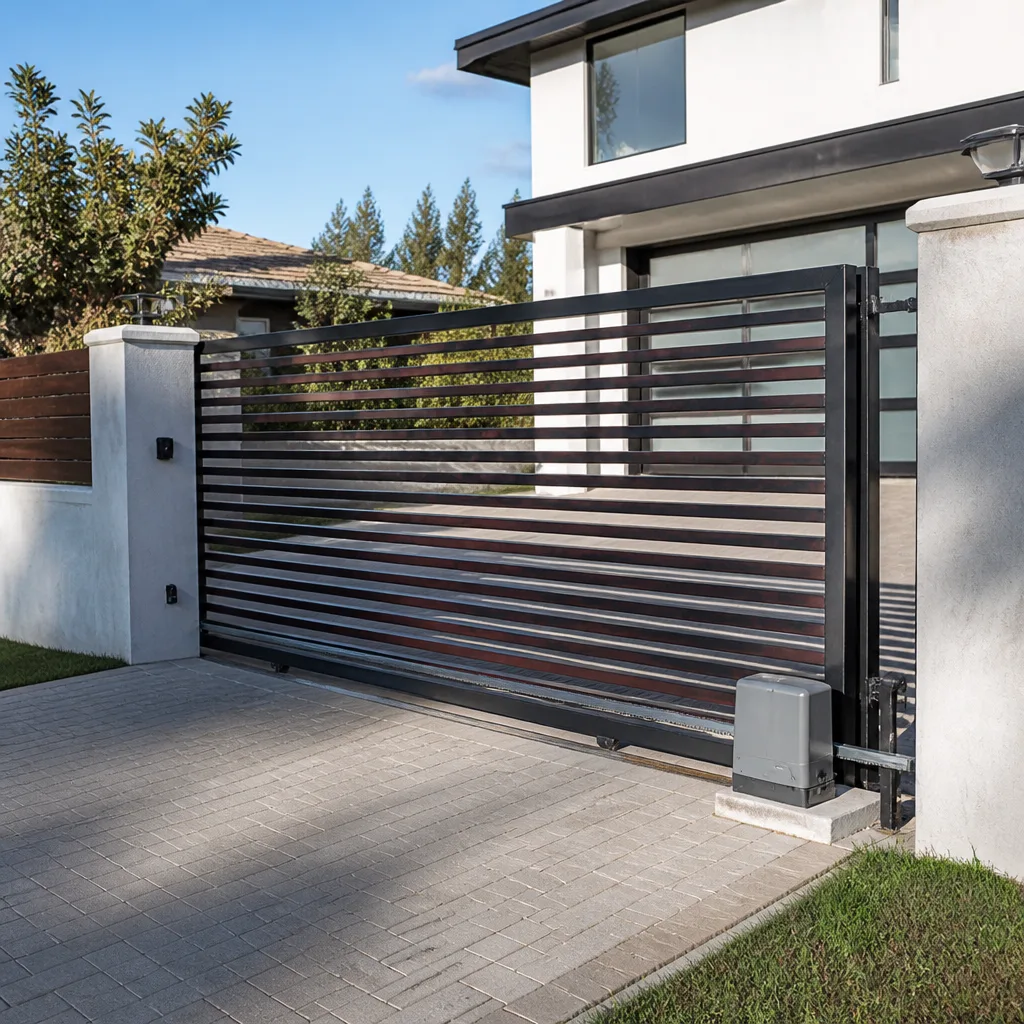 Sliding driveway gates
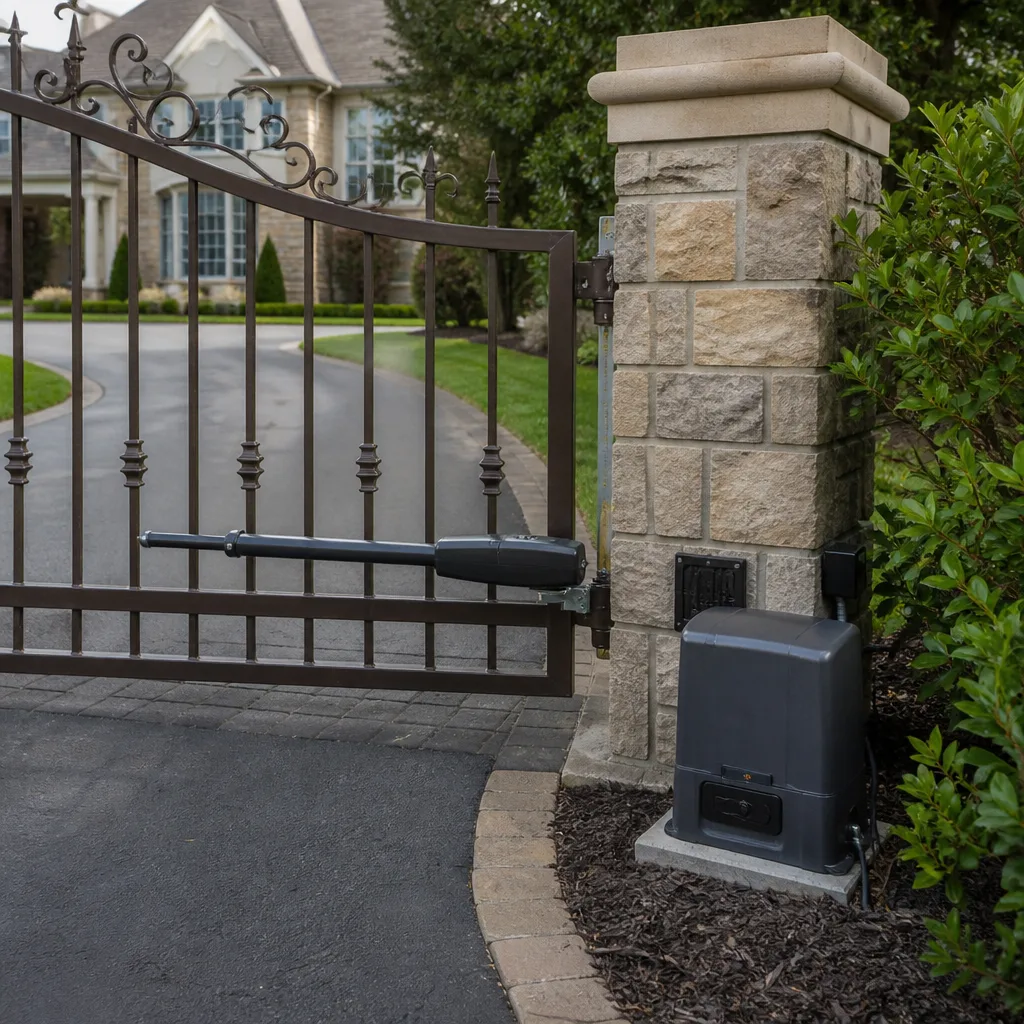 LiftMaster operators
Free on-site gate assessment - hinges, posts, and your LiftMaster or Nice gate operator checked before anything is quoted
The assessment is free and the quote is the invoice.
Get your free estimateSeasonal Gate Repair Care for Multnomah Village: Year-Round Homeowner’s Guide
October in Multnomah Village is the most important gate maintenance month of the year. By December, the failures that weren’t caught are already in progress. That’s the part most homeowners get wrong: gate care here doesn’t follow a four-season model with a spring tune-up and a fall cleanup. It splits into two operational environments, wet-season stress and dry-season thermal movement, and each one produces its own kind of failure. A hinge that seized in February was already corroding in November. A gate that started dragging in August has been waiting since July for the wood to swell. This guide walks through both halves of the year, in order of when the work actually matters.
Quick Answer
Seasonal gate care in Multnomah Village divides into wet-season protection and dry-season thermal management, and the wet-season work is the urgent half. Before the rains settle in around October, inspect hinge pins for corrosion, seal control board enclosures, check that gate posts drain properly, and test the battery backup. In the dry months, watch for gap drift from heat expansion and recalibrate limit switches, because a gate that “seems fine” in July often hands you a stuck gate by the first cold snap.
Styles & brands we work with
- Wrought iron
- Wood & steel frame
- Farm & ranch
- Sliding driveway gates
- LiftMaster operators
Table of Contents
- Why Multnomah Village Gate Care Doesn’t Follow the Standard Calendar
- The Wet-Season Prep Checklist: The Three Failures That Matter
- Control Board Water Ingress and What It Costs You
- Swollen Wood, Gate Warping, and What to Do About It
- Temperature Swings, Gap Tolerances, and Limit Switch Recalibration
- Drainage and Site Grade on Sloped Multnomah Village Lots
- Battery Backup and the Portland Storm Season
- The Dry-Season Tasks Homeowners Skip, and What They Defer to Fall
Why Multnomah Village Gate Care Doesn’t Follow the Standard Calendar
Most seasonal maintenance advice is built around a climate that freezes and thaws, and the assumption baked into it is that winter is the danger and summer is a break. In Multnomah Village, that formula misses. The seasonal pattern that matters is a long, wet stretch from roughly October into May, and a dry, warm block through the summer. The gate doesn’t care what month it is. It cares whether it’s wet or dry, and whether the hardware is moving with the wood or against it.
Two things happen. In the wet months, moisture penetrates and corrosion accelerates. In the dry months, materials contract and gaps widen while heat pushes the gate to the limits of its travel. The same gate can present opposite symptoms within the same year.
Multnomah Village’s housing adds a wrinkle. Many properties here sit on lots with a gradual slope, a mature tree canopy, and older wood gates alongside newer metal installations. Canopy shade keeps hardware damp longer after rain, which slows drying at the hinge pins and around your opener’s control box. The slope changes where water ends up after it runs off the gate. That combination means the standard advice to “lubricate in spring and check in fall” is both too vague and timed wrong for this area.
The better approach is to think in two operational modes. Wet-season mode is about keeping water out of places it can corrode, swell, and short. Dry-season mode is about managing movement, and that’s where calibration and clearance checks live. We’ve surveyed enough gates here to know which mode a homeowner is in the moment we look at the frost lines, the staining, and the hinge play. That tells us more than any calendar.
The Wet-Season Prep Checklist: The Three Failures That Matter
The wet season brings three failures consistently ahead of any other: corrosion at hinge pins, water ingress at the control board, and swelling wood that warps the gate out of square. All three start earlier than people expect. The prep window is roughly the end of September into mid-October, before the first sustained rain. Once the ground gets saturated, some of these tasks get harder to do well.
Here’s the order we suggest, because it moves from the components that fail most often to the ones that fail most expensively:
- Inspect and lubricate every hinge pin. Lift each gate leaf slightly to feel for grinding or slack. A pin that’s already corroding will feel rough. Clean off the rust, apply a moisture-displacing lubricant rated for exterior use, and check the hinge plates for pitting. On a double-leaf gate, both sets matter.
- Check the control board enclosure for water intrusion. Open the housing, look for moisture lines, rust at the terminals, or fine white deposits from dried water. Reseal the gasket, and if the seal has collapsed, replace it. A gasket costs little. A control board on a DoorKing or an Elite unit is the most expensive part of your system.
- Walk the gate posts and the surrounding grade. Look for water pooling around the base. Note any cracks in the post footing or soil that’s settling. If a post is taking on water, address it before winter, because that’s where foundation heave starts.
- Test the battery backup. Confirm it holds a charge. More on this later, but the storm season is the reason to test it now.
- Examine weatherstripping and seals on the gate hardware. Any loose or cracked seal on a control box or operator housing needs to be fixed while the weather is still dry enough to apply a proper seal.
- Clear leaf litter and drainage channels. Multnomah Village’s older trees drop heavily. Debris around the gate base holds moisture against metal and concrete, and clogs whatever drainage you have.
If we could get you to do one thing, it would be the hinge pins. Corrosion at the hinge is the slow failure that quietly accelerates every other issue, because a seized hinge turns every open and close into a lever against the frame. It’s the single most common cause of a gate that eventually needs structural work rather than a repair.
Control Board Water Ingress and What It Costs You
Water ingress at the control board is the most expensive of the three wet-season failures, and the easiest to miss until it’s already happened. It doesn’t produce a symptom until it does. A control board that’s taken on moisture can work fine for weeks and then fail intermittently, usually when the weather shifts and the residual damp causes a short across a terminal.
The failure looks like this: the gate starts behaving erratically. It stops mid-travel. It opens when you press close. It cycles without a command. Or it simply goes dead one morning with no warning. When we open an enclosure and find water staining at the edge of the board, that usually confirms it. On Viking and Ghost Controls units in particular, the board placement and the gasket seating matter, and we’ve seen more than a few units where a small seal failure at the housing mount was the whole story.
What you can do:
- Check the enclosure gasket every wet-season prep, not just when something’s wrong.
- Confirm the housing is pitched so water runs off, not into the seam.
- Look for insect debris in the housing. It blocks the drain area and holds moisture.
- Never hose down the area around a mounted control box. A garden hose directed at the wrong seam can force water into the housing.
If the board has already been compromised, we can typically diagnose it and either repair or replace the board without pulling the entire system. That’s the practical case for a gate-only specialist: gate repair on the electrical side is where a general handyman stops, and it’s the part that matters most when the gate is already installed and working.
Swollen Wood, Gate Warping, and What to Do About It
Wood gates move with moisture, and in Multnomah Village the wood is moving significantly between October and March. A gate that fits cleanly in August will often drag by January. The board edges swell, the gate leafs warp slightly, and what was a clean clearance becomes contact. This isn’t a flaw in the gate. It’s the material doing what it does in a wet climate.
The prep work here is about limiting the amount of water the wood takes on and giving it somewhere to go when it does.
- Inspect the finish before the first rain. Worn finish on the top edges and the end grain lets water in fast. Re-seal or repaint those areas. End grain is where water absorbs and where swelling starts.
- Check the hardware attachments. Screws that have backed out let water run behind the hinge plate, and that’s where rot starts. Tighten or replace any that are lifting.
- Watch the clearances at the latch side and the ground. A small gap in summer is your clearance in winter. If the gate’s already touching the ground in July, it will be dragging by fall.
- Look for cupping and checking. A board that’s cupped or checking along its length has already absorbed moisture. That’s the board to watch.
Swollen wood gates create a second problem: the opener is now pushing against resistance it wasn’t set for. That’s wear on the motor and strain on the hinges. When we look at a gate that’s dragging and the opener is struggling, we’re usually looking at a combination of wet-season swelling and a force setting that hasn’t been adjusted. That combination is worth catching before it becomes a motor replacement.
Temperature Swings, Gap Tolerances, and Limit Switch Recalibration
Think about the range this gate sees in a year. July afternoons and January mornings are far apart on the thermometer, and the materials respond differently. Metal expands with heat and contracts with cold. Wood does the same, though it also absorbs and releases moisture. From the hinge line to the latch side, the gate is moving in small increments all year.
The opener’s limit switches are set to a specific travel distance. When the gate dimensions shift, even slightly, the switch that once told the motor exactly where to stop is now slightly off. The symptoms of a limit switch that needs recalibration:
- The gate stops short of fully closed, or slams into the closed position.
- The gate reverses partway through the open cycle.
- One leaf of a double gate stops at a different point than the other.
- The gate has to be operated twice to close.
The recalibration itself is a technician job on most automated systems, because it involves adjusting travel limits and confirming the safety reverse behavior. It’s not the kind of adjustment to do by ear or by trial and error, especially if the gate is on a sloped driveway and the safety sensors are part of the picture.
The timing matters. Late spring, after the wet season ends and before the summer heat sets in, is the right window to check the limits. The gate is at its closest to “normal” dimensions, and any adjustment you make there will hold through the summer. A limit recalibration done in December, when the wood is at its most swollen, will be wrong by April. This is the single biggest calendar mistake we see: the gate gets recalibrated in the wet season because that’s when the symptom shows up, and then it misbehaves in July. The plan should be: adjust for the dry-season geometry in spring, and anticipate the wet-season geometry with clearances in fall.
Drainage and Site Grade on Sloped Multnomah Village Lots
A gate post is only as stable as the ground under it. On Multnomah Village’s sloped lots, the usual problem is water running downhill and ending up at the gate, exactly where the post is buried. That’s the setup for foundation heave: the soil under the post swells with moisture, then shifts when it dries, and the post moves. A post that’s out of plumb puts the whole gate out of alignment.
Here’s the set of checks worth doing before the wet season, and again after the first heavy rain:
- Trace where water goes during a storm. Look for any path that ends at the gate base. Gutters that dump near the post, a walkway that acts as a channel, or a downslope that targets the gate all need a fix.
- Look at the soil line around the post. Any dip, crack, or fresh settling at the base means water movement. That’s the early sign of heave.
- Check the post footing depth. A post needs a properly sized footing below the seasonal moisture zone. Posts set at proper footing depth are less likely to shift. A post that was set shallow in a sloped lot is a candidate for movement.
- Grade the ground near the gate so it drains away. Redirect runoff so it leaves the gate area rather than pooling at the base.
- Inspect the gate for plumb after the wet season. Hold a level against the post or the gate leaf. Movement of even a small amount over one wet season tells you the drainage needs attention.
A post that’s already heaved or gone out of plumb is a structural fix, not a hardware adjust. That job is a stronger case for a specialist than a generalist, because setting a new post on a slope without fixing the drainage just sets up the same failure again. If the drainage isn’t addressed, any gate installation on that spot will inherit the same problem.
Battery Backup and the Portland Storm Season
Winter storms in the Portland area bring wind and power outages, and the wet season is when they cluster. That’s the real reason to test your gate’s battery backup in the fall, not in July. A battery that tests fine in summer may not hold under the load of a power outage in a cold snap, when both the battery capacity and the gate hardware are less cooperative.
The fall battery test should be done on this sequence:
- Kill the primary power to the opener. Look at how the gate behaves on battery alone.
- Run a full open-close cycle. Time it. A slow cycle means the battery is weak. If it fails to complete a cycle, replace it.
- Check the battery age and the terminal connections. Corrosion at the terminals on a sealed battery can make a good battery test bad. Clean the terminals.
- Look for moisture around the battery housing. The same water ingress that ends up at the control board can find the battery compartment.
A battery backup task you shouldn’t skip: test it while there’s still good light and the weather is dry, because doing it in a cold snap when the power is out is a bad time to find out the battery is dead. A single weak battery can leave a gate stuck open or stuck closed when the neighborhood power is out, and a stuck gate in a storm is a security problem you’d rather not have. If your opener is older and the battery hasn’t been checked in a while, put it on the fall list. A technician looking at a gate motor & opener can check the battery as part of a broader diagnosis.
The Dry-Season Tasks Homeowners Skip, and What They Defers to Fall
This is the section that matters most, because the dry season creates the false confidence. The gate is working fine in July. The sun is out. There’s no water pooling, no drag, no symptom. So nothing gets done, and then October arrives and the gate is already in trouble.
What’s actually happening in dry weather:
- The gate components are at their most contracted. Gaps are at their widest. Limit switches set in winter are now slightly off.
- The wood is at its driest, and any finish wear is at its most exposed. The wood that’s going to absorb the first rain is already porous.
- The battery is under less load, so a weak cell reads as healthy.
- The hinges are quiet, so any early corrosion at the pins has no audible symptom.
The jobs to do in the dry season, in order of what prevents fall failures:
- Recalibrate the limit switches. As noted above, this is the right time for it. Adjust for the dry-season geometry so the gate cycles cleanly through the summer.
- Re-seal the wood finish and check the end grain. Get a fresh protective coat on before the wet season. A finish applied in a dry window lasts longer.
- Inspect the hinge pins even though they feel fine. Clean and lubricate them while it’s dry. You’re getting ahead of the corrosion that would otherwise start eating at the pin in the wet season.
- Test the battery before the storm season. A summer test gives you time to replace a weak battery without rushing.
- Clear the grade and check the drainage. Dry weather is when you can see and fix where the water will run.
If a gate “seems fine” through the summer, that’s not an all-clear. It’s the window to do the work that keeps it fine through October. Our technicians have up to 14 years of experience, and the consistent pattern is that gates that got attention in July and August fail less in December.
Common Mistakes to Avoid
- Treating gate care as a spring and fall task. The wet-season prep is a fall job, and the calibration work is a dry-season job. Following a generic maintenance calendar puts both in the wrong window for Multnomah Village’s weather.
- Waiting for a symptom to inspect. Corrosion at the hinge and moisture in the control board both run silent for weeks. By the time the gate stalls, the control board is already compromised.
- Recalibrating limit switches in the wet season. A gate adjusted in December is set up to misbehave in July. Calibrate when the gate is dry and tight, not when it’s swollen.
- Ignoring water pooling at the post base. On a sloped lot, water running to the gate is a post-heave setup. Catch it early, before the post moves, because a post fix is much more expensive than a drainage fix.
- Hosing down the area around the opener control box. A garden hose directed at a housing seam forces water into the board enclosure. The fastest way to kill a good control board is to spray the enclosure.
- Skipping the battery test because the gate works. A battery backup that fails in the storm season takes the gate down when you need it most. Test it in the dry months when there’s time to replace it.
- Assuming a general handyman can handle the electrical side. Control board logic, limit switches, and battery systems are specialist work. A generalist may fix the hinge and leave the opener problem in place.
See the difference
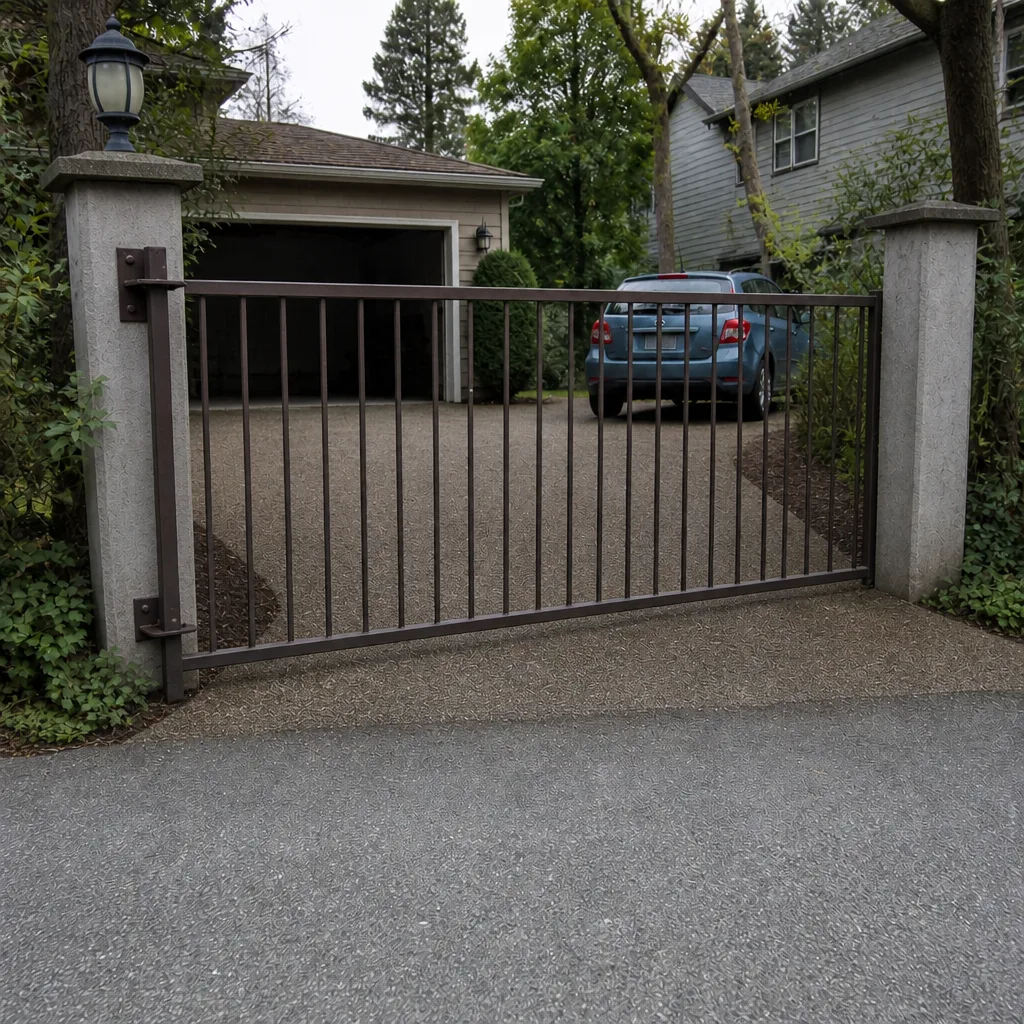
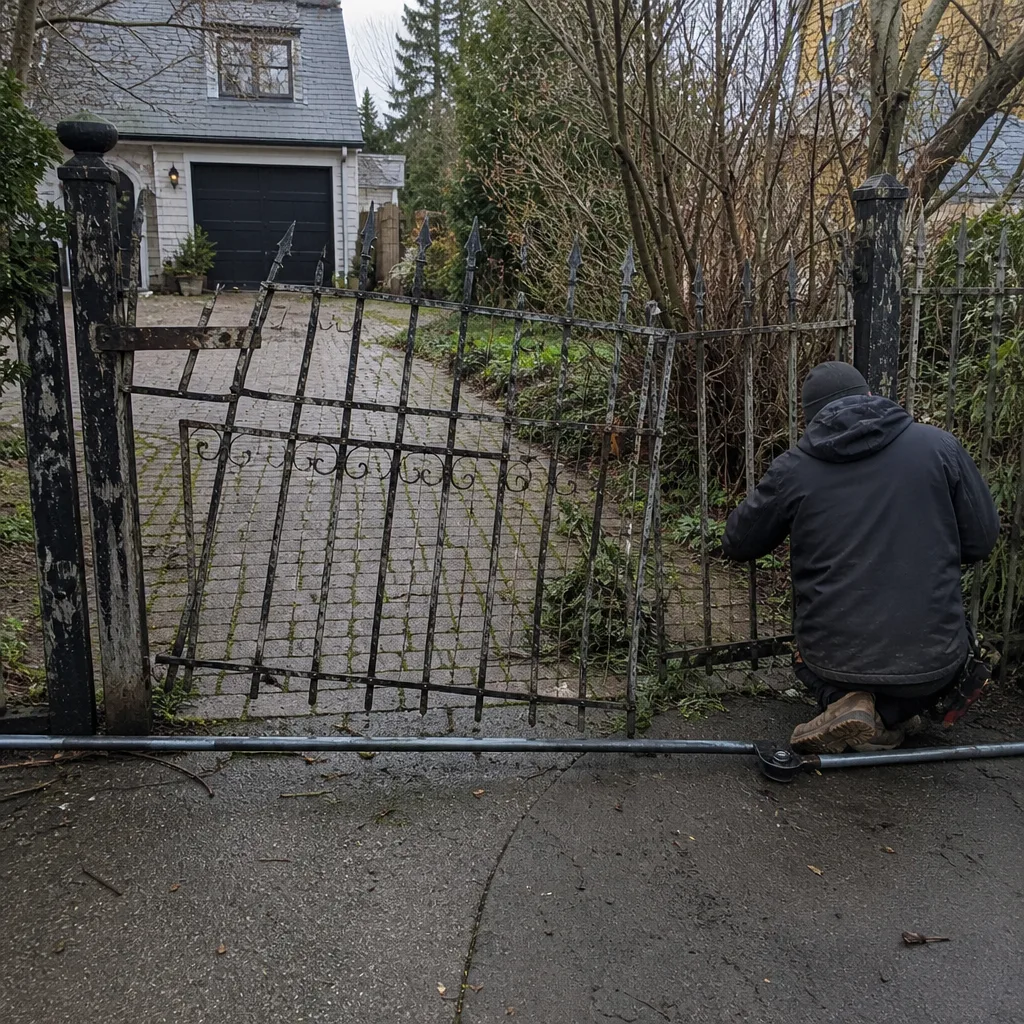 Before
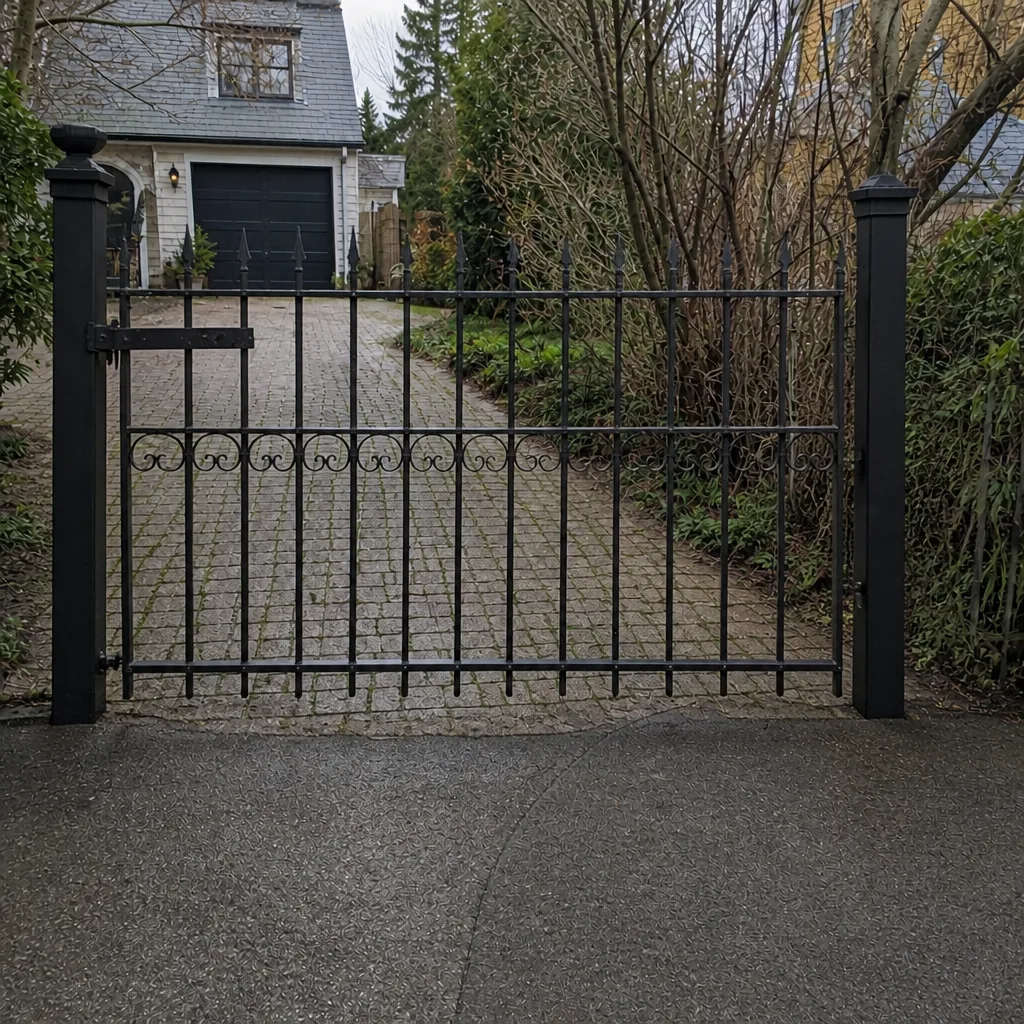 After
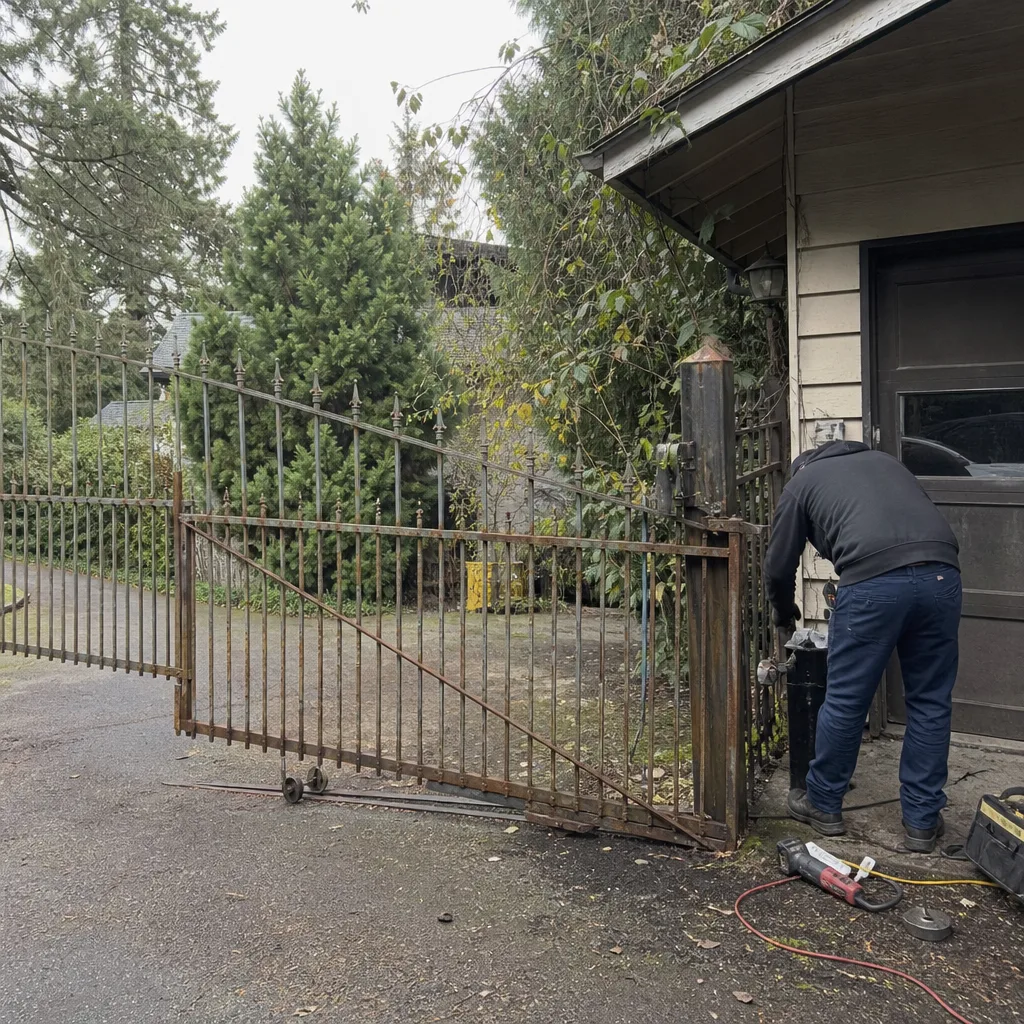
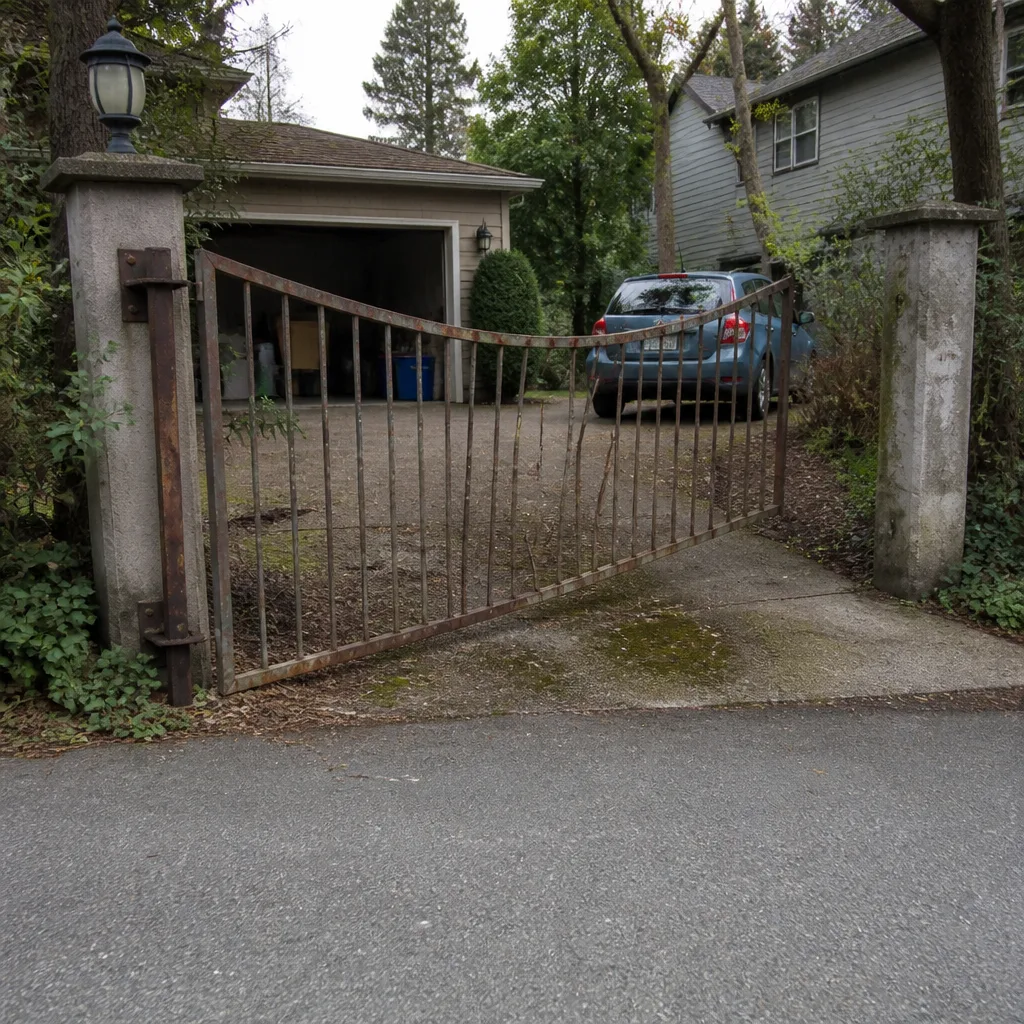 Before
 After
 Before
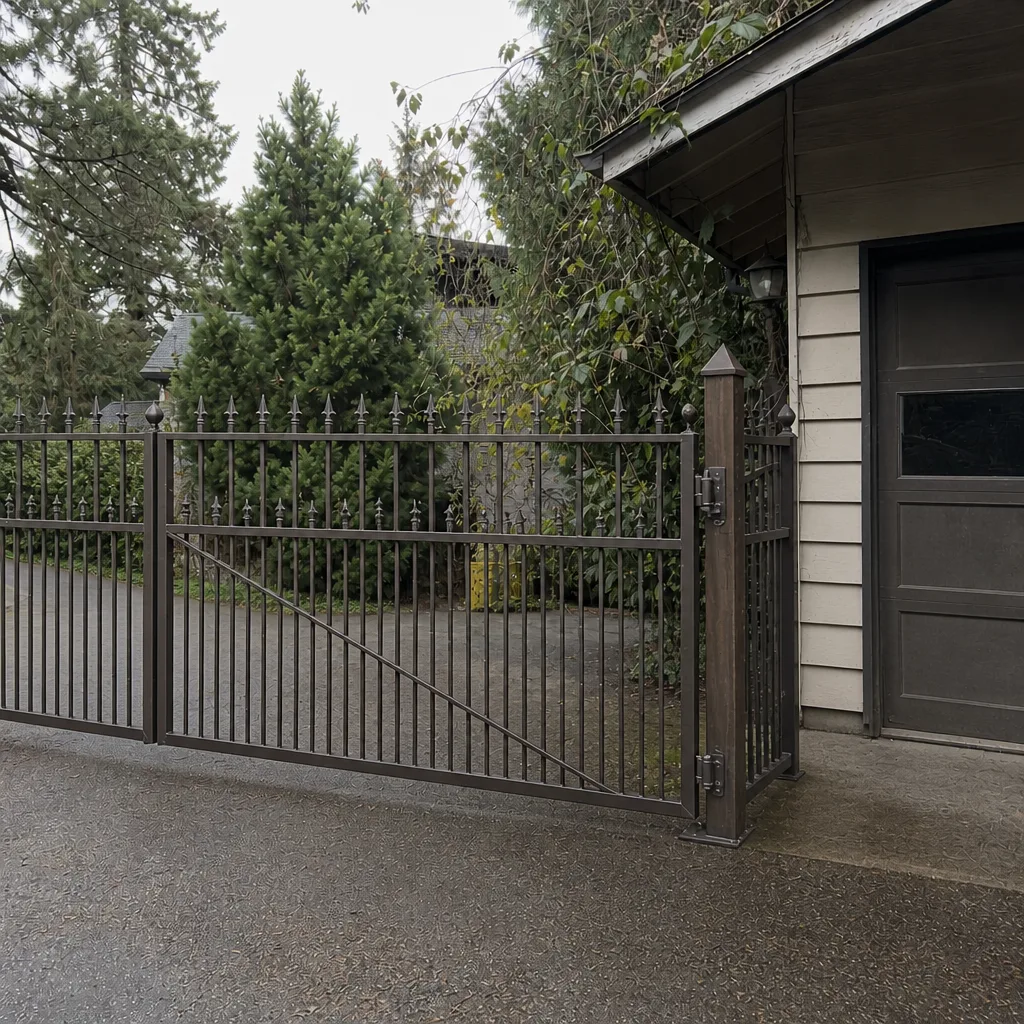 After
When to Call a Professional
A gate that’s dragging, reversing, or stopping mid-travel needs a trained eye, and the wet season is when these symptoms cluster. Call us when the gate behaves erratically after rain, when the control board shows any sign of water intrusion, when a post has visibly moved or gone out of plumb, or when the gate operates on battery unexpectedly. Anything involving the power wiring, the control board, or the safety sensors is a professional task, and we’d rather see it before the system gets worse. Gate Repair Multnomah Village works on the gate you already have, whether it’s a LiftMaster, a FAAC, or a DoorKing, and that means diagnosis comes first rather than a replacement recommendation. We offer free estimates in Multnomah Village – call (833) 508-9284.
Frequently Asked Questions
Late September into mid-October, before the first sustained rain. That’s the window for hinge pin lubrication, control board gasket checks, drainage inspection, and the battery test. Once the ground is saturated, some of these tasks get harder to do properly, and the moisture has already had a chance to start working on the hinge pins and the wood.
Because the wood swells with moisture and the gate dimensions shift. A gate that has clean clearance in August will often be in contact with the ground or the latch by January. This is normal movement for a wood gate in a wet climate, and small clearances built in during the dry season are what prevent it from becoming a drag. If the drag is severe, the opener may be set up against too much resistance, and that’s a motor wear issue worth checking.
At least once a year, and the right time is late spring after the wet season, when the gate is close to its dry dimensions. A gate that’s been recalibrated at the wrong time of year will typically present symptoms in the opposite season. If you’ve noticed the gate stopping short, slamming, or reversing mid-cycle, that’s the signal to get the limits checked.
In many cases the board can be repaired or replaced without pulling the whole system. A specialist can diagnose the board and the operator separately and give you an honest assessment. That’s the practical difference between working on the actual installed brand and recommending replacement because the system isn’t familiar. Call (833) 508-9284 for an exact quote – estimates are free.
Trace where water ends up during a storm. Any path that runs downhill to the gate base is a drainage issue, and it’s the setup for post movement. Check the soil line for fresh settling or cracking, confirm the post footing is set at proper footing depth, and grade the ground so water leaves the gate area. Catching drainage before the post moves saves the cost of a post repair.
You can test the battery yourself by killing the primary power and running a full cycle. If the battery is weak or the terminals are corroded, a technician can confirm whether the battery or the charging circuit is the problem. Anything involving the control board or the operator wiring belongs with a professional. Our technicians have up to 14 years of experience with systems from brands including Viking and Ghost Controls.
The Bottom Line
Seasonal gate care in Multnomah Village is not a four-season routine. It’s a wet-season set of tasks and a dry-season set of tasks, and the calendar most homeowners follow puts both in the wrong place. Get the hinge pins, the control board housing, the wood finish, and the battery checked in the fall. Get the limit switches recalibrated and the drainage addressed in the dry months. Watch the post base on a sloped lot through every wet season. Do those things and the gate is much less likely to fail in a cold snap when the power is out. If something’s already off, the gate you have is worth fixing, and we can look at it. Call (833) 508-9284 for a free estimate.
Written by the team at Gate Repair Multnomah Village.