
Last updated November 25, 2026
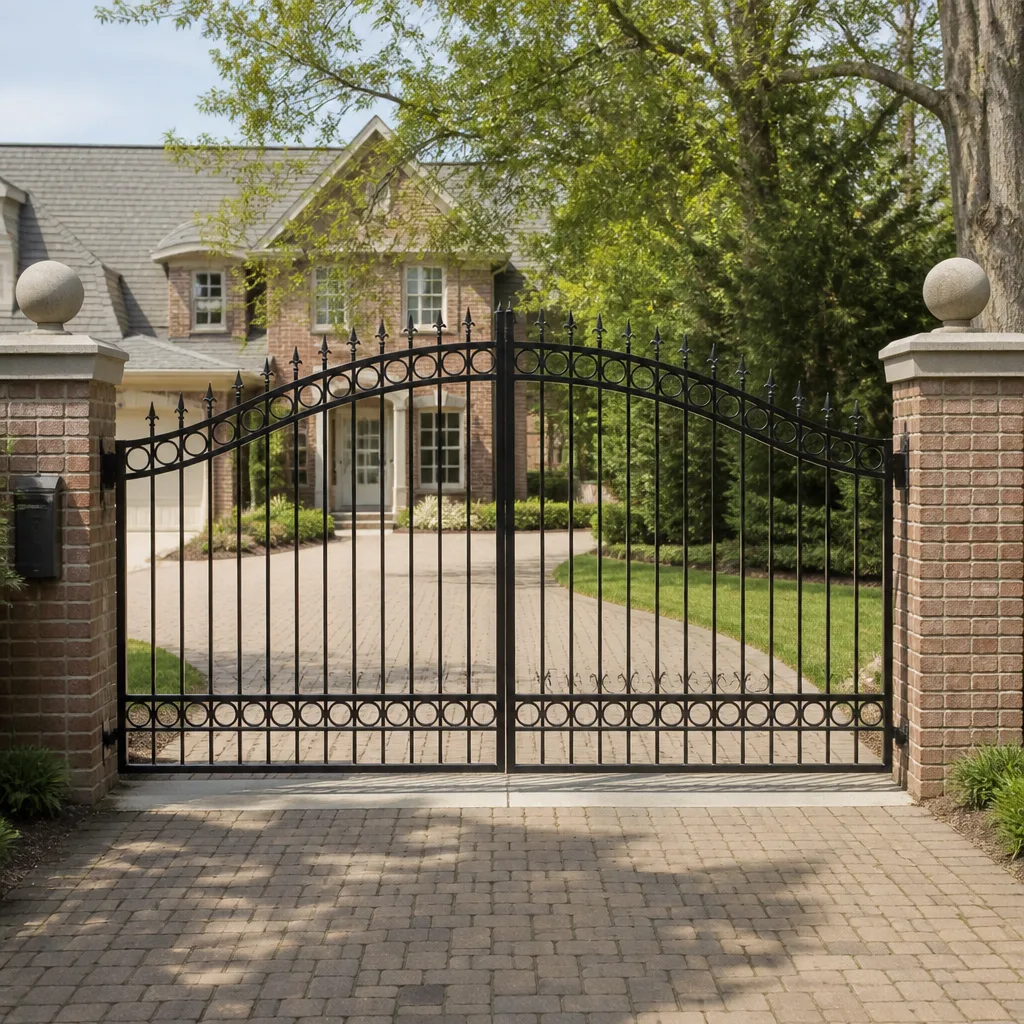 Wrought iron
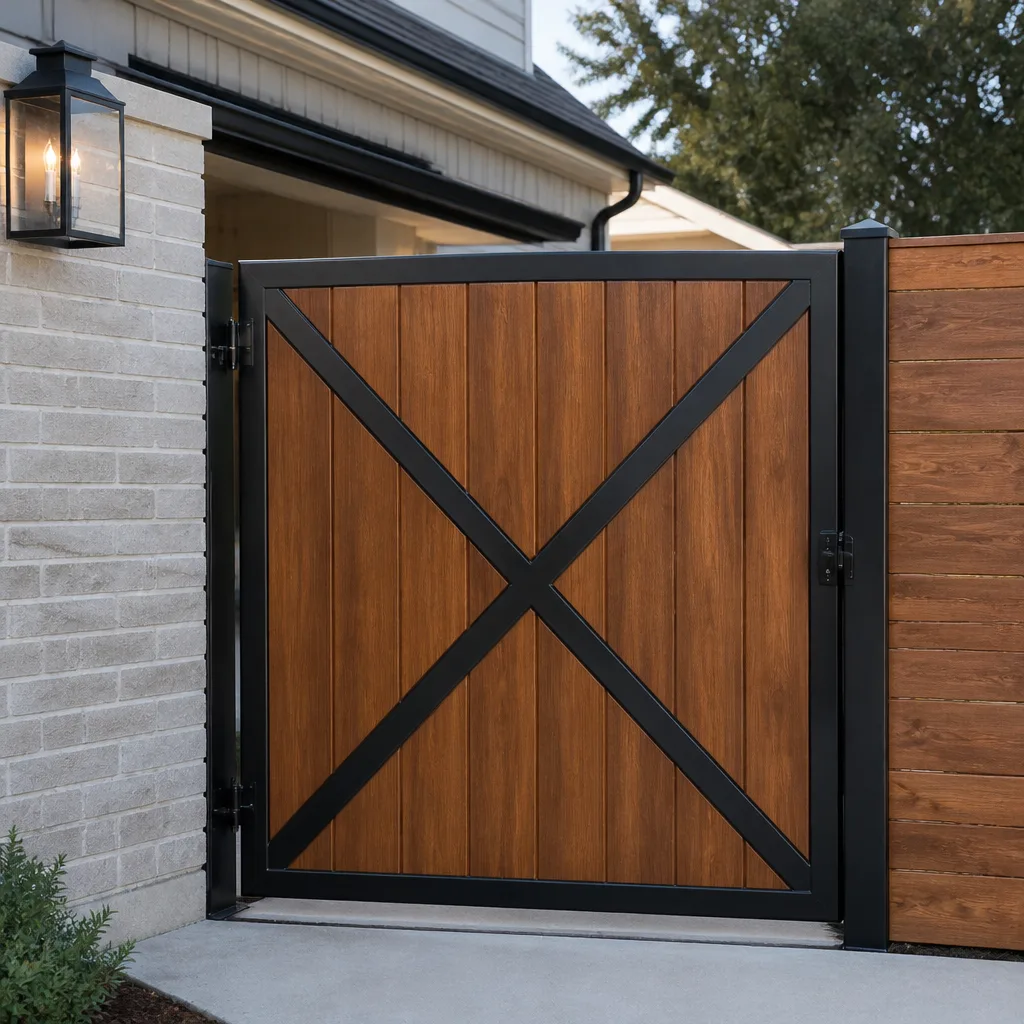 Wood & steel frame
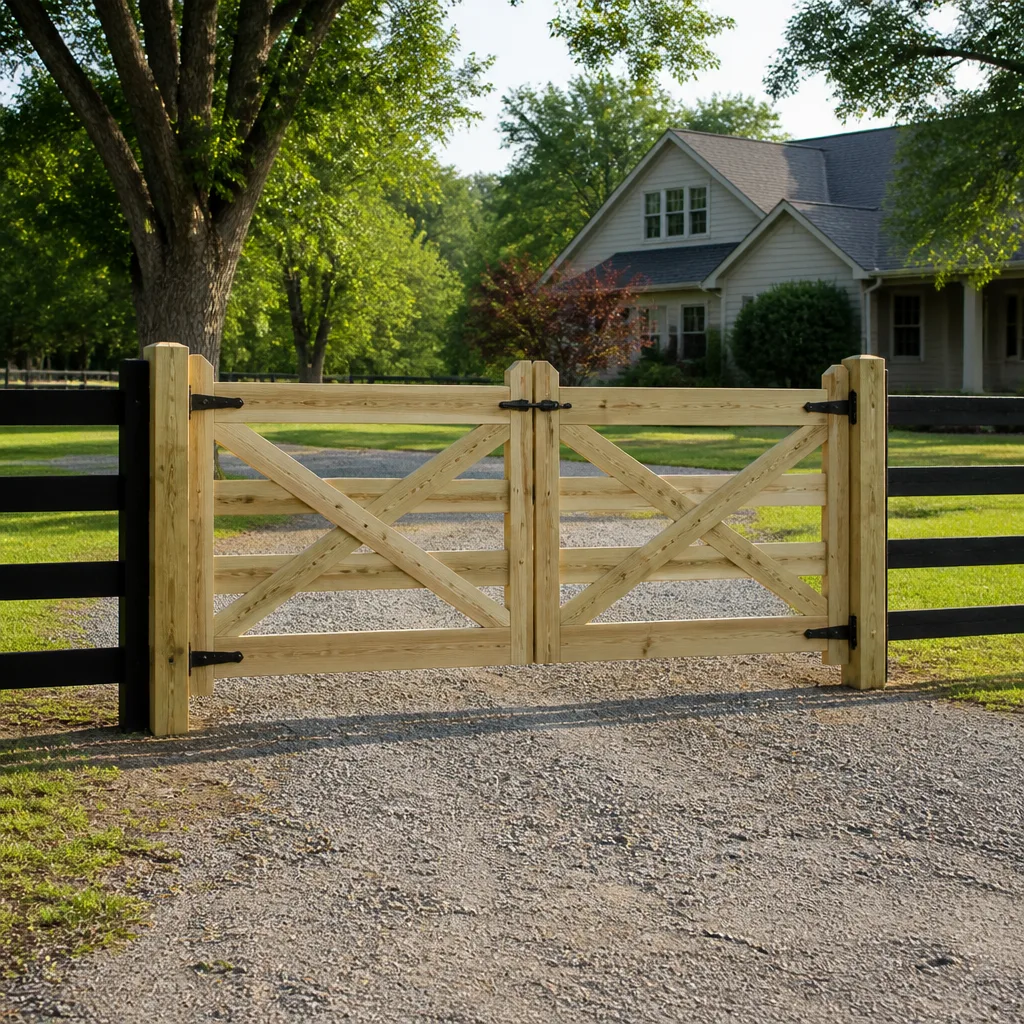 Farm & ranch
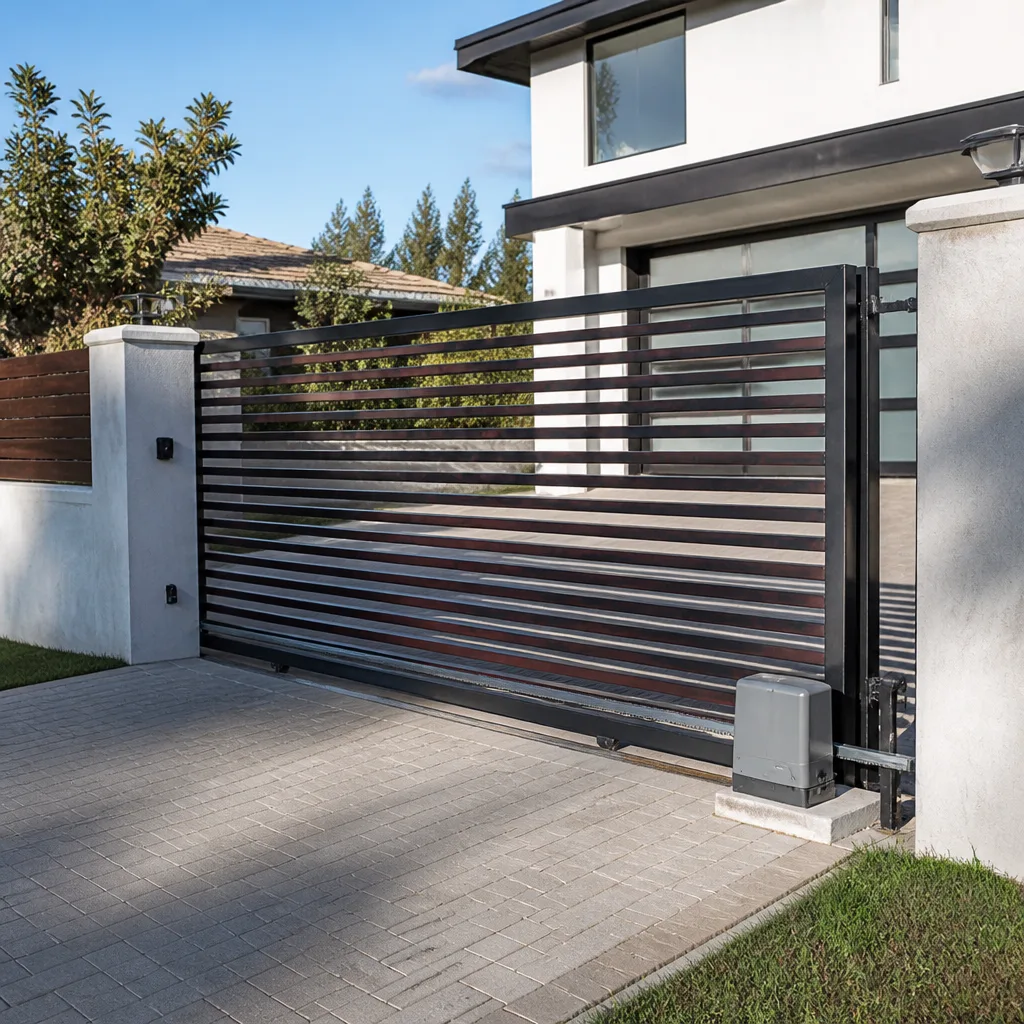 Sliding driveway gates
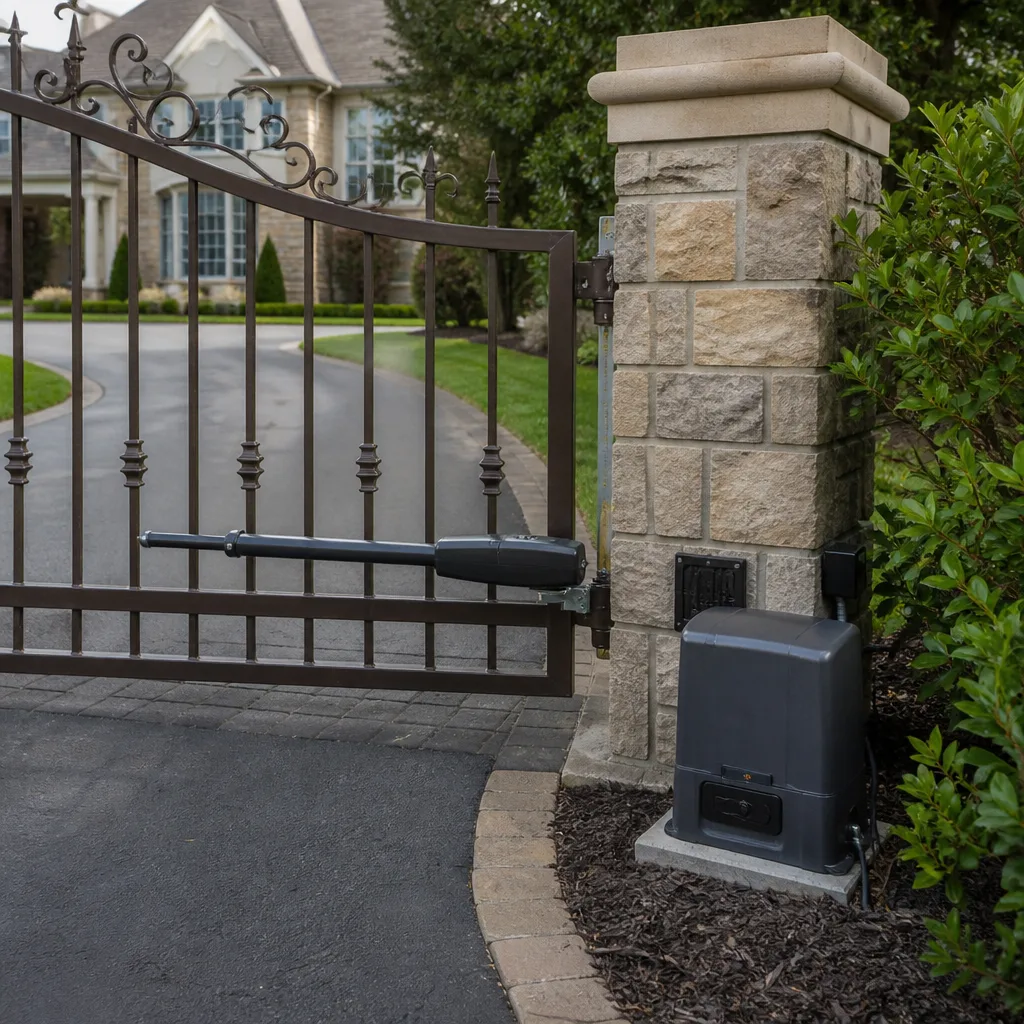 LiftMaster operators
Free on-site gate assessment - hinges, posts, and your LiftMaster or Nice gate operator checked before anything is quoted
The assessment is free and the quote is the invoice.
Get your free estimateHow to Hire a Gate Repair Contractor in Multnomah Village: A Step-by-Step Guide
Ask a prospective gate contractor which FAAC actuator models they keep parts for. If the answer is a long pause followed by “we can order it,” you’ve just learned where gates rank in their business. In Multnomah Village, a lot of gate repair quotes come from garage-door companies that treat gates as a secondary revenue line, and the diagnostic gaps show up later as callbacks, repeat visits and recommendations to replace a system that was never properly assessed. This guide gives you the screening criteria to tell a gate specialist from a generalist with a gate on the truck, so your next repair is quoted by someone who actually knows the equipment.
Quick Answer
To hire a gate repair contractor in Multnomah Village, verify Oregon licensing and insurance for the scope of work, ask which automation brands the technicians are trained on, and insist on an on-site assessment before any quote is written. A true gate specialist can name the system you have, explain the diagnostic process, and quote repair versus replacement honestly without steering you toward a new gate because the installed brand is unfamiliar.
Styles & brands we work with
- Wrought iron
- Wood & steel frame
- Farm & ranch
- Sliding driveway gates
- LiftMaster operators
Table of Contents
- Why a Gate Specialist Beats a Garage-Door Company With a Gate Add-On
- What Oregon Requires: Licensing and Insurance for Gate Work
- What a Correct Site Assessment Looks Like Before You Get a Quote
- Questions That Reveal Whether They Can Service Your Brand
- How to Compare Quotes When the Terminology Doesn’t Match
- Why the Lowest Bid on Electric Gate Work Is Usually Missing Something
- Mechanical Repair vs. Automation: Two Different Skill Sets
- The Multnomah Village Hiring Checklist
Why a Gate Specialist Beats a Garage-Door Company With a Gate Add-On
A gate and a garage door share a motor and a control board, and that’s roughly where the similarity ends. Gates carry heavy panels that swing or slide under their own momentum, operators that run on low-voltage control wiring, safety edges that must reverse on contact, and access-control hardware that has to talk to the operator logic. Garage-door technicians are trained for a very different load profile and safety envelope. When a company sells both but only staffs for one, gates get diagnosed by analogy, and analogies cost you money on the second visit.
The gate-only specialist model exists because the diagnostic work is different. An electric gate that opens halfway and stops isn’t the same fault as a garage door that reverses. It could be a binding hinge, a failing limit switch, a control-board input, a low battery on a solar operator, or a safety edge that’s reading a false obstruction. Each of those lives in a different part of the system, and the technician has to know which part to isolate first.
In our experience, the callback pattern tells the story. A company that treats gates as an add-on tends to fix the symptom closest to the motor and leave the actual cause in place. A specialist starts at the source.
What Oregon Requires: Licensing and Insurance for Gate Work
Oregon regulates contractors through the Construction Contractors Board (CCB), and any company performing construction-related work for compensation is generally required to hold an active CCB license. Gate work straddles two categories: purely mechanical repair to the gate frame, hinges, rollers and latches, and electrical work involving the operator, control board and power wiring. Ask for the CCB license number, verify it on the CCB’s public lookup, and confirm that the license class matches the scope of work you’re hiring for. A license that covers light residential repair may not cover the electrical side of an automated gate, and the contractor should be able to tell you clearly which it is.
Insurance matters just as much. Ask for a current certificate of liability insurance and confirm it names the contracting entity. For a gate with a heavy panel or automated travel, an uninsured contractor is a liability you’d be absorbing personally if something fails on the property.
A few things to verify before signing anything:
- Active CCB license, verifiable by number, with a class that covers the work being quoted.
- Current liability insurance certificate, with the entity name matching the license.
- Workers’ compensation coverage if the contractor employs anyone.
- Written confirmation of who is liable if the gate is damaged or a person is injured during the job.
- Whether the electrical portion is handled by the same licensed company or subcontracted.
For permits, ask the City of Multnomah Village or the relevant jurisdiction directly. New gate installations often trigger permit requirements depending on height, location and whether the gate is automated. A contractor who tells you “we never pull permits for gates” is telling you something useful about how they operate. Our own approach is to say plainly that the local pro is licensed and insured as their state requires, and that the specifics for your property should be confirmed with the jurisdiction handling it.
What a Correct Site Assessment Looks Like Before You Get a Quote
A quote written without an on-site assessment is a guess wearing a number. Gates are physical systems with site-specific conditions – slope, footing depth, gate weight, hinge condition, power availability at the operator, distance from the control panel, and the state of the safety edges. None of that can be assessed from a phone description or a photograph alone. If a contractor quotes you a repair over the phone without seeing the gate, you have a number, not a diagnosis.
A proper assessment follows a predictable sequence:
- Walk the entire gate cycle. Open it fully, close it fully, watch for binding, hesitation, bounce, drag or irregular travel. Note any noise that only appears in part of the cycle.
- Inspect the mechanical structure. Hinges, rollers, track (on a slide gate), stops, latches, and the gate panel itself for sag or misalignment. A panel that’s out of square will stress every motor that tries to move it.
- Test the operator and controls. Check that the motor responds correctly to every input – remote, keypad, intercom, loop detector, safety edge. Note any input that misfires or lags.
- Examine the wiring and control board. Visible corrosion at terminals, loose connections, moisture intrusion at the control box, and any sign of prior quick-fixes.
- Check the power source. Confirm voltage at the operator, confirm any battery backup or solar components are delivering what they should, and confirm the disconnect is correct.
- Look at safety features specifically. Safety edges, photo-eyes and any reversal logic must be tested and confirmed working. On an automated gate, this is not optional.
- Document the fault before writing the quote. A serious contractor will tell you what they found and why it explains the symptom you reported.
When any of these steps is skipped, the quote tends to be cheap and the repair tends to be short-lived. The most common shortcut we see is a contractor who tests the remote, hears the motor run, and writes the quote – without ever checking whether the panel is binding or whether the safety edge has failed silently.
A safety note that bears repeating: automated gates carry heavy panels and low-voltage control wiring alongside line-voltage power at the operator. If the panel is not behaving predictably, or the safety edges are not reversing on contact, stop using the gate until a trained technician inspects it. This is not a repair for a fall-prevention pad and a YouTube video.
Questions That Reveal Whether They Can Service Your Brand
The installed brand matters more than most hiring guides acknowledge. A LiftMaster operator, a FAAC actuator, a BFT system and a Mighty Mule residential unit each use different control logic, different diagnostic codes and different parts. A technician trained on one can usually diagnose the symptom, but the ability to source the right part and reprogram the system correctly is a different question. Ask these questions and listen to the answer:
- Which automation brands are your technicians trained on? A specialist should be able to name several – for example LiftMaster, FAAC, BFT, Linear, Viking, Ghost Controls, DoorKing, Elite and Mighty Mule – and explain which ones they see most locally.
- Do you stock any parts for my brand, or order them per job? Not every contractor keeps spare parts, and that’s not automatically a red flag. But knowing whether a repair is a same-day fix or a two-week wait matters for your planning.
- How do you diagnose an unfamiliar brand? A trained technician can trace operator logic on a board they haven’t seen before. If the answer is “we’d just replace the whole opener,” that tells you they’re guessing.
- Do you handle access control programming on my system? Keypads, intercoms, loop detectors and multi-user access systems are part of automated gates. If the contractor hands that to a different company, the coordination is on you.
- How many units of my brand have you worked on? Specific experience beats general experience. A technician who has diagnosed your actuator family dozens of times has pattern recognition that a newcomer doesn’t.
Our technicians have up to 14 years of experience and are trained across the major automation brands so they can honestly assess whether a repair or a system upgrade is the right call for what you already have installed. That’s the standard you should hold any contractor to.
How to Compare Quotes When the Terminology Doesn’t Match
Two quotes can describe the same repair with different words, and the mismatch makes comparison feel impossible. One contractor writes “replace actuator,” another writes “opener motor,” a third writes “drive unit” – all three could mean the same part. If you compare on price alone, you’ll choose the cheapest wording, not the best value. The fix is to normalize the descriptions before you compare.
A quick way to translate common gate terminology:
- Operator / actuator / opener / motor – the motor and gearbox assembly that drives the gate.
- Control board / controller / logic board – the electronics that process inputs and command the motor.
- Safety edge / sensing edge / reversing edge – the strip on the gate panel that triggers a reverse if something contacts it.
- Photo-eye / safety beam / through-beam sensor – the light-based obstruction sensor on slide and some swing gates.
- Access control / entry system – the keypad, intercom, card reader, remote receiver or app module that tells the operator to open.
- Limit switch / travel stop – the component that tells the operator the gate has reached full open or full close.
Once the terminology is aligned, ask each contractor to break the quote into parts and labor separately. A quote that lumps everything into one line is harder to challenge and harder to audit. A quote that separates them lets you see whether the labor is diagnostic-heavy or replace-everything heavy, and whether the parts are being sourced as new OEM replacements or aftermarket equivalents. Both can be legitimate, but you should know which you’re paying for.
Finally, ask each contractor what happens if the diagnosis turns out to be wrong. A serious answer is a plan to re-diagnose without charging you twice for the same fault. A vague answer is a warning sign.
Why the Lowest Bid on Electric Gate Work Is Usually Missing Something
The lowest bid on electric gate work frequently reflects missing diagnostic labor, not efficiency. Diagnosing an intermittent gate fault takes time – pulling up the control-board status, testing every input, watching the gate cycle multiple times to catch an intermittent safety-edge failure. That diagnostic work sits in the labor line, and a contractor who skips it to keep the bid low will often come back to it as a “second visit” once the actual fault shows up. By then you’ve paid twice.
The bids that look highest on paper often include things the cheap bids quietly exclude:
- Full diagnostic time to isolate the actual fault rather than the nearest symptom.
- Testing and confirmation of safety edges and photo-eyes on the repaired system.
- Reprogramming of access control inputs after the repair, not just the motor.
- Correct parts sourced to the installed brand versus whatever fits.
- A written description of what was found, so you have a record.
- A clear statement of what the price includes and what would be billed separately if the scope changes.
None of this is a reason to accept an inflated bid either. The point is that a quote’s value comes from what’s inside it, not its position on the list. On a gate, the difference between “we fixed it” and “we fixed it correctly” is almost always the diagnostic time that shows up in the middle of a quote.
Mechanical Repair vs. Automation: Two Different Skill Sets
A manual swing gate that drags is a mechanical job – hinges, alignment, post stability, latch geometry. An automated slide gate that opens and then reverses without warning is an automation job – operator logic, safety edge, limit switch, control board input. Some faults sit in both, like a hinge that binds just enough during the last six inches of travel to trip the motor’s stall detection. That’s the kind of fault a specialist isolates by watching the full cycle, not by running a single test.
When you interview a contractor, ask specifically how they handle the electrical side of an automated gate. Do they diagnose wiring, control boards and motor logic themselves, or do they bring in an electrician? An electrician who hasn’t worked on gate operators is not a gate technician, and a gate technician who can’t work on low-voltage control wiring will be limited in what they can actually diagnose. Our own approach is to keep the full lifecycle under one roofline – from the hinge to the control board – so nothing gets handed off mid-job.
For a new install or a motor replacement rather than a repair, the scope changes. That’s a measurement, order and scheduling process rather than a same-day fix. For that work, you should expect gate installation to be quoted after a proper on-site measure, with any automation components specified to the site conditions. If you’re only replacing the motor and keeping the existing gate panel, a gate motor & opener assessment should confirm the panel is fit to drive the new operator before the parts are ordered. When the diagnosis points to a specific repair rather than a replacement, gate repair begins with isolating that fault and only that fault, not with a recommendation to start over.
The Multnomah Village Hiring Checklist
Here’s the compact version of everything above, structured so you can run it against each contractor you talk to. A serious gate specialist will answer every point without hesitation. A generalist with a gate on the truck will trip over at least three of them.
- Verify the license. Active Oregon CCB license, class appropriate to the work, number verifiable in public records.
- Verify insurance. Current certificate, entity name matching the license, workers’ comp if the company employs anyone.
- Confirm the brand capability. Ask which automation brands the technicians are trained on and whether they’ve worked on your installed brand before.
- Require an on-site assessment. No quote over the phone. No quote before the full gate cycle has been observed at least twice.
- Ask about the electrical scope. Do they diagnose the control board, wiring and operator logic themselves, or is that subcontracted?
- Ask about access control. Keypads, intercoms and multi-user systems – are they part of the service or a separate call?
- Request a written estimate. Parts and labor separated, scope clearly described, terminology defined.
- Confirm the price is agreed before work starts. The written estimate should be the price you pay unless the scope changes and you approve the change first.
- Ask about safety-edge testing after the repair. On an automated gate, this should be confirmed working, not assumed.
- Ask what happens if the first diagnosis doesn’t fix it. A specialist stands behind the diagnostic process. A generalist repeats the visit and the fee.
Multnomah Village has a mix of residential driveway gates, yard gates and small commercial entrances, and each one carries different stakes. A yard gate that fails is an inconvenience. A shared commercial entrance that fails is a liability, and the contractor has to be prepared for that difference. A gate specialist treating every job as a gate job – not a side call between HVAC and plumbing appointments – is the one who takes the full scope seriously from the assessment onward.
Common Mistakes to Avoid
- Accepting a phone quote. A number given without an on-site assessment is a guess. Gate faults sit in the operator logic, the hinge, the safety edge or the control wiring – none of which can be assessed from a description.
- Assuming a garage-door company covers gates. Garage door technicians are trained on a different load profile. Gates need hinge, track, panel and operator diagnosis that a garage-door specialist may not routinely do.
- Choosing the lowest bid without reading the scope. The cheapest quote frequently omits diagnostic time, safety-edge testing or access-control reprogramming. Read what’s inside each line before comparing the total.
- Skipping the brand question. If the contractor can’t name which automation brands they’re trained on, or won’t confirm experience with your installed brand, you’re paying for their learning curve.
- Letting someone replace the operator before diagnosing the panel. A binding hinge will stress any new operator exactly like it stressed the old one. Mechanical faults need to be isolated before an electrical fix is proposed.
- Ignoring the safety edges. A repair that leaves a failed safety edge in place is not a finished repair. If the gate isn’t reversing on contact, it shouldn’t be running automatically.
- Not verifying the license and insurance. Multnomah Village properties often have shared gates, tight driveways or commercial access. Confirm the contractor can carry the liability for the work before they touch the system.
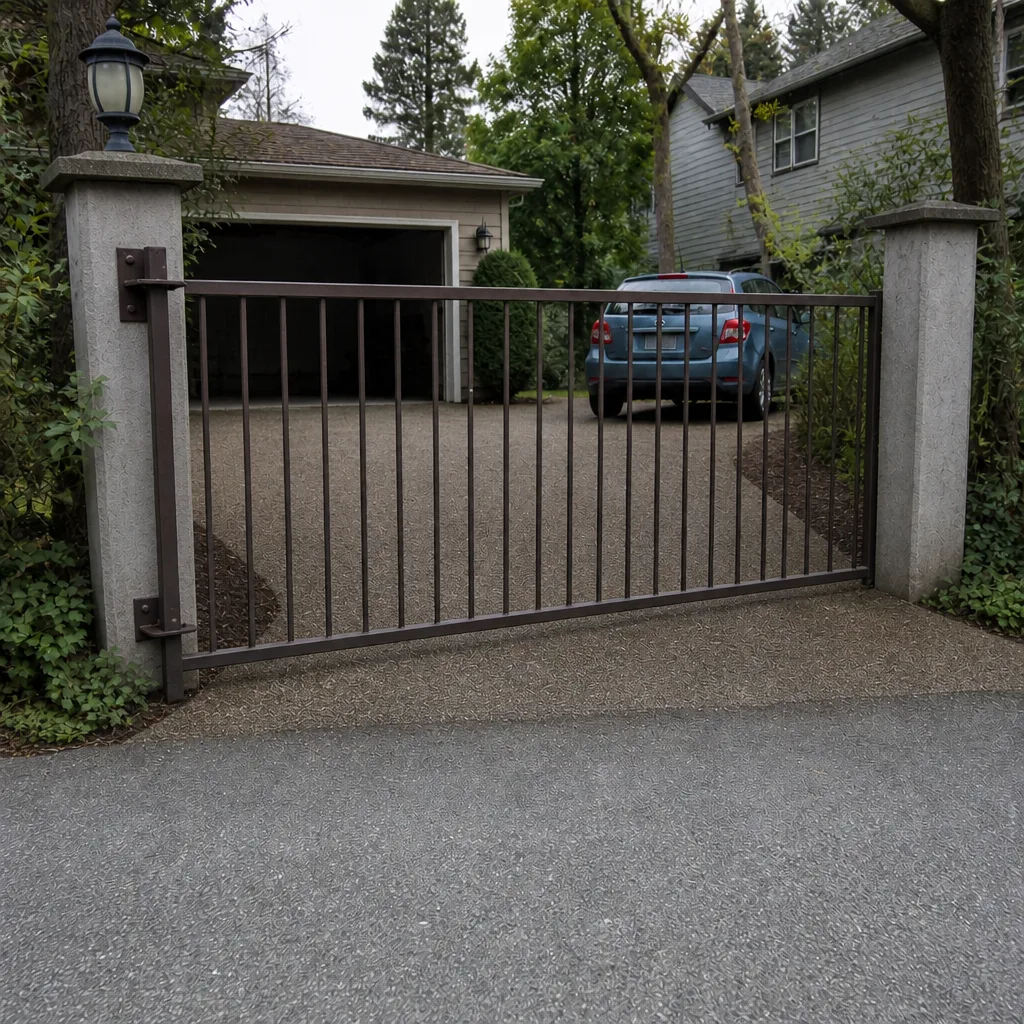
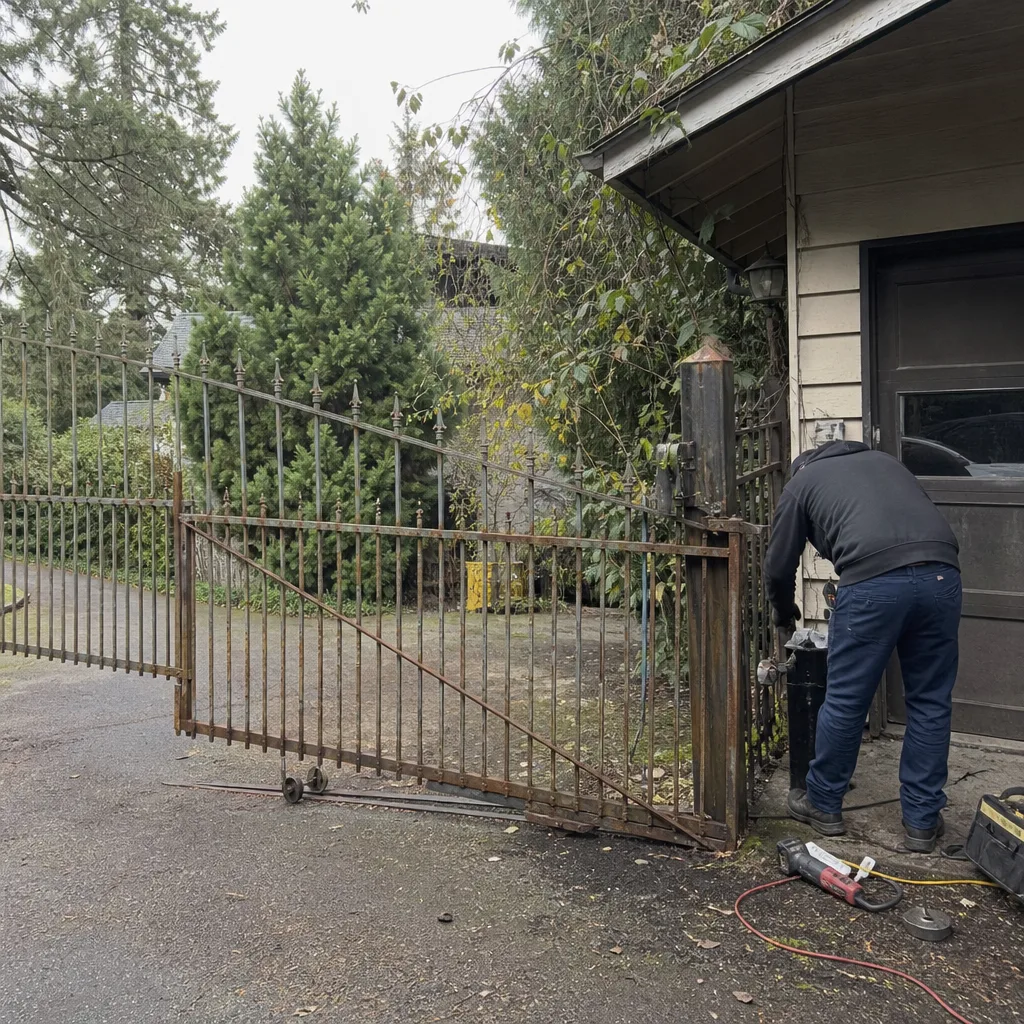
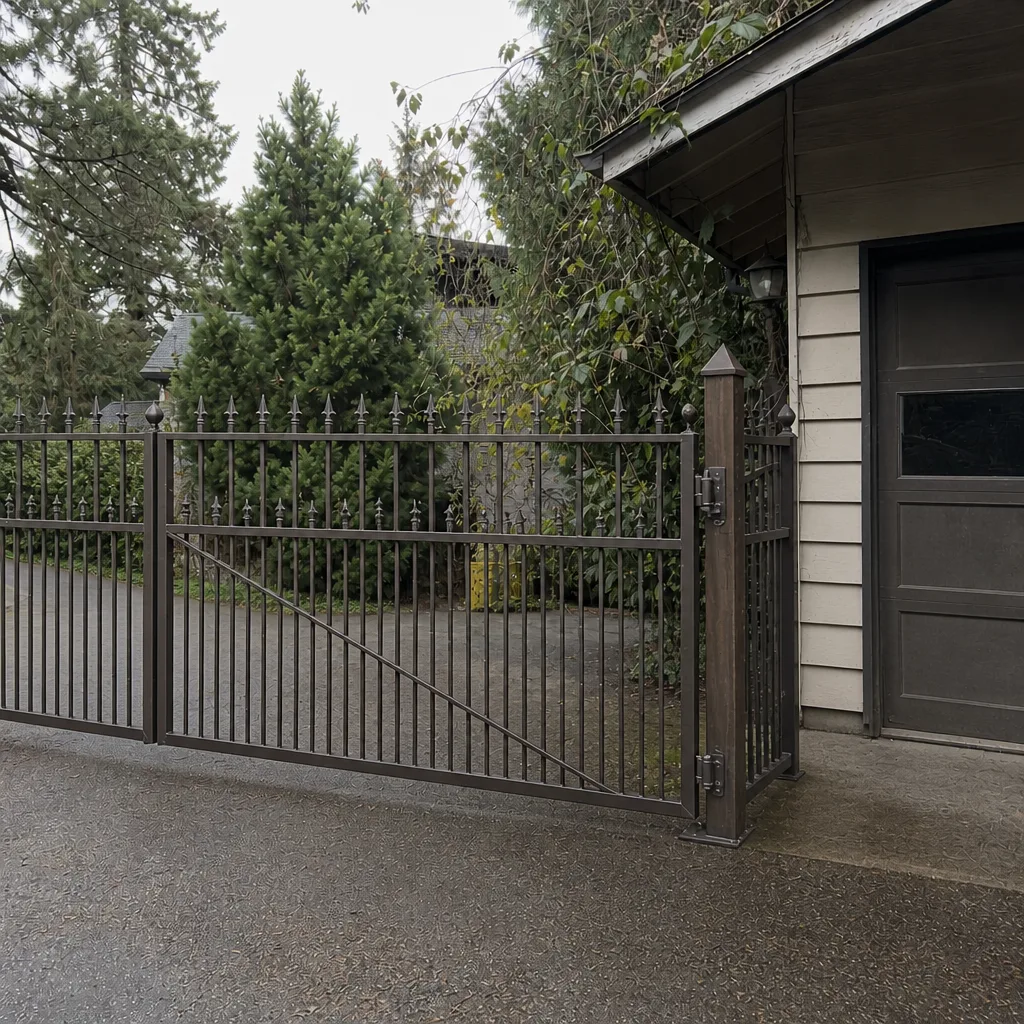
See the difference
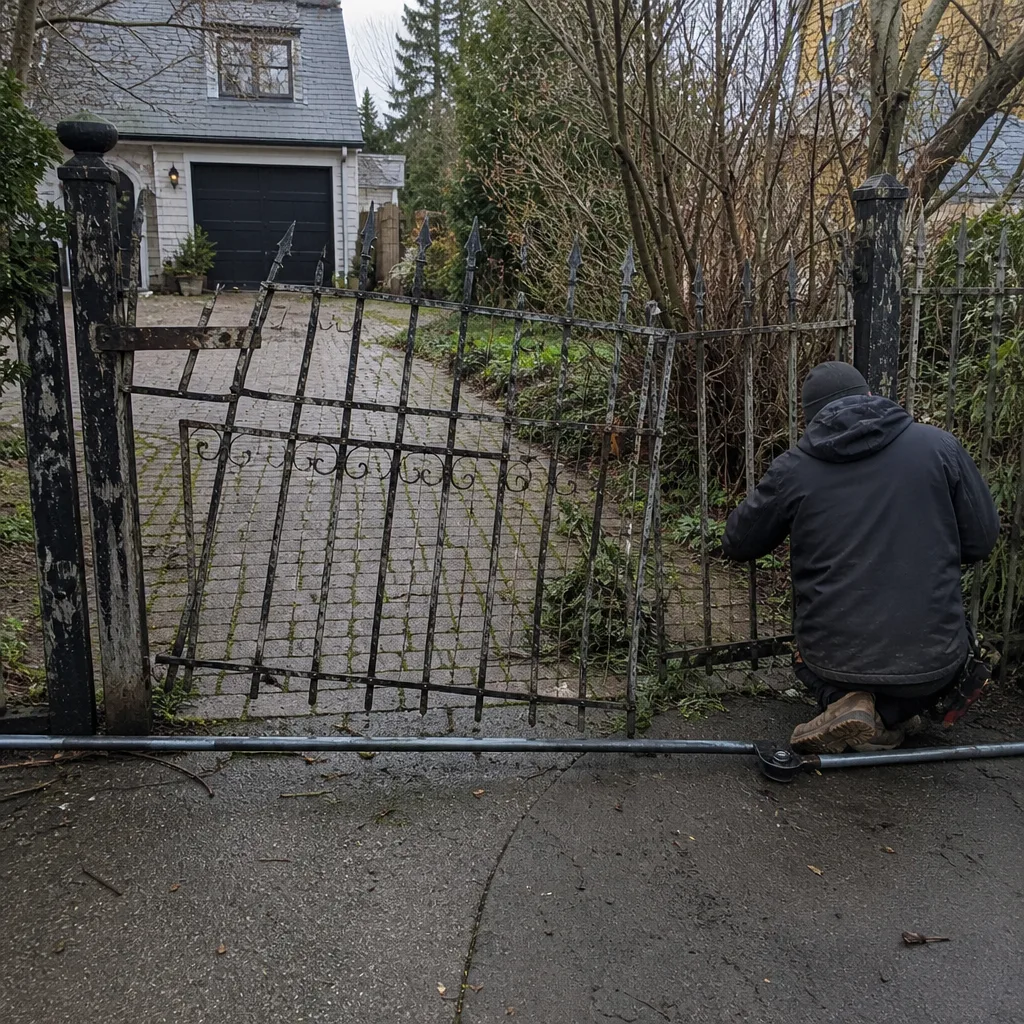 Before
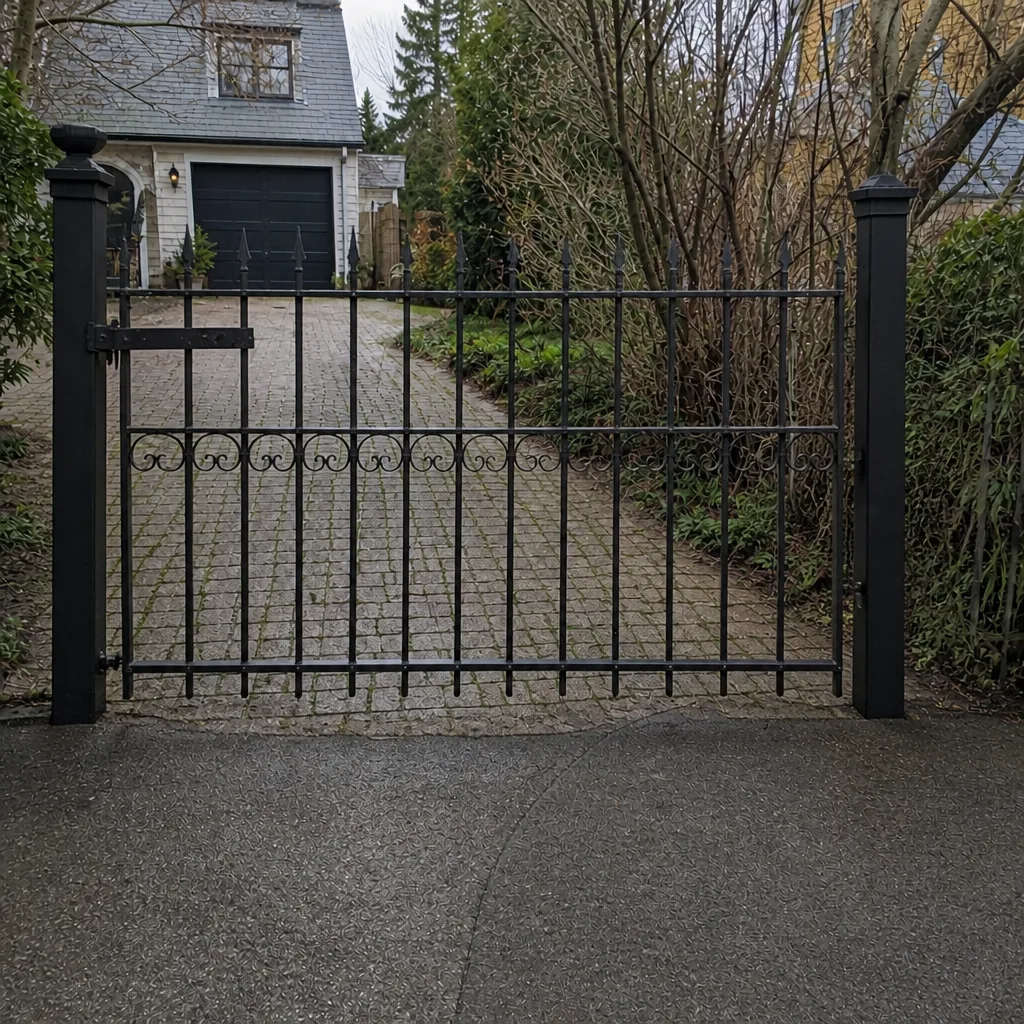 After
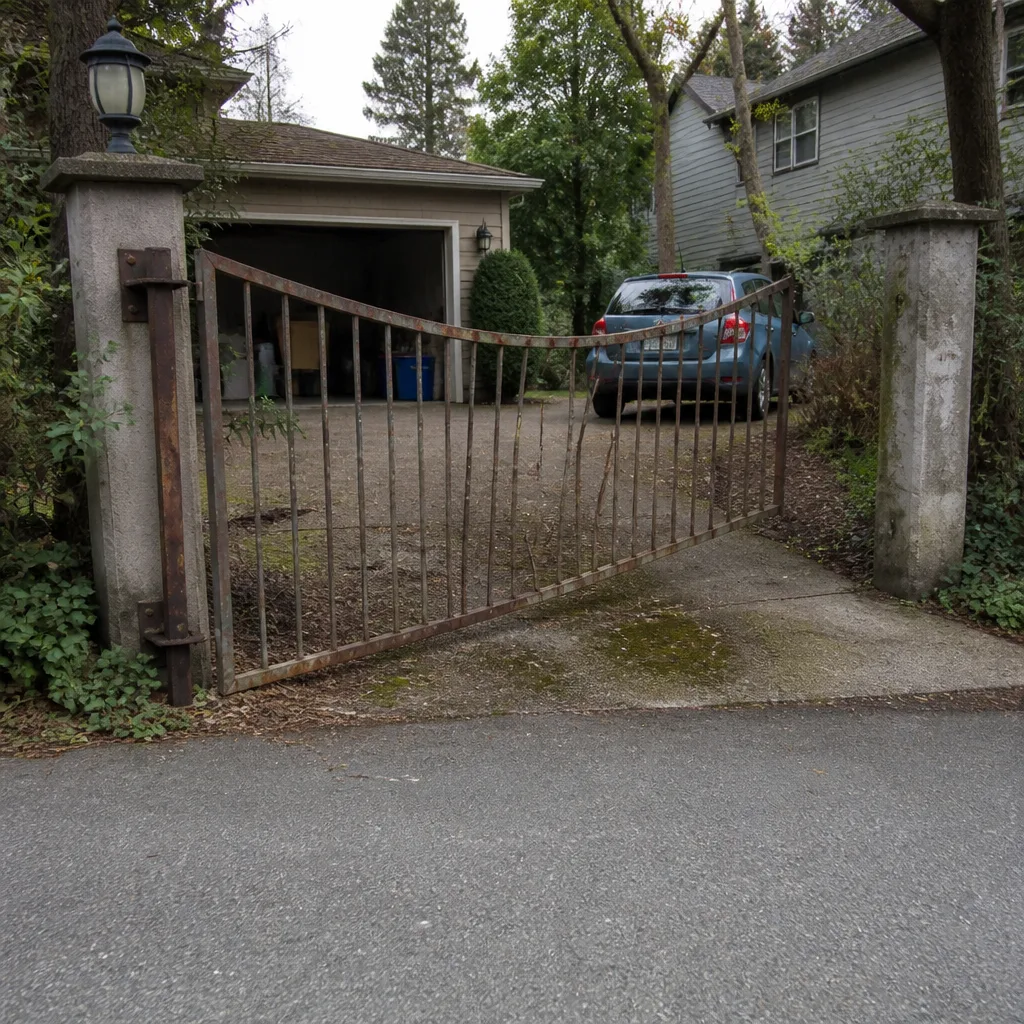 Before
 After
 Before
 After
When to Call a Professional
Call a gate professional when the gate is automated and stops, reverses, hesitates or behaves differently on some cycles; when a safety edge or photo-eye is not reversing the gate on contact; when the operator runs but the gate doesn’t move; when keypads, remotes or intercoms stop triggering the gate; when a sliding gate jumps its track; or when any component of a heavy gate panel is loose, sagging or out of alignment. The same applies when a repair you had done elsewhere hasn’t held, and the fault keeps coming back. These aren’t jobs for a fall-prevention pad and a quick YouTube tutorial – automated gates carry heavy panels and real power connections, and both can injure someone if the diagnosis is wrong. Gate Repair Multnomah Village offers free estimates in Multnomah Village – call (833) 508-9284.
Frequently Asked Questions
Gate repair pricing depends on the fault, the brand, and whether the repair is mechanical, electrical or both. A hinge or alignment fix costs less than a control-board replacement, and a combined fault costs more than either alone. The only way to get an accurate price is a written estimate after an on-site assessment, and that estimate should be agreed before any work starts. Call (833) 508-9284 for an exact quote – estimates are free.
For a gate that’s stuck open, stuck closed, or behaving unpredictably, call us. We answer 24/7. Fast dispatch from 7am to 7pm, Sunday through Friday. Same-day service is often possible, and a phone call is the fastest way to find out what’s available for your property. Call (833) 508-9284.
We work on the gate you already have, across the major automation brands – LiftMaster, FAAC, BFT, Linear, Viking, Ghost Controls, DoorKing, Elite and Mighty Mule. If your installed brand isn’t familiar to the technician, they can usually still diagnose the electrical and mechanical side – but we can confirm the specific brand capability for your system when you call. Call (833) 508-9284 to confirm your brand.
Yes. Access control, wiring, control boards, operator logic and safety edges are all part of the same service for us, so there’s no handoff to a separate subcontractor. That matters because the safety edge and the operator have to be tested together after a repair – not left as two separate visits. Call (833) 508-9284 to talk through your system.
A full gate installation includes the site measure, the panel and hardware, the operator or automation components, the power run, the safety edges and photo-eyes, and the access-control setup and programming. The scope is specified in a written estimate, and the installation is scheduled after measure and ordering rather than same-day. Call (833) 508-9284 for a free measure and a written price.
Often yes, especially for automated gates and where the gate is at or near a property line or affects vehicle access. Permit requirements are set by the jurisdiction that handles your address, so the answer varies by location. Ask the city or county building department directly, and ask your contractor whether they pull permits for gate work before signing. Call (833) 508-9284 if you’d like to talk through how a permitted install usually runs.
The Bottom Line
Hiring a gate repair contractor in Multnomah Village comes down to five checks: verified Oregon licensing and insurance, confirmed technician experience with your installed automation brand, an on-site assessment before any quote is written, normalized terminology so you can actually compare bids, and a written estimate that separates diagnostic work from parts. A gate specialist will pass all five without asking for patience. A generalist with a gate on the truck will hesitate on at least two. The diagnosis is the job – the parts are almost always secondary. Gate Repair Multnomah Village is a gate-specialist company offering gate repair, new installation, motor and opener service, and access-control programming, and you can reach us at (833) 508-9284 for a free estimate.
If you’d rather start with the parent page and read more about what we cover, you can visit Gate Repair Multnomah Village.
Written by the team at Gate Repair Multnomah Village.