
Last updated November 25, 2026
 Wrought iron
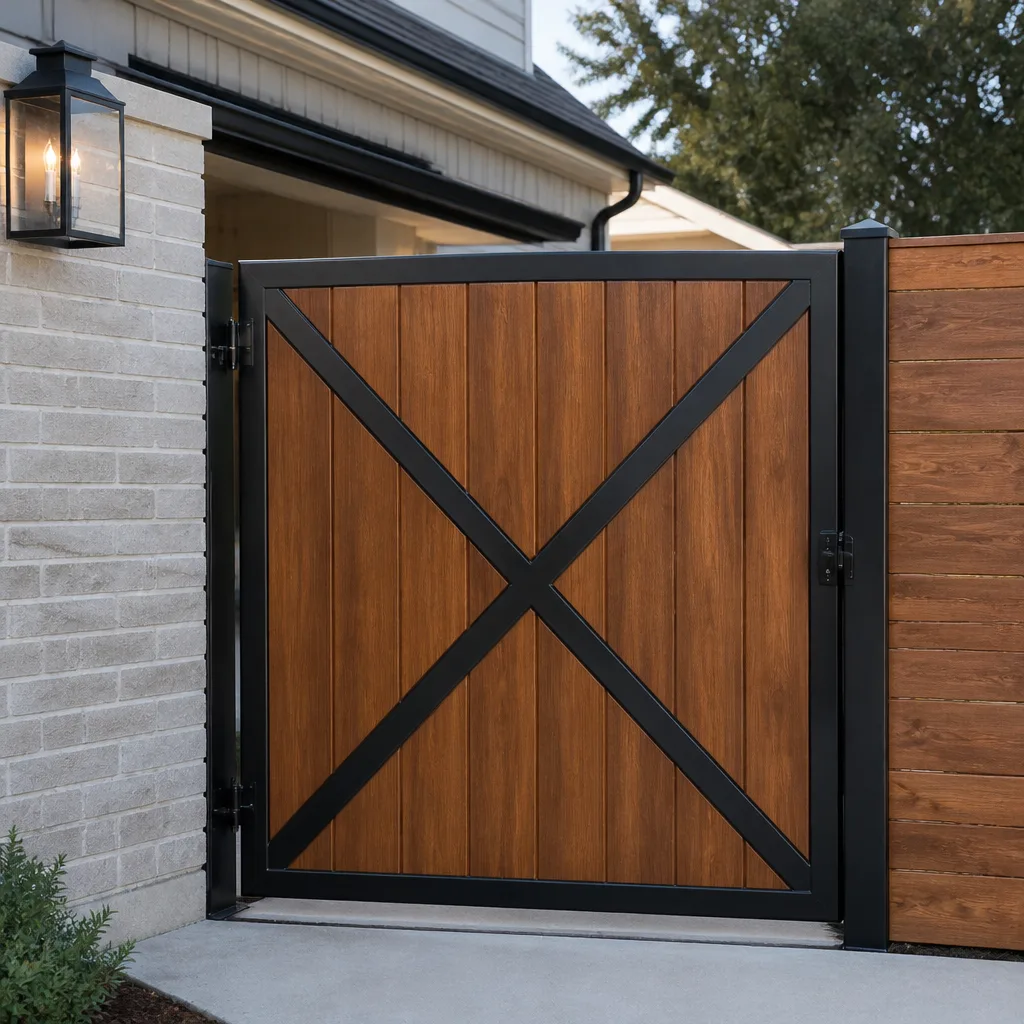 Wood & steel frame
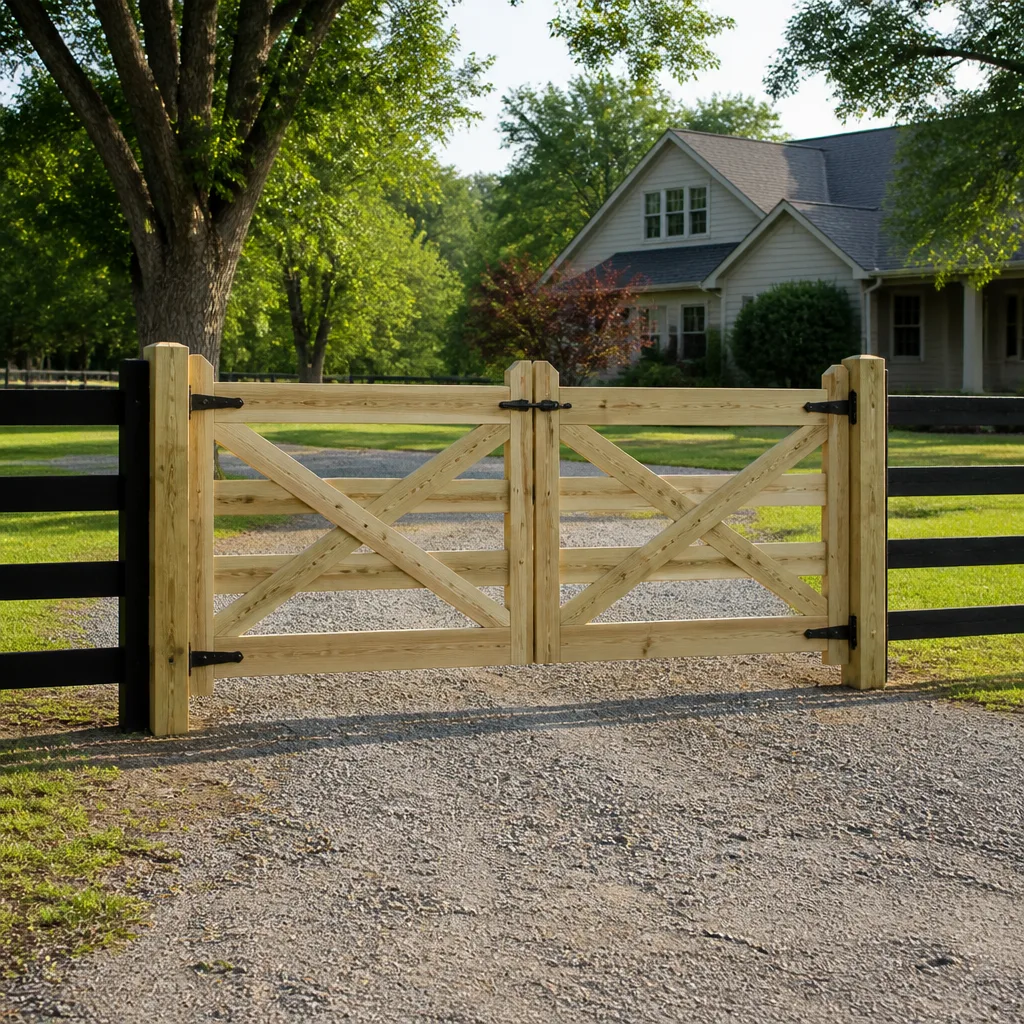 Farm & ranch
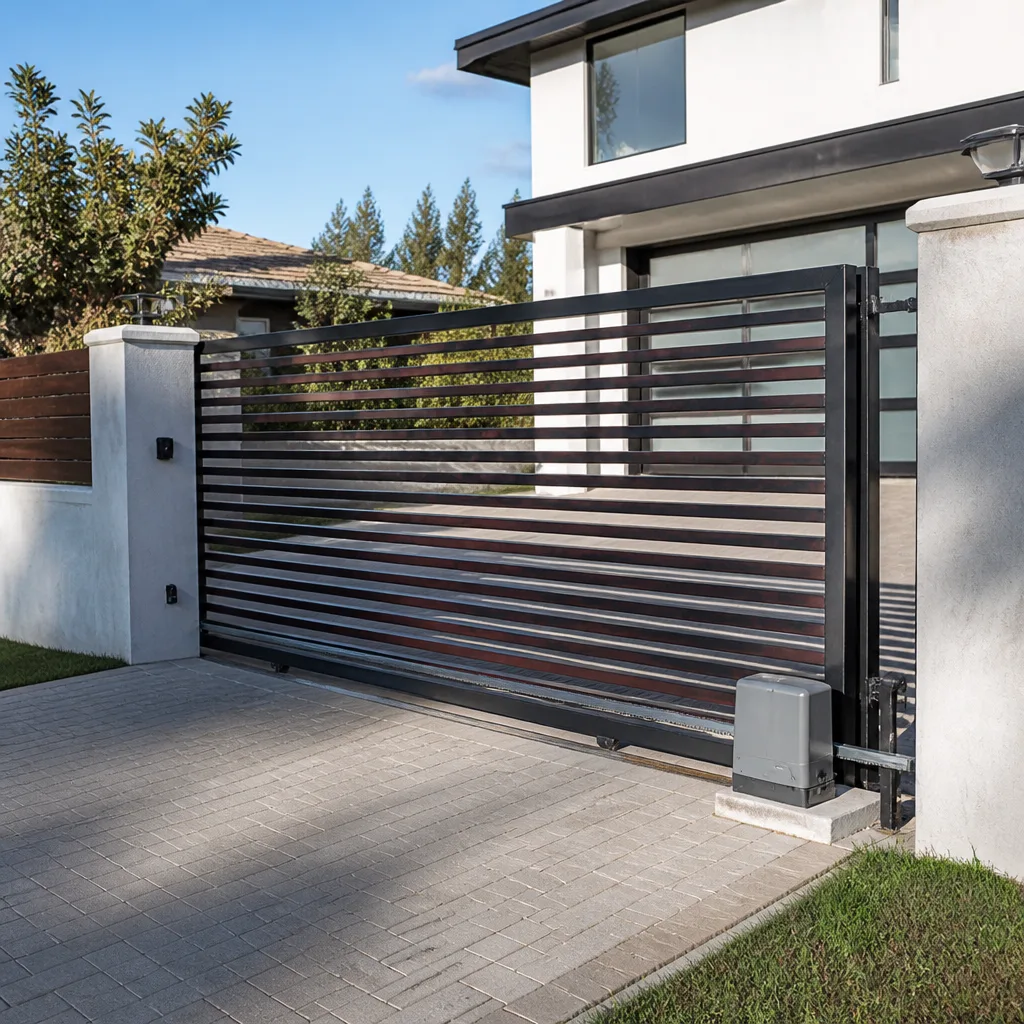 Sliding driveway gates
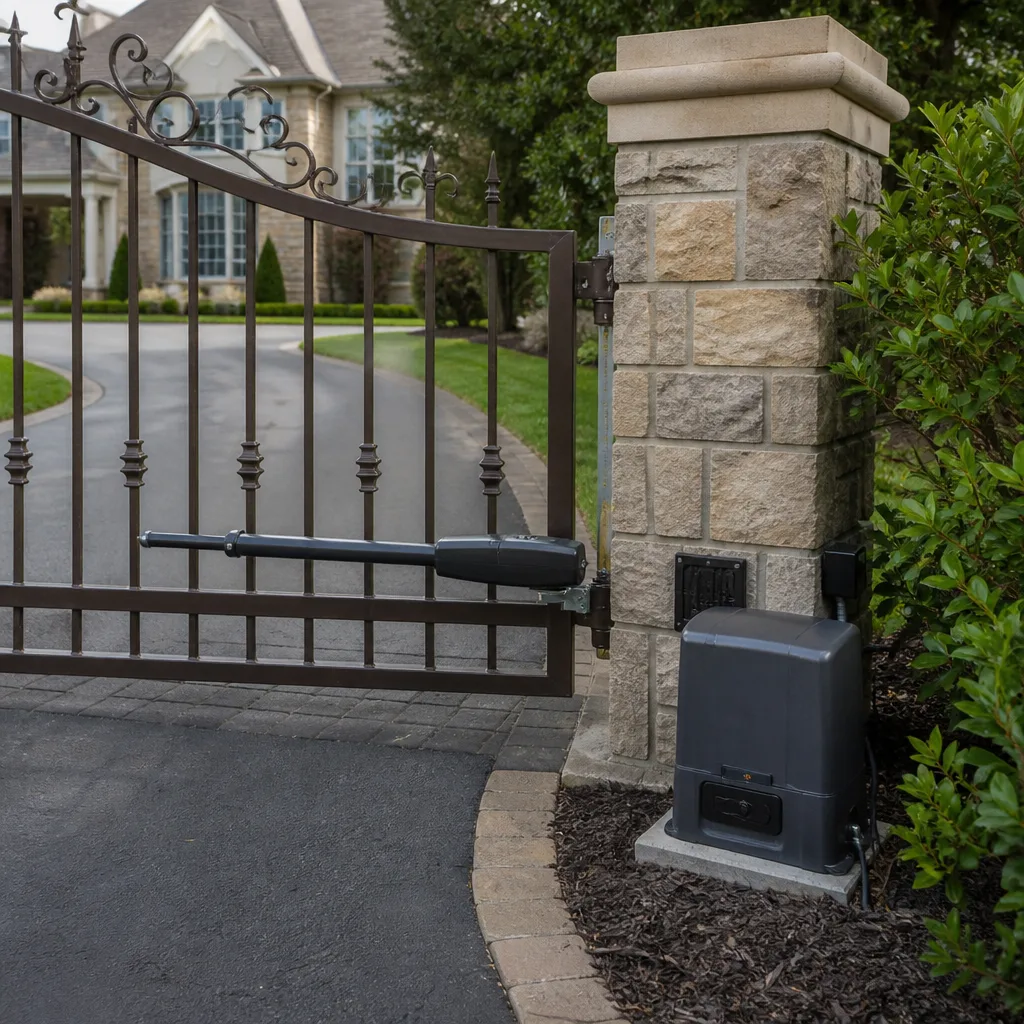 LiftMaster operators
Free on-site gate assessment - hinges, posts, and your LiftMaster or Nice gate operator checked before anything is quoted
The assessment is free and the quote is the invoice.
Get your free estimateGate Repair Maintenance Checklist for Multnomah Village Homeowners
Most gate maintenance checklists tell you to lubricate moving parts. That single instruction can wreck a rack-and-pinion drive, because the wrong lubricant turns into a grit-collecting paste that grinds the teeth down over a season. What goes on a hinge isn’t what goes on a drive gear, and nothing wet should ever get near a limit switch. In this guide we break down the checklist we’d hand a Multnomah Village homeowner: which task goes on which part, how Portland’s wet-then-dry cycle stresses hardware, and what a technician should handle instead of you.
Quick Answer
A good gate maintenance checklist for a Multnomah Village property separates tasks by gate type (swing vs. slide), by timelin (monthly vs. annual), and by who should do them (homeowner vs. technician). Lubricate hinges with a dry film or lithium grease, keep wet lubricants off drive gears and limit switches, test the safety-reverse function under real resistance every month, and have a trained technician handle control boards, wiring, and any adjustment that changes the gate’s operating force.
Styles & brands we work with
- Wrought iron
- Wood & steel frame
- Farm & ranch
- Sliding driveway gates
- LiftMaster operators
Table of Contents
- Why a Generic Checklist Falls Short in Multnomah Village
- Lubricant Compatibility: What Goes Where (and What Never Does)
- Swing Gates vs. Slide Gates: Different Parts Fail First
- How to Test the Safety-Reverse Function Correctly
- The Wet-Dry Cycle: What Portland Weather Stresses First
- The Monthly vs. Annual Task Split
- Brand-Specific Nuances (Linear, Viking, Ghost Controls, DoorKing)
- The Power and Wiring Rules That Override Everything
Why a Generic Checklist Falls Short in Multnomah Village
Multnomah Village sits in the hills southwest of downtown Portland, where driveways slope, lots are narrow, and a lot of gates are squeezed into spots that would be a straight run in a flatter suburb. That topography changes what fails first. A slide gate on a level track wears its rollers evenly; a slide gate on a graded entry wears the guide rollers and the track edges harder on one side. A swing gate on a slope loads the hinge on the downhill side and works the opener harder every cycle. A manufacturer’s PDF doesn’t know your property, so it can’t tell you which of these to watch.
Then there’s the rain. Portland runs a long wet season and a sudden dry summer, and the transition between the two is where hardware shows stress. Wooden posts swell and shift. Steel tracks rust at the seams. Underground wiring conduits pick up moisture, and operators start tripping or stalling in ways that have nothing to do with the motor.
What makes this checklist different
- Component-specific lubrication. We tell you what lubricant goes on hinges, what goes on rack-and-pinion gears, and what should never touch a limit switch.
- Gate-type separation. Swing gates and slide gates fail differently, and the checklist is written to match.
- Real safety-reverse test. We explain how to test it under resistance, not just watch the gate swing back.
- Seasonal timing. What to check before the wet season and after it, and why the dry months matter more than people think.
- Clear homeowner vs. technician split. Some of these tasks are yours. Some should never be.
We work on the gate you already have, so the checklist has to make sense for a Linear slide gate as much as a LiftMaster swing system. If you want the service side of this, our gate repair in Multnomah Village page covers what we handle in the field.
Lubricant Compatibility: What Goes Where (and What Never Does)
This is the part most homeowners get wrong. Using the wrong lubricant on a drive gear or a limit switch does more damage than no lubricant at all. Here’s a practical mapping by component.
Hinges and pivot points
For exposed gate hinges, use a dry film lubricant (PTFE or silicone-based) or a light lithium grease. Dry film is the better choice in Portland’s damp months because it doesn’t hold grit or trap water the way heavy grease does. A hinge that’s gummed up with a thick dark paste is telling you it was over-lubricated with the wrong product. Wipe it clean before you re-apply anything.
Rack-and-pinion drive gears (slide gates)
Rack gears want a light, dry film lubricant or a proper gear grease applied sparingly. Never use WD-40 or a wet oil spray. Wet lubricants attract dust and pine pollen, then set into a grinding paste that wears the rack teeth. If you can see black residue packed into the tooth valley, the rack is already stressed. Clean it with a soft brush and re-apply a dry film.
Rollers, track, and cantilever wheels
These want clean, not slick. A dry-film lubricant on the roller axle is fine. The track surface itself should stay dry; a greased track collects grit and transfers it straight into the roller bearing. On a track that shows rust, clean the surface and treat it with a rust-inhibiting product, not grease.
Limit switches, control boards, and any electrical housing
Nothing. No oil, no grease, no spray of any kind. Limit switches sit inside or on the operator housing and are usually fine until someone sprays them “for good measure.” Moisture-wicking sprays can bridge contacts in a way that makes a limit switch either stick or coast past its set point. If your gate stops short or over-travels, the limit switch is the likely culprit, and that’s a technician’s check.
Operator-specific service like motor and gearbox work is a separate job, and you can read about it on our gate motor & opener page.
Swing Gates vs. Slide Gates: Different Parts Fail First
A checklist that treats both gate types the same will waste your time and miss the parts that actually wear. Here’s how to think about them separately.
Swing gates: hinge load and opener arm geometry
- Hinge pins and bushings. The top and bottom hinges carry different loads, and on a sloped driveway the downhill hinge takes more. Check for play, visible gap, or a pin that rotates with the gate.
- Gate sag. A gate that has begun to droop at the latch edge is loading its opener. Unless the geometry is right, the opener fights the sag on every cycle.
- Opener arm mounting. On arm-style openers, the mounting bolts and brackets work loose over time. Check the bracket-to-gate connection and the bracket-to-post connection.
- Latch alignment. If the gate bangs into the latch or needs a push to fully close, the gate has shifted or the opener’s limit has moved.
Slide gates: track, rollers, and the rack-and-pinion
- Rollers. Look for uneven wear. A roller flat-spotted on one side usually means the gate isn’t running true.
- Track. The track should be clean and clear. Debris in the guide track is the most common cause of a slide gate stalling, especially after a wind-driven leaf drop.
- Guide rollers. The guide rollers keep the gate vertical. A gate that wobbles or rattles is telling you a guide roller is worn.
- Rack mesh. On a rack-and-pinion drive, the gear teeth should mesh cleanly. If the rack sags away from the gear at any point along its length, you’ll hear a clunk on every cycle.
- Cantilever beams. On a cantilever gate, check the support beam for cracks or deflection. A bending beam will misalign the gate over time.
Whatever the gate, the number of cycles it makes per day matters more than the calendar. A gate used by a household of four cycles far less than a community entry gate, so seasonal maintenance should be timed by usage, not just by season.
How to Test the Safety-Reverse Function Correctly
The safety-reverse function is the single most important piece of gate safety equipment. It stops or reverses the gate when it meets resistance. Most people “test” it by watching the gate swing back after they press the button. That’s not a test; that’s just confirming the gate opens. Here’s the correct way.
- Clear the entire arc or travel path. No people, pets, vehicles, or objects anywhere near the gate.
- Start the gate closing from fully open. Observe the gate as it travels through the full close cycle.
- Introduce controlled resistance mid-cycle. Using a light push against the leading edge (or a proper safety test tool), introduce resistance the way a person or object would encounter the gate. The gate should stop and reverse within the manufacturer’s specified travel distance. Do not force it; a firm, controlled push is enough.
- Repeat at the ends of travel. The gate should respond the same way close to the latch and close to the fully open position. A safety-reverse function that works mid-cycle but fails at the very end is dangerous.
- Test the photo-eye or safety edge if installed. Block the beam or press the edge and confirm the gate stops or reverses as designed.
- Confirm the force-adjustment setting matches your location. If your gate has been re-hung, shifted, or the opener replaced, the force settings should have been re-adjusted to the new load. If they weren’t, the safety-reverse function may not match the gate’s actual weight.
A gate that doesn’t reverse correctly isn’t safe, no matter how smoothly it moves. If you can’t confirm the reverse function works, call a technician. Our gate repair team checks and re-tests this function on every visit.
The Wet-Dry Cycle: What Portland Weather Stresses First
Portland’s wet season and its dry season each put different stress on a gate, and the transition between them is where most hardware problems begin. What to watch, by season:
Entering the wet season (typically October onward)
- Wooden posts. Wood swells with sustained moisture. Check post bases for rot, particularly in the top few inches of any post set into a low area where water pools.
- Steel hardware. Rust appears first at the weld seams, hinge pins, and any spot where the powder coat is chipped. Touch up as soon as you see it.
- Operator housings. Look at the door seals, cable entries, and the underside of the housing. A housing that admits water will show corrosion inside the control board area first.
- Drainage. The surface runoff path matters. If water flows across the gate track or the drive gear on a slide gate, you’ll get grit and rust in a hurry.
- Buried wiring. Conduits that run to the operator can admit water. If a gate starts tripping a breaker or behaving erratically in wet weather, the conduit is one of the first suspects.
Leaving the wet season (typically April onward)
- Check for swelled woodwork. A wooden gate that has swollen may stick, load the opener, or run at an angle. Do not adjust the opener force to compensate; fix the mechanical cause first.
- Dried-out seals and gaskets. Rubber seals that sat wet for months will often dry, crack, and shrink in the first weeks of warm weather. Check operator housing seals, weatherstripping, and cable entries.
- Track and rack alignment. The ground shifts during the dry season as heavy clay soils dry and crack. This is the top cause of a slide gate that ran fine all spring but stalls by July.
- Battery and backup power. Operators with battery backup should be tested. A backup battery that hasn’t been checked all winter may have silently degraded.
For a homeowner in Multnomah Village, the short version is: check structural hardware in the fall before heavy rain, check alignment and electrical in the spring as things dry out. That seasonal rhythm catches most of what happens in this climate.
The Monthly vs. Annual Task Split
If you only do one thing, do the monthly visual walk-around. If you do two, add the annual deep check. Here’s the split.
Monthly (homeowner, 10-15 minutes)
- Walk the full travel path of the gate. Look for debris, loose hardware, and anything that has appeared where it shouldn’t be.
- Press the safety-reverse test. One cycle is enough to confirm the gate stops and reverses.
- Check the gate visually for sag, wobble, or binding. If it doesn’t move smoothly, don’t force it.
- Listen. A change in the sound of the operator is a change in condition. New clunks, squeaks, or grinding are early warnings.
- Check for weather damage if there’s been a storm. Wind-blown branches and debris are a common cause of track blockage on a slide gate in Multnomah Village.
Annual (technician, ideally)
- Full mechanical inspection: hinge pins, bushings, track, rollers, and rack.
- Control board and wiring inspection. Check for corrosion, moisture intrusion, and loose terminals.
- Limit switch check and adjustment. This should be done by a technician because a mis-set limit can drive the gate past its mechanical stop.
- Force-adjustment verification. The safety-reverse function depends on the force settings matching the actual gate load.
- Battery backup test and replacement if needed.
- Lubricant inspection: not just “did you grease it,” but “is the right product on the right part.”
Whichever task is yours, these belong to a technician
Any check that involves opening an operator housing, adjusting limit switches or force settings, or probing electrical connections is a technician job, not a homeowner job. Electrical panels and gate opener wiring carry line voltage and stored energy. A badly handled control board doesn’t just stop working; it can fail in a way that leaves the safety-reverse function dead. If you’re not certain what a component is, call a professional rather than guess.
Brand-Specific Nuances (Linear, Viking, Ghost Controls, DoorKing)
Different automation platforms have their own quirks, and knowing them means a technician doesn’t have to experiment on your gate. We service equipment from LiftMaster, FAAC, BFT, Linear, Viking, Ghost Controls, DoorKing, Elite, and Mighty Mule. A few general observations:
- Linear. Linear operators are common on residential slide gates and often use an adjustable force setting that’s easy to bump if someone was hand-adjusting the gate. If your Linear gate has changed how it behaves, start there.
- Viking. Viking swing gate operators have their own arm-geometry requirements, and a re-hung gate can defeat them. If the gate has shifted, the opener has to be re-set to match.
- Ghost Controls. Ghost Controls systems are typically on residential swing gates and often run safety edges and photo-eye accessories. Make sure whatever is installed keeps working; don’t bypass a safety accessory to “get it working.”
- DoorKing. DoorKing systems are common on multi-user entry gates, and access-control programming is part of the maintenance picture. Keypads, call buttons, and multi-user logic need to be reviewed on a schedule, not just when they fail.
Our technicians have up to 14 years of experience on these platforms, and we’re trained across competing systems. That matters when the honest answer is that a gate needs its opener replaced, not because the brand is unknown to us but because the mechanism has genuinely reached the end of its service life.
Access control isn’t optional to the checklist
If your gate has a keypad, intercom, or entry system connected to it, that’s part of the maintenance checklist. Keypads accumulate moisture, buttons stick, and user codes drift. A gate that operates perfectly but won’t let the right people in isn’t a solved problem. Access-control programming for both residential keypads and multi-user systems is a service we handle directly.
For the bigger picture on the automation side, our gate motor & opener page covers what we service.
The Power and Wiring Rules That Override Everything
The operator and its wiring run at line voltage in most cases, and a gate that is opening or closing has enough force to injure a person. These are not discretionary items.
- Never open the operator housing or control board enclosure to check or adjust anything unless you’ve disconnected power at the source and know exactly what you’re looking at. Even then, an operator with a battery backup can have stored energy.
- Never bypass a safety edge, photo-eye, or safety-reverse function to get a gate working. It’s tempting when a sensor is misbehaving. It’s also the failure point that gets people hurt.
- Never probe or adjust wiring while the gate is powered. If the gate is tripping a breaker or behaving erratically in wet weather, stop using it and call a technician.
- Never force a gate that has stalled. A gate that won’t move is telling you the motor or the mechanical linkage has a problem. Forcing it can bend the gate or damage the operator gearbox.
We handle wiring, control boards, and motor logic as a core service. If your gate has a hard electrical fault, the right move is to have a trained technician look at it.
Common Mistakes to Avoid
- Using WD-40 or a wet oil on a rack gear. It attracts dust and pollen, then sets into a grinding paste that wears the teeth. Use a dry film or proper gear grease, sparingly.
- Greasing the track on a slide gate. The track should stay clean and dry. Grease on the track pulls grit into the roller bearing and wears it out faster.
- Bumping the force setting to fix a sticking gate. A gate that sticks is telling you something is physically wrong: a hinge, a post, or a swell. Raising the force masks the problem and makes the safety-reverse function less effective.
- Skipping the safety-reverse test after a storm. Wind and debris can shift the gate alignment, and a gate that was fine last week may not reverse correctly now. Test it whenever the weather has been rough.
- Spraying lubricant into a limit switch “to clean it.” Limit switches are not meant to be lubricated. Wet products trap dirt and can interfere with contact. If a limit switch sticks, it needs to be inspected, not sprayed.
- Assuming a brand-specific problem requires a new gate. Most of the time, the gate is fine and the opener needs service. A technician trained on the installed brand can tell the difference; a generalist may recommend replacement simply because the system is unfamiliar.
- Treating a multi-user entry gate like a residential one. A community or shared-access gate with a DoorKing controller or similar has more users, more cycle counts, and more reason for scheduled maintenance. Applying a residential checklist to it will miss the access-control side.
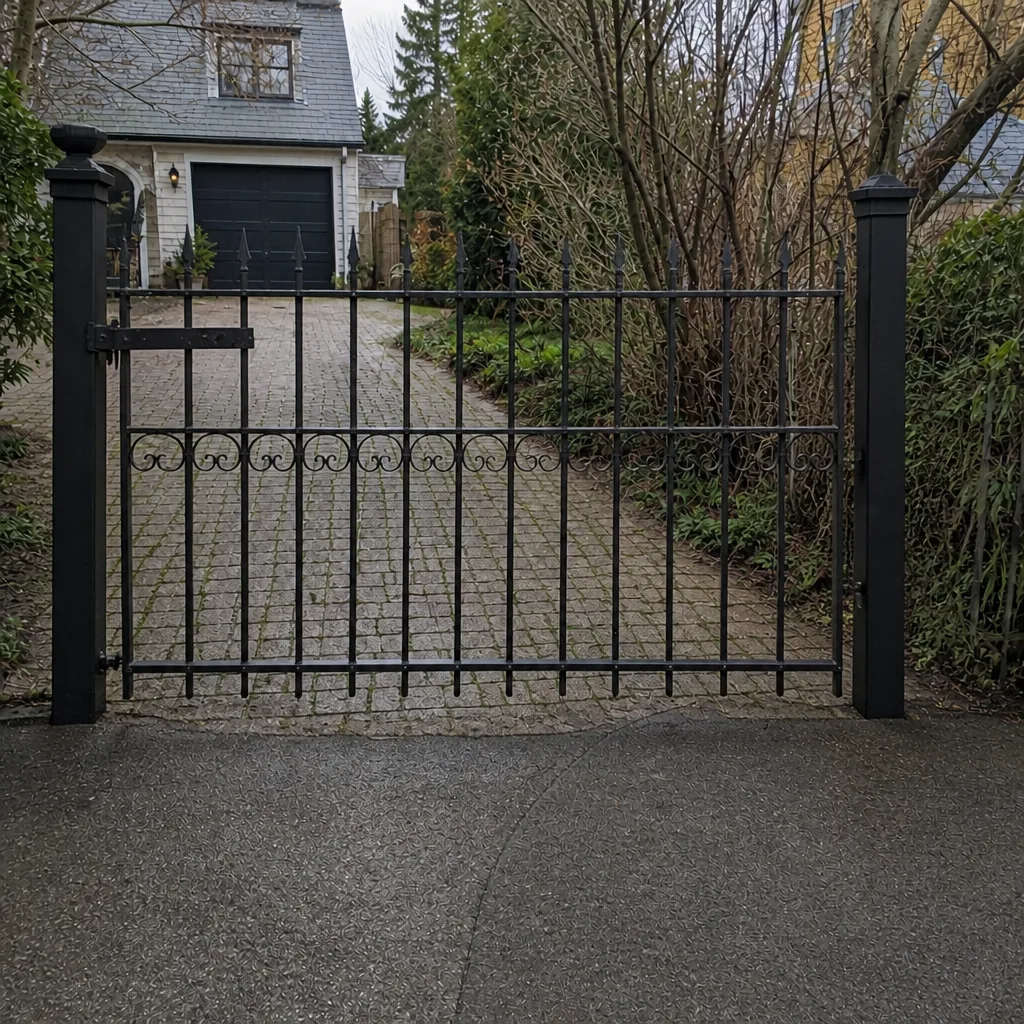
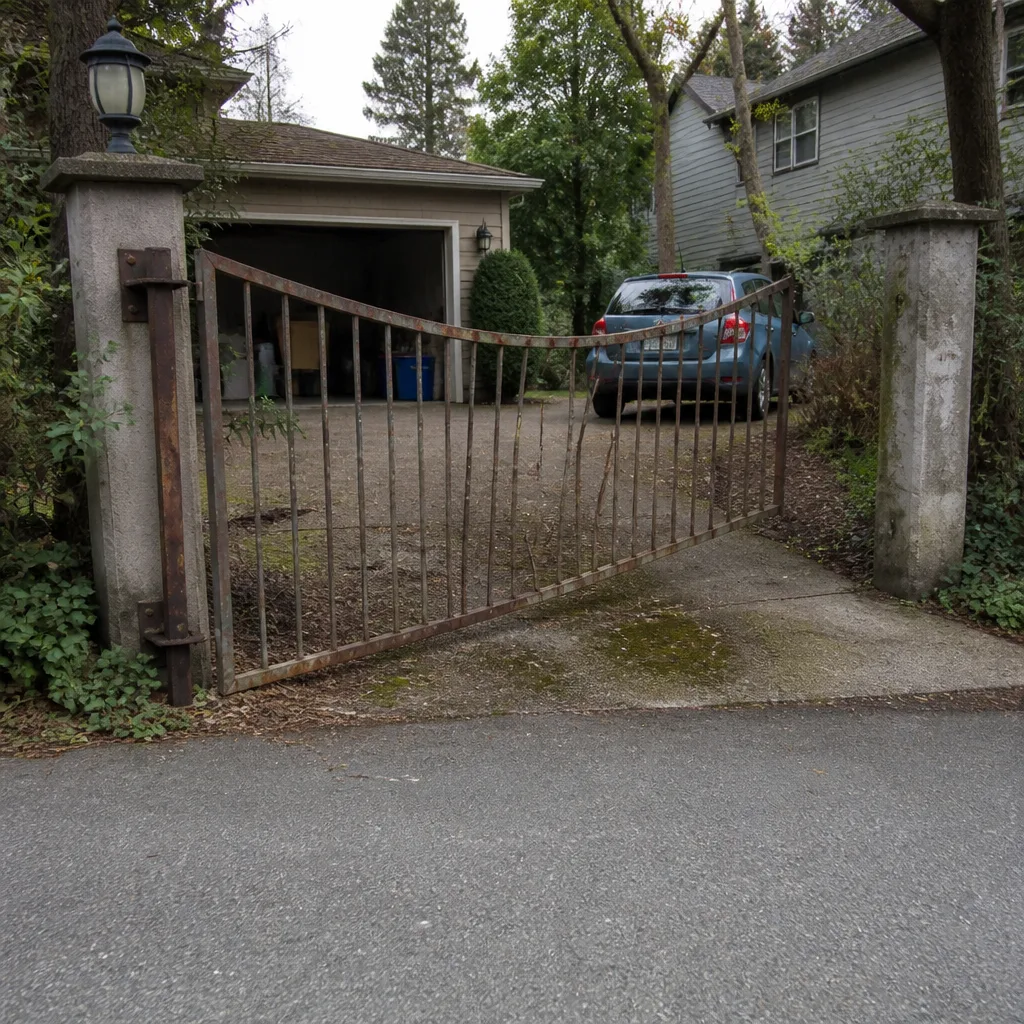
See the difference
 Before
 After
 Before
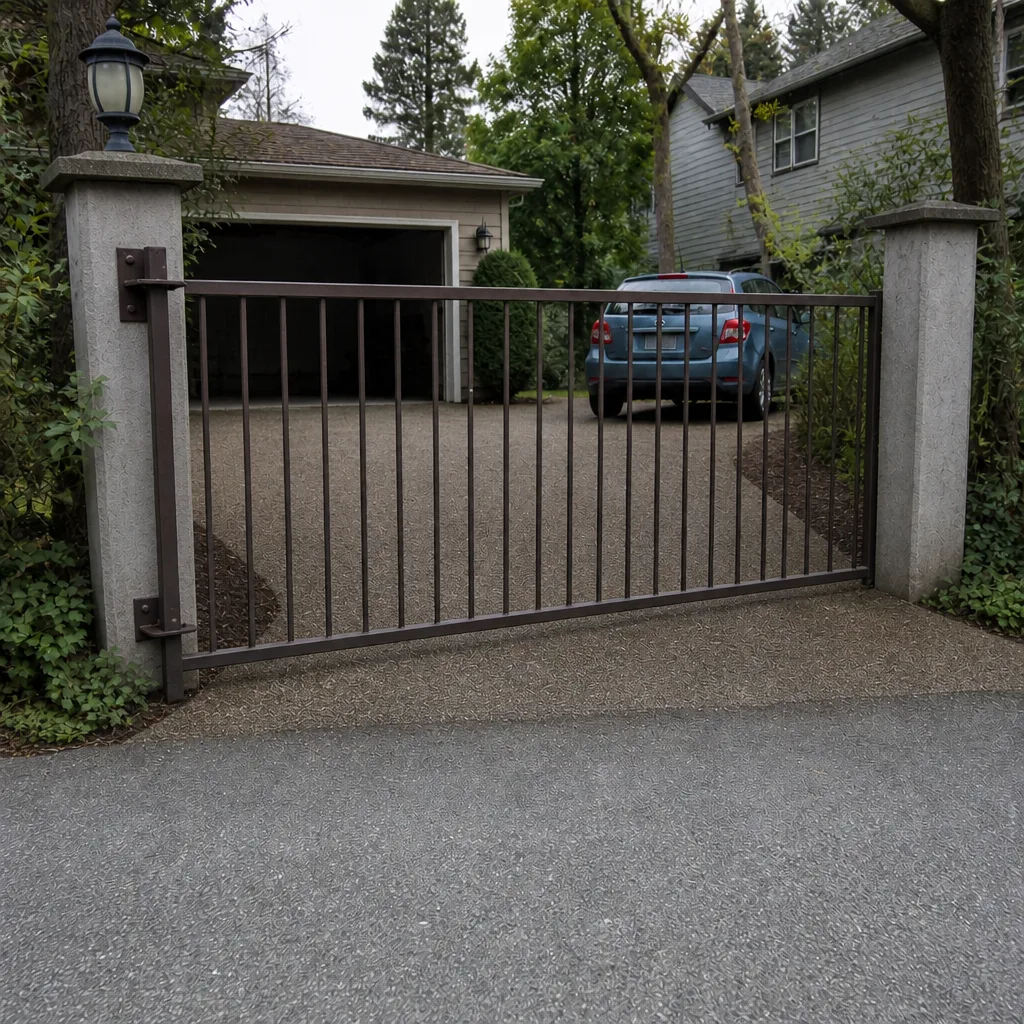 After
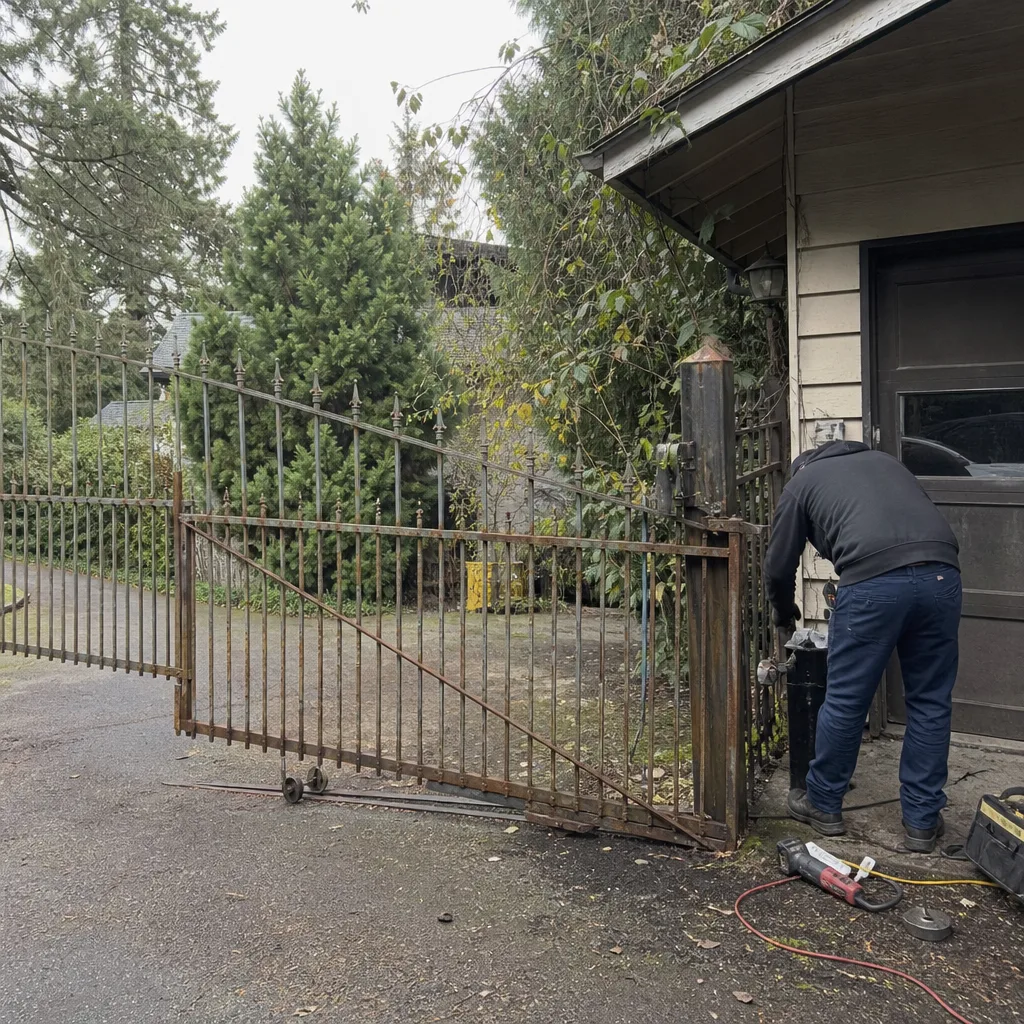 Before
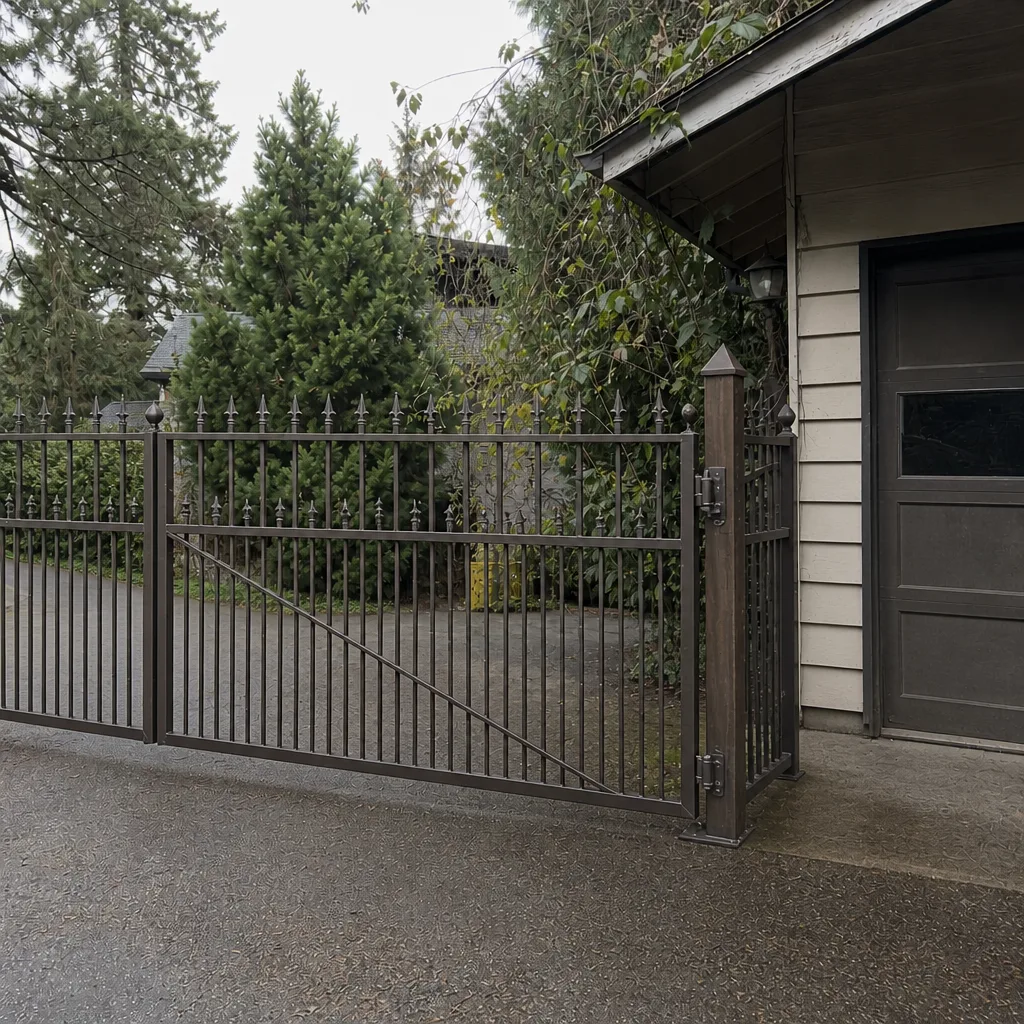 After
When to Call a Professional
Call a professional when the gate won’t move, moves erratically, or stops and reverses at the wrong point in its travel. Call when you can see or smell burning at the operator, when the gate trips a breaker, or when it behaves differently in wet weather than in dry. Call when the safety-reverse function fails any part of the test, even if the gate otherwise runs. Call when the gate has visibly sagged or shifted, because a mechanical problem left alone loads the opener and can lead to a larger repair. And call when your access-control system stops accepting codes or when a keypad has begun to fail.
Gate Repair Multnomah Village offers free estimates in Multnomah Village. Call (833) 508-9284 to get your gate checked.
Frequently Asked Questions
Once a year for a deep mechanical and electrical check, plus a monthly visual walk-around and safety-reverse test you can do yourself. Portland’s wet-dry cycle makes the fall and spring check-ins particularly valuable, because that’s when alignment and seal problems show up.
You can lubricate exposed hinges and pivot points with a dry film or light lithium grease, and the rack gear on a slide gate with a dry film applied sparingly. Do not lubricate limit switches, control boards, or any electrical housing, and keep wet oils off the track and rack. If you’re unsure what a component is, let a technician handle it.
It usually means the safety-reverse function is either mis-set or has been affected by a mechanical change in the gate’s load. A hinge that has stiffened, a gate that has sagged, or a force setting that has drifted can all cause this. It’s a technician’s check, because correcting it may involve both the mechanism and the force adjustment. Call (833) 508-9284 for an exact quote; estimates are free.
Both types benefit from a specialist when the problem is electrical or control-board related. A slide gate with a rack-and-pinion drive and a swing gate with an arm-style opener each have their own mechanical wear points, but both share the same electrical and safety systems. A technician trained on the installed brand can diagnose either. We service Linear, Viking, Ghost Controls, DoorKing, and other major platforms.
First, stop using the gate and don’t force it. Common causes in this climate include moisture in the conduit or operator housing, a safety sensor that’s gotten wet, and a grounded or corroded wire. These are all wiring or control-board issues, which means a technician should look at them. Don’t attempt to probe or adjust the wiring yourself.
Yes. Keypads accumulate moisture and grit, buttons wear or stick, and codes can drift or lock out. A keypad or intercom is part of the gate’s overall care, not a separate gadget. If your gate uses an access-control system, it should be part of the annual service. For a new entry system or programming help, our gate installation team handles access control directly.
The Bottom Line
The checklist that keeps a gate working in Multnomah Village isn’t the one from a manufacturer’s PDF. It’s built around the parts that actually wear here (hinges and alignment in the wet season, track and rack in the dry), the right lubricants on the right components (dry film on hinges and rack, never wet oil on the track or a limit switch), and a real safety-reverse test that introduces resistance mid-cycle. Handle the monthly walk-around yourself. Hand off control boards, wiring, limit switches, and force settings to a trained technician. And when the gate is behaving in a way you can’t explain, call before you force it. We work on the gate you already have, and we can tell you whether a repair or an upgrade is the honest answer.
Call (833) 508-9284 for a free estimate. We answer 24/7. Fast dispatch from 7am to 7pm, Sunday through Friday.
Written by the team at Gate Repair Multnomah Village.