
Last updated November 25, 2026
 Wrought iron
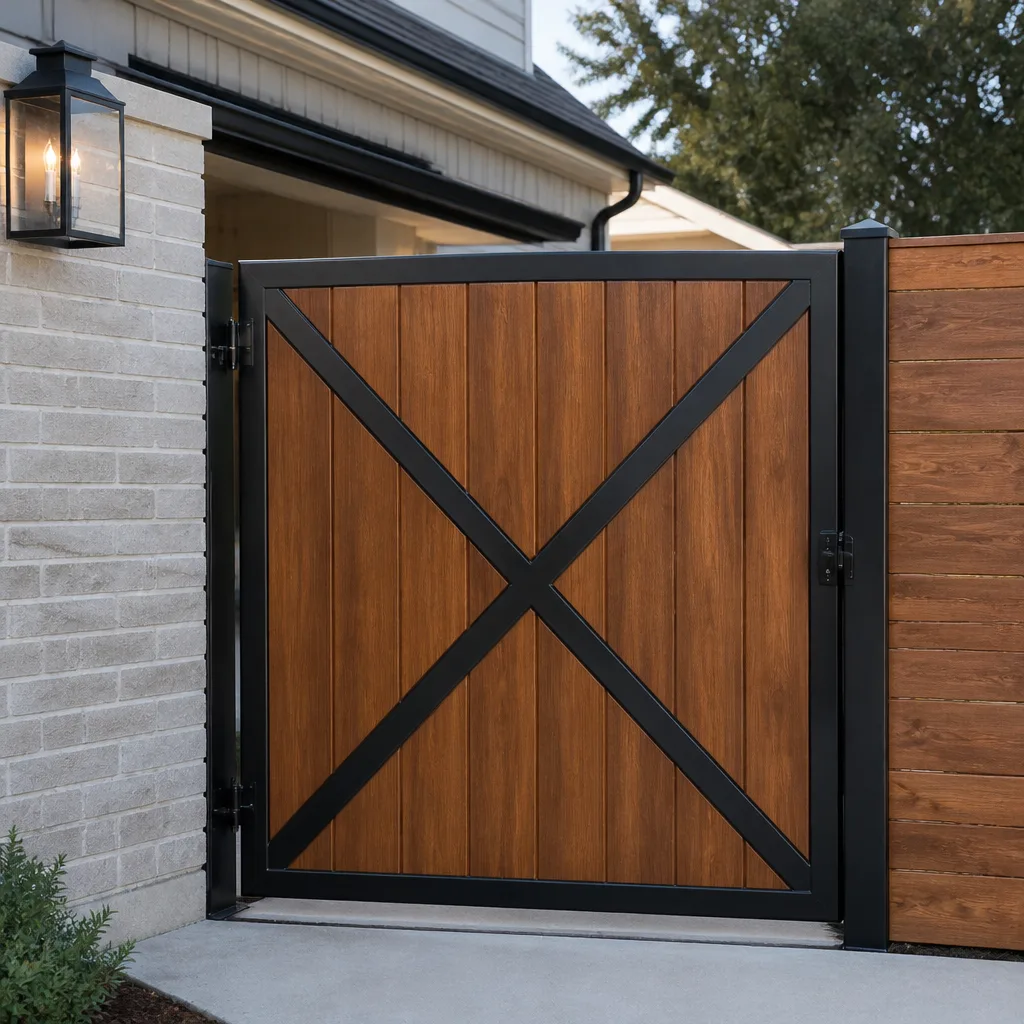 Wood & steel frame
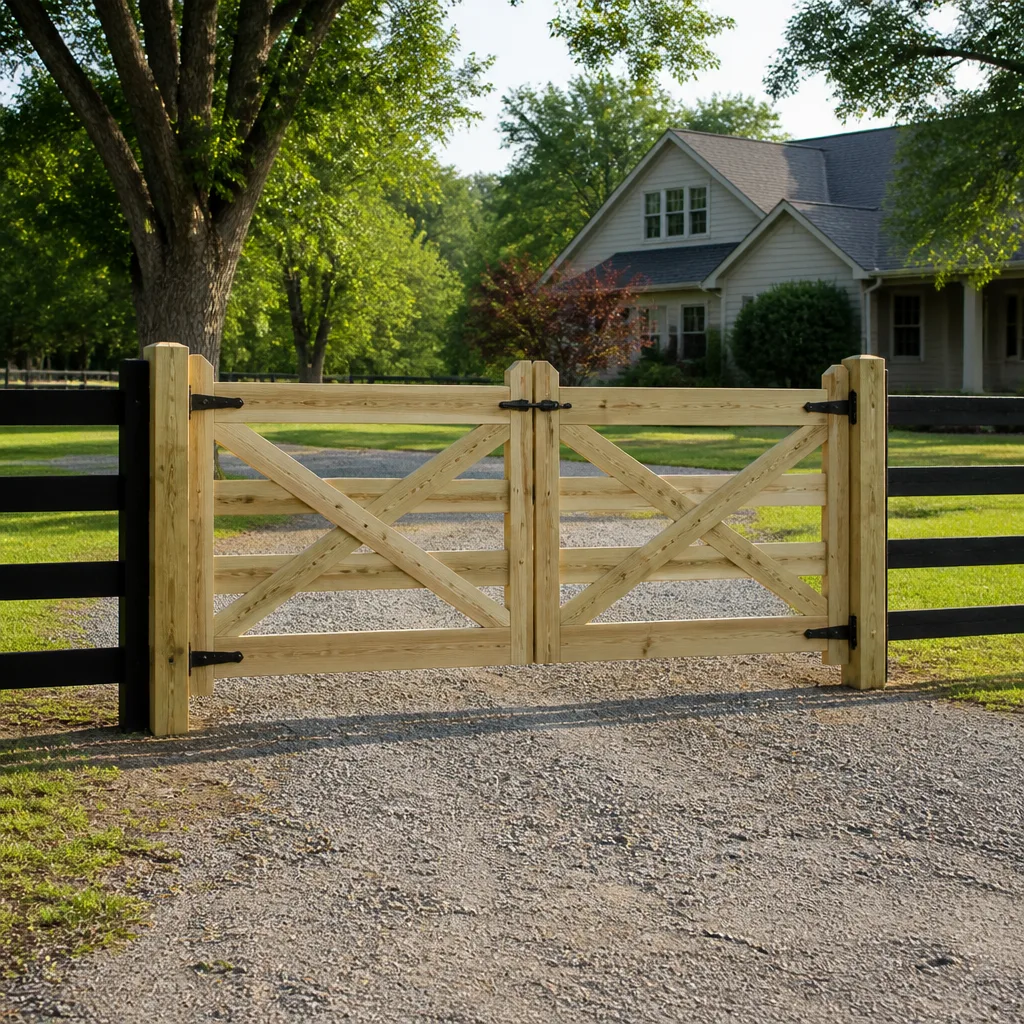 Farm & ranch
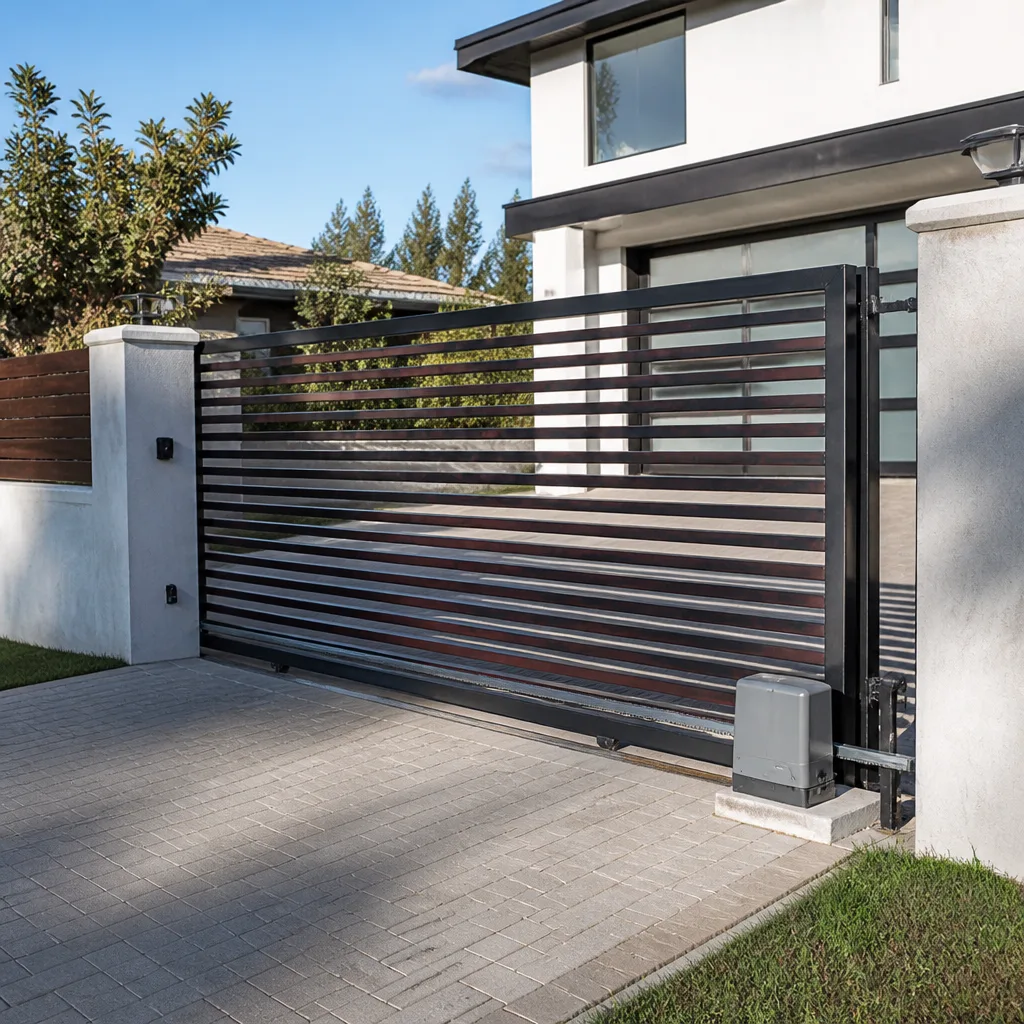 Sliding driveway gates
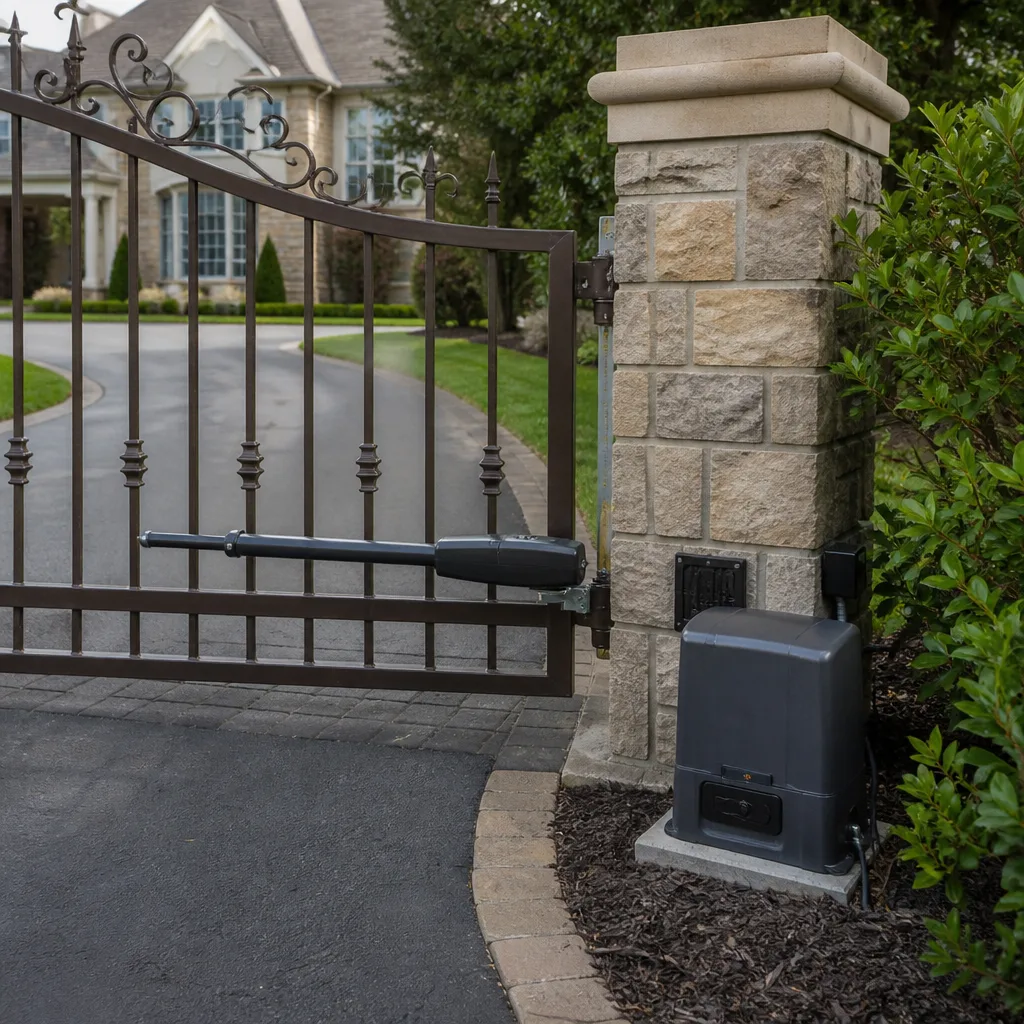 LiftMaster operators
Free on-site gate assessment - hinges, posts, and your LiftMaster or Nice gate operator checked before anything is quoted
The assessment is free and the quote is the invoice.
Get your free estimateDIY vs Professional Gate Repair: The Multnomah Village Homeowner’s Decision Guide
Most gate repair advice online frames the DIY question as a matter of confidence or skill. That’s the wrong axis. The real dividing line is the type of system you own. A sticky latch on a manual swing gate is genuinely homeowner territory. A gate that stops mid-travel because its photo-eye alignment shifted is not, and not because the fix is mysterious. It’s because verifying the safety system afterward needs a tester and a procedure, not a visual once-over. In this guide we’ll walk through that line task by task, explain what a failed DIY repair can cost you on a control board and a warranty, and describe how property owners in Multnomah Village should think about liability when a gate they adjusted themselves is involved.
Quick Answer
Manual gate hardware – hinges, latches, sagging swing adjustments, gravel drag on a slide track – is reasonable DIY work for a careful homeowner. Anything that touches gate automation, safety sensing, or high-tension hardware belongs with a professional. That means control boards, wiring, photo eyes, safety edges, loop sensors, and motor or opener logic. The physical risk and the liability exposure both change once electronics are involved, and the tools needed to verify the repair are not things most homeowners own.
Styles & brands we work with
- Wrought iron
- Wood & steel frame
- Farm & ranch
- Sliding driveway gates
- LiftMaster operators
Table of Contents
- Why Two Kinds of Gate Repair Calls Look So Different
- Manual Gates vs Automated Gates: Where the DIY Line Falls
- What’s Safe for a Homeowner to Do Yourself
- Why Safety Systems Need Calibrated Testing, Not a Visual Check
- Oregon Liability When a Self-Repaired Gate Injures Someone
- The Tools That Separate DIY From Professional Work
- What a Failed DIY Repair Does to Your Control Board Warranty
- Why Brand Familiarity Changes the Repair-or-Replace Conversation
Why Two Kinds of Gate Repair Calls Look So Different
Gate technicians tend to see two categories of call. The first is a problem that started as a problem: a motor that quit, a hinge that finally gave out, a keypad that stopped accepting codes. The second is a problem that started as a homeowner repair. The gate was working imperfectly, someone adjusted it, and now it doesn’t work at all – or it works unpredictably, which is often worse.
The second category takes longer and costs more. Not because the original fault was serious, but because diagnosing a system that has been adjusted out of its baseline means working backward before you can work forward. A photo-eye that was nudged “to fix” a stopping issue can leave a gate that now reverses at random. A control board that got a jumper wire added to bypass a limit switch can hide the actual failure behind a second, self-inflicted one.
That pattern is worth knowing before you pick up a screwdriver. In our experience, the disciplined DIY repairs – the ones that stay in homeowner territory – almost never create this problem. It’s the exploratory repairs, the ones where someone opens a control box to “see what’s going on,” that turn a small repair into a longer one.
We work on the gate you already have, which means we see a lot of both categories. Brands like LiftMaster and FAAC are common around Multnomah Village, and the installed systems vary quite a bit in age and configuration. That variety is exactly why a clear decision rule beats a general “call a pro” message. You’ll make better choices with a rule you can apply to your own gate than with a blanket warning.
Manual Gates vs Automated Gates: Where the DIY Line Falls
The single most useful question to start with is simple: does your gate move under its own power? If it doesn’t, you’re dealing with mechanical hardware and the DIY options are real. If it does, the calculation changes, and it changes sharply.
Manual swing and slide gates
Manual gates are mechanical. The failure points are hinges, posts, latches, stops, and the track or the ground surface under a slide gate. These are things you can inspect, understand, and in many cases adjust with ordinary tools. A gate that drags because gravel has built up under the slide track isn’t a professional repair. Neither is a latch that needs its strike plate nudged a quarter inch.
What’s not DIY territory even on a manual gate: post footing problems. A gate post that has shifted or loosened in wet soil needs to come out and go back to proper footing depth. That’s not an adjustment, it’s a rebuild, and getting it wrong means the gate sags again within a season.
Automated gates
Automated gates carry three separate risk layers at once: stored mechanical energy, line voltage, and a safety system whose whole job is to prevent injury to people and vehicles. Any of those alone justifies professional work. Together, they make the case clearly.
- Motor and opener internals: gearboxes, limit switches, encoder assemblies. These fail in ways that look like control problems.
- Control boards and wiring: low-voltage logic sitting inches from line voltage, often in an outdoor enclosure.
- Safety devices: photo eyes, safety edges, loop sensors. These need calibration and testing, not just installation.
- Access control: keypads, intercoms, entry systems, multi-user programming for property managers.
Around Multnomah Village, we see a mix of older automated driveway gates and newer installations, and the older systems are where homeowners are most tempted to experiment. Parts availability on some older boards pushes people toward workarounds. A workaround on a control board is almost always more expensive than the repair it was meant to avoid.
What’s Safe for a Homeowner to Do Yourself
This is the list we’d hand to a neighbor. Every item here is mechanical, requires no electronics knowledge, and can be undone if it doesn’t work. If the task isn’t on this list, treat it as professional work until someone qualified tells you otherwise.
- Clear the travel path. Gravel, soil, and debris under a slide gate cause drag that mimics motor failure. Clearing the track is free and fixes real problems.
- Lubricate hinges and moving joints. A dry hinge loads the opener. Lubrication is routine, low-risk, and extends hardware life.
- Adjust a latch or strike plate. Small alignment tweaks on manual gates are ordinary homeowner work. Small adjustments on an automated gate usually mean the gate has moved, which is a different problem.
- Inspect and tighten visible fasteners. Bolts working loose on hinges and brackets are common and easy to address. If a fastener keeps coming loose, something structural is moving.
- Check the physical condition of your safety devices. Look at whether photo eyes are dirty or physically misaligned, whether a safety edge is damaged. Cleaning a lens is fine. Realigning the beam and verifying the gate’s response is not the same job.
- Keep vegetation clear. Trimming back growth that triggers a photo eye or blocks a gate’s travel solves more problems than people expect.
Notice what’s absent: nothing on this list involves opening a control enclosure, disconnecting a battery, bypassing a limit switch, or adjusting a gate arm’s force setting. Those are the repairs that create the second category of call we described at the top.
Why Safety Systems Need Calibrated Testing, Not a Visual Check
This is the point competitors skip, so it’s worth slowing down on. A gate’s safety system is not a switch that’s either working or broken. It’s a set of devices that must interrupt the gate’s motion within a specific response, and that response has to be verified with a measurement. Looking at a photo eye and saying “it’s aligned” tells you almost nothing about whether the gate will stop when a child walks into its path.
Here’s what testing actually involves on a typical automated system:
- Photo-eye response: verifying the beam is not just aligned but that interruption reliably triggers a stop or reversal at multiple points in the gate’s travel, not only one.
- Safety edge sensitivity: confirming the edge actuates at the pressure it’s rated for, which requires a method to apply and measure force.
- Loop sensor detection: confirming the vehicle loop detects a bicycle, a child, and a car – different masses produce different signatures, and a marginal loop can miss the lighter ones.
- Force and obstruction settings: verifying the opener’s own obstruction response matches the gate’s actual weight and travel, which changes as hardware wears.
A homeowner can observe that the gate reverses when they wave a hand through the beam. That’s a useful check, and we’d rather you do it than not. But it doesn’t confirm the response works at the far end of travel, in cold weather, or with a partially depleted battery backup. Those conditions are where safety systems fail quietly.
Multnomah Village’s wet winters matter here. Water intrusion into photo-eye housings and edge wiring is a common cause of intermittent safety faults, and intermittent is the worst failure mode because the gate works most of the time. When we handle gate repair, verifying the safety system after any fix is part of the job, not an optional add-on.
Oregon Liability When a Self-Repaired Gate Injures Someone
Oregon property owners owe a duty of reasonable care to people who come onto their property. For a gate, that duty means keeping the gate and its safety systems in reasonably safe condition, and it applies whether the gate is manual or automated. What “reasonable maintenance” means in practice is where homeowners get into trouble.
Reasonable maintenance generally means the property owner took steps a prudent person would take: inspecting the gate, addressing known problems, keeping safety devices functional, and using qualified help for work beyond their competence. A self-repaired gate that injures someone invites the question of whether the repair itself was reasonable. If the repair disabled or degraded a safety device, or if it was done on a system the owner wasn’t qualified to work on, that question gets harder to answer.
This matters most for property managers and for homeowners with automated gates near a sidewalk or shared driveway. A gate that closes on a delivery driver, a pedestrian, or a child is a serious event, and the first thing an insurer or attorney will ask is who worked on the gate last and what was done.
- Keep records of professional service. A documented service history is the clearest evidence of reasonable maintenance.
- Don’t disable a safety device, even temporarily. “Just until the part comes in” is the sentence that ends badly.
- Treat intermittent faults as open problems. A gate that sometimes fails to reverse is not a gate that’s mostly fine.
- Know when to stop. Competence is a legal standard as well as a practical one.
We’re not attorneys and this isn’t legal advice. It’s the pattern we see, and it’s why we treat safety verification as non-negotiable on every automated gate we touch in Multnomah Village.
The Tools That Separate DIY From Professional Work
One reason professional labor costs what it does is that the right tools make a job faster and more certain. That’s not a sales argument, it’s just how the work goes. Here’s the honest split.
Tools a homeowner can reasonably own
- Adjustable wrench and socket set for hinge and bracket bolts
- Screwdrivers, including the security-bit types some enclosures use
- Spirit level for checking post and gate alignment
- Multimeter for basic continuity checks (useful, but reading a control board is a different skill)
- Lubricant, a stiff brush, and a shovel for track and travel-path work
Specialty tools that change the job
- Photo-eye and safety-edge test equipment for verifying response and sensitivity
- Loop sensor testing gear for confirming detection across different vehicle masses
- Manufacturer diagnostic access for control board fault codes on brands like LiftMaster, BFT, and Linear
- Force-measuring equipment for obstruction and edge calibration
- Proper wire termination and weatherproofing tools for outdoor low-voltage work
When a technician arrives with the right tester and confirms the safety system in a few minutes, that speed is what you’re paying for. The alternative – a homeowner buying test equipment they’ll use once, then guessing at the result – costs more in the end. If your gate needs a motor or opener replaced rather than repaired, that’s gate motor & opener work, and it’s measured and scheduled rather than rushed.
What a Failed DIY Repair Does to Your Control Board Warranty
Control board warranties generally don’t survive unauthorized work. That’s the short version, and it’s the one most homeowners don’t hear until after the fact. Manufacturers warrant their boards against defects, not against field modifications, and a board showing signs of DIY intervention – jumper wires, solder work, cut traces, water intrusion from an enclosure left open – is a board a manufacturer can decline to cover.
The cost consequence is straightforward. A warranty replacement is a covered part. A declined warranty means you’re buying the board outright, and control boards on automated gate systems are not inexpensive components. On top of the board, you may be paying for the diagnostic time to figure out what the original fault was before the DIY attempt obscured it.
There’s a second layer that’s easy to miss. A failed DIY repair on a system that’s still under an installation warranty can affect that coverage too, depending on the terms. Before you open an enclosure on a gate that was installed recently, check what your paperwork says. It takes five minutes and can save a real repair bill.
This applies across brands. Whether your opener is a LiftMaster, a FAAC, or a Linear system, the logic is the same: the board is a warranted component, and unauthorized work is the fastest way to lose that coverage.
Why Brand Familiarity Changes the Repair-or-Replace Conversation
Here’s a dynamic worth understanding, because it affects the advice you get. A technician who only knows one or two automation platforms will sometimes recommend replacement when they encounter a system they don’t work on often. That’s not dishonesty so much as unfamiliarity – if you can’t confidently diagnose a board, replacing the system is the path you know.
A brand-agnostic approach produces different advice. When a technician is trained across competing platforms, the question becomes “what’s actually wrong with this system” rather than “do I know this system.” Sometimes the answer is repair. Sometimes it genuinely is replacement, because the board is obsolete or the motor’s gearbox is at the end of its life. The point is that the recommendation comes from the diagnosis, not from familiarity.
That matters more on automated gates than on almost any other residential equipment, because the installed base is so varied. Driveway gates around Multnomah Village run the range from older systems with limited parts support to recent installations with full manufacturer backing. Two gates on the same street can call for completely different answers.
Full-scope capability matters too. When mechanical repair, motor and opener replacement, and access-control programming all sit with the same company, there’s no handoff between trades and no one telling you the electrical side “isn’t our department.” The wiring, the control board, and the opener logic are the job. Whether you’re looking at new gate installation or a repair on the system you already own, having one point of responsibility keeps the diagnosis honest.
Common Mistakes to Avoid
- Opening the control enclosure “just to look.” Outdoor control boxes are sealed for a reason, and opening one in wet weather invites the water intrusion that causes the next failure. Look at the outside of the box; leave the inside to someone qualified.
- Bypassing a safety device to get the gate moving. A jumper wire on a photo eye or safety edge turns a repair into a liability question. If the gate only works with a safety device disabled, the gate doesn’t work.
- Adjusting force settings to overcome drag. Increasing opener force to push through a dragging gate masks the real problem and removes the obstruction response that protects people. Fix the drag instead.
- Treating an intermittent fault as fixed. A gate that reverses most of the time is not repaired. Intermittent safety faults are the most dangerous kind, and Multnomah Village’s wet winters produce plenty of them through water intrusion.
- Assuming a visual photo-eye check is a safety test. Alignment isn’t response. The beam can look perfect and still fail to stop the gate at the far end of travel.
- Ignoring post movement. A gate post that has shifted in saturated soil is a structural problem. Adjusting the hinges to compensate buys a few weeks and then fails again.
- Buying a replacement board before diagnosing. Control board failures are often actually motor, limit switch, or wiring faults. Replacing the board first is an expensive way to find that out.
See the difference
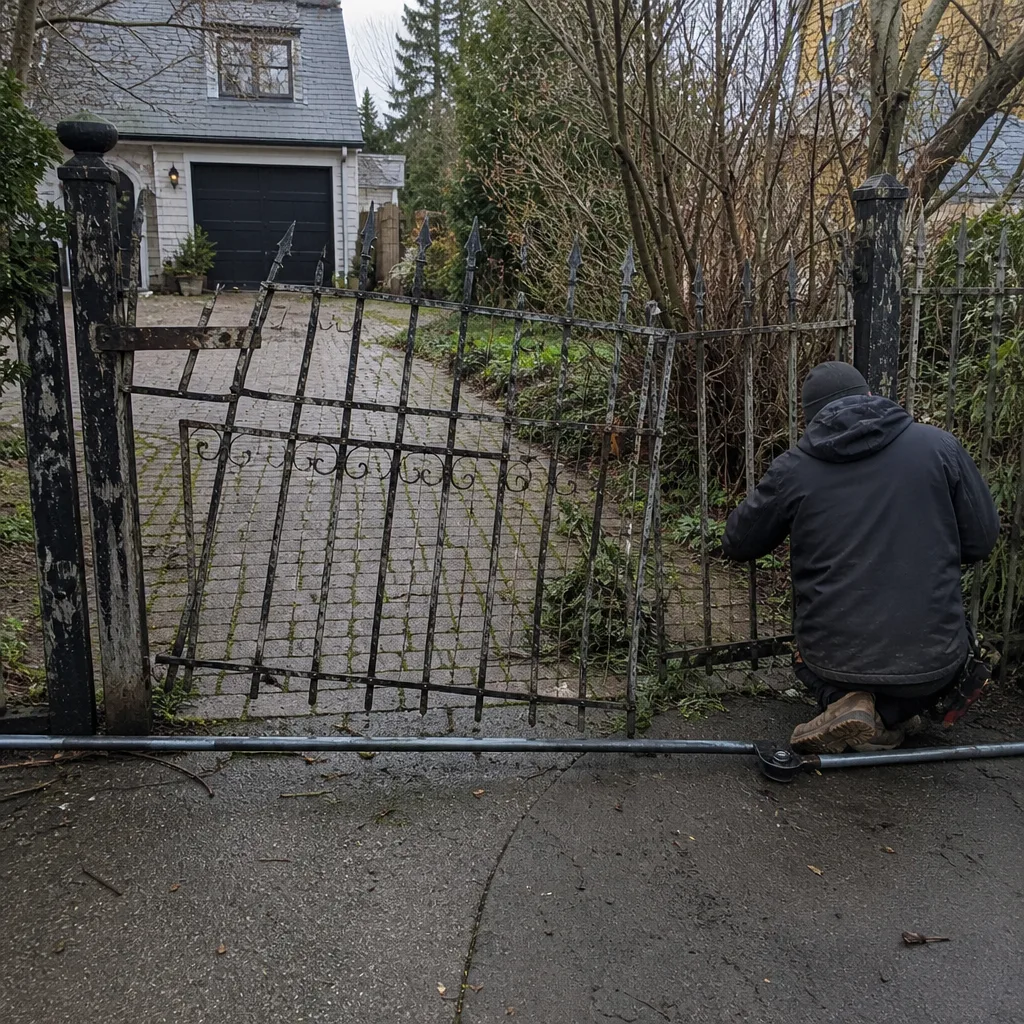 Before
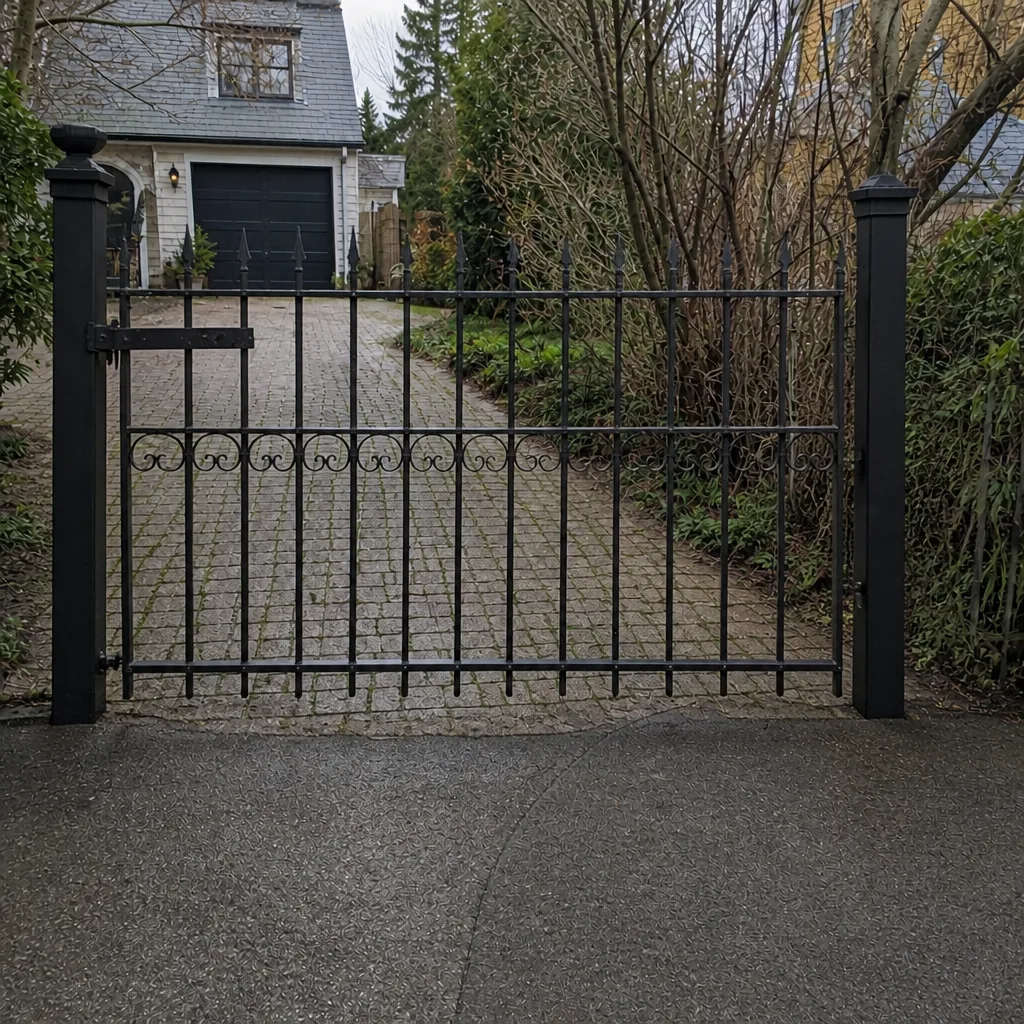 After
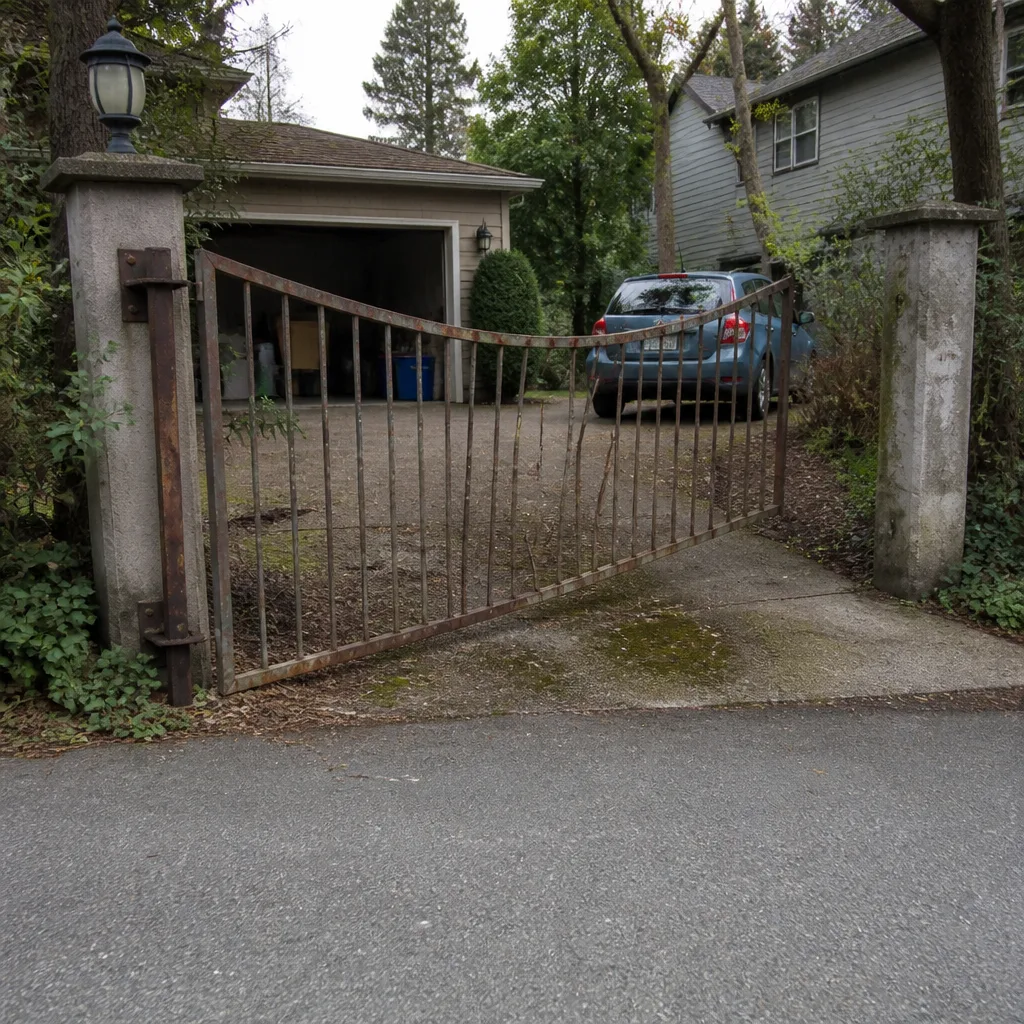 Before
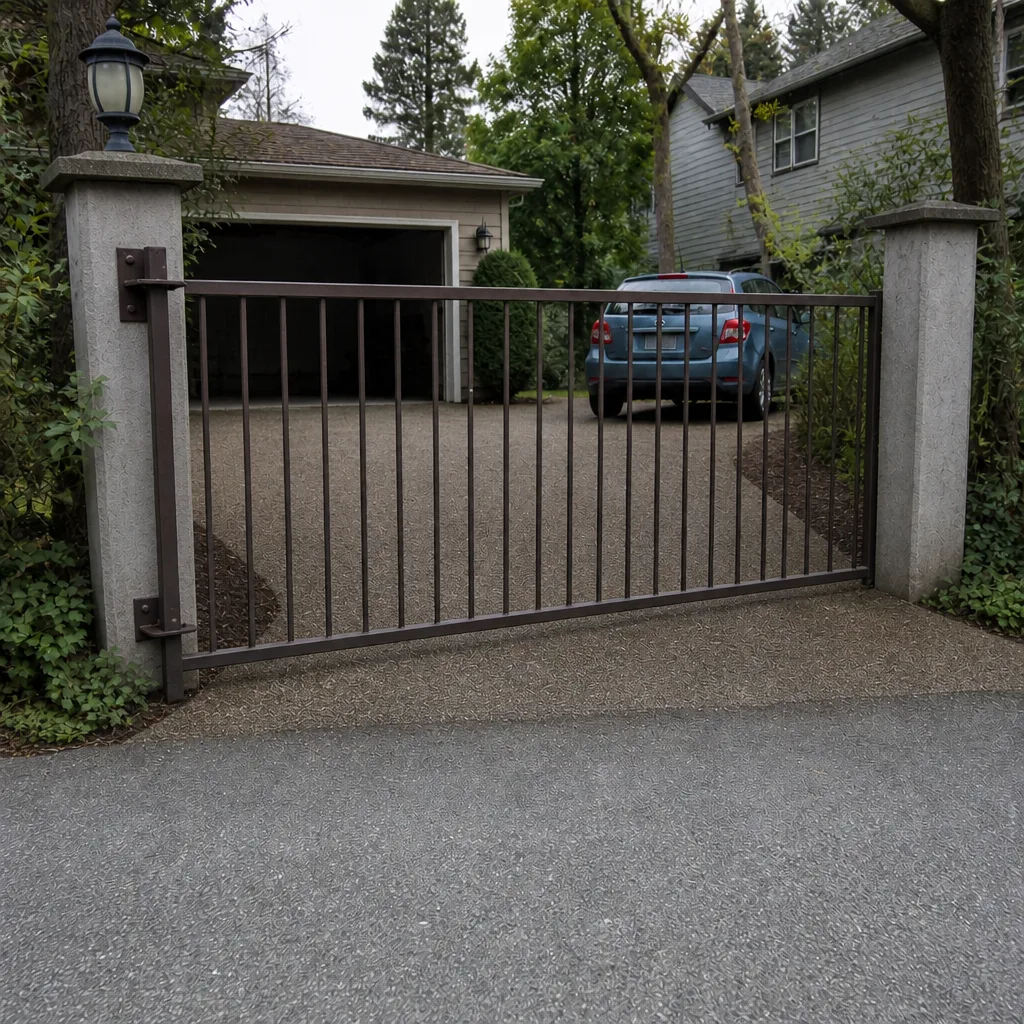 After
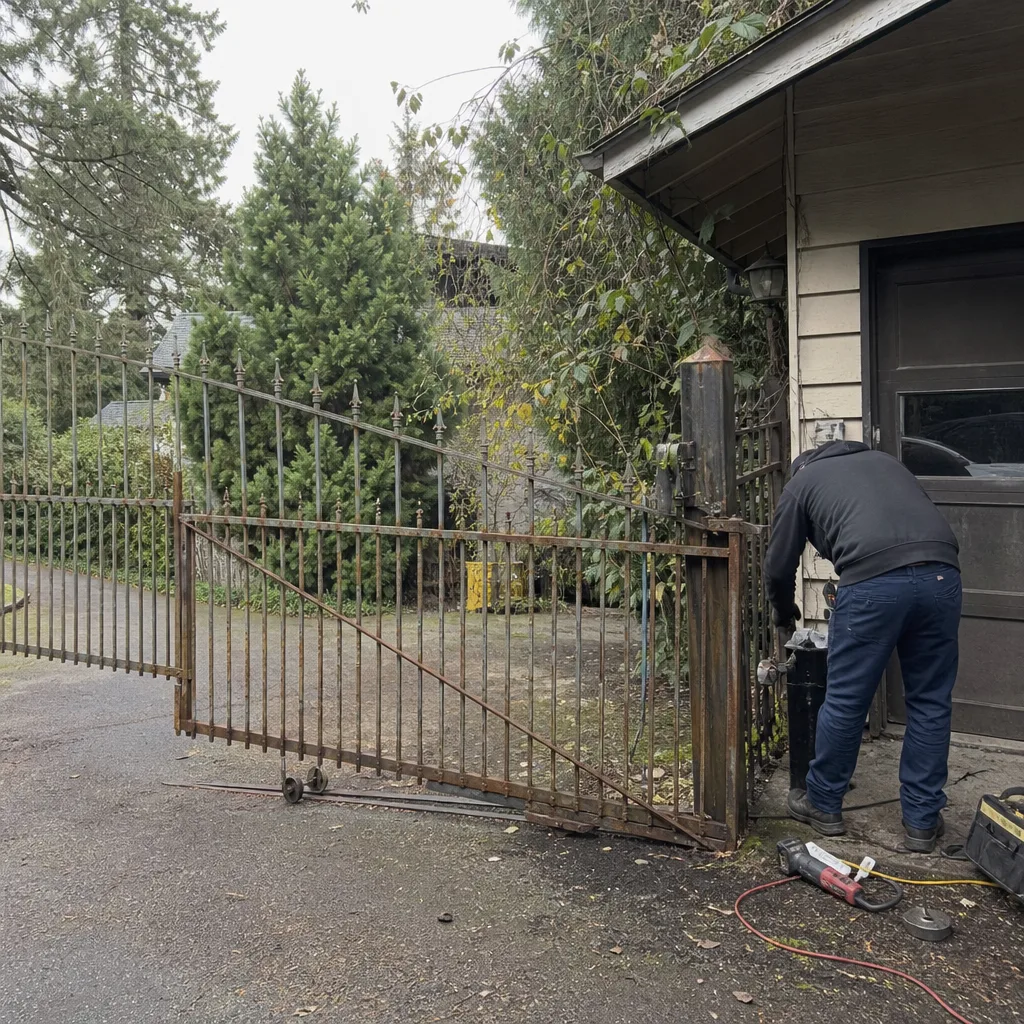 Before
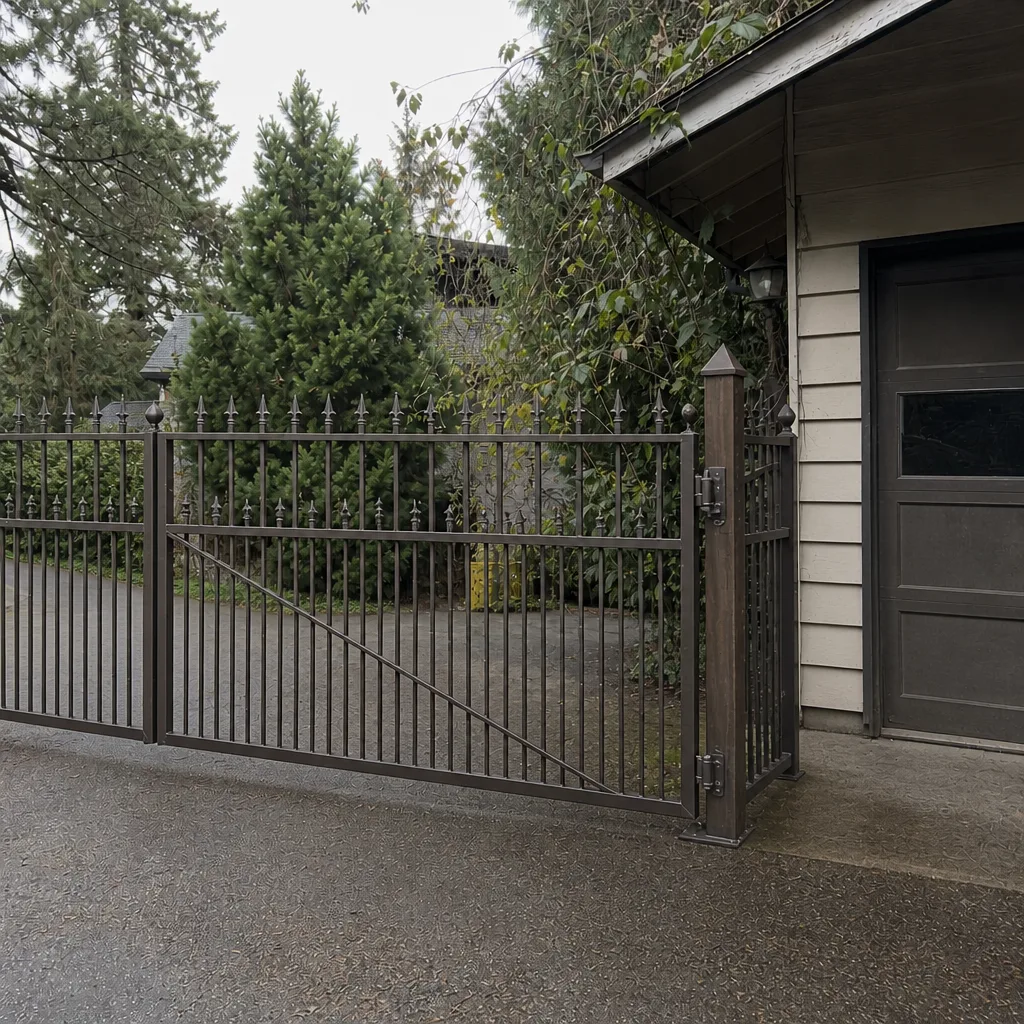 After
When to Call a Professional
Call a professional for anything involving automation electronics, safety sensing, wiring, or structural post work. Specifically: your gate stops or reverses unpredictably, a safety device has been damaged or bypassed, the opener runs but the gate doesn’t move, a control board shows fault codes, your keypad or intercom has stopped working, or a post has shifted. Also call if you’ve already attempted a repair and the gate now behaves differently than it did before – that’s the second category of call, and it’s better addressed sooner than later.
Gate Repair Multnomah Village offers free estimates in Multnomah Village – call (833) 508-9284. We answer 24/7. Fast dispatch from 7am to 7pm, Sunday through Friday. The price is quoted and agreed before any work starts, so the written estimate is the number you pay. Our technicians have up to 14 years of experience and work on the gate you already have, from the hinge to the control board.
Frequently Asked Questions
Mechanical tasks on an automatic gate are reasonable DIY work, but anything touching the motor, control board, wiring, or safety devices should go to a professional. That includes photo eyes, safety edges, and loop sensors, because verifying them requires test equipment rather than a visual check. If you’re unsure which category a task falls into, treat it as professional work.
Pricing is set per job by a written estimate, because gate repair ranges from a hinge adjustment to a control board replacement and those aren’t comparable jobs. The estimate is free, and the quoted price is agreed before any work starts. Call (833) 508-9284 for an exact quote.
Generally yes. Manufacturers warrant boards against defects, not against field modifications, and a board showing signs of unauthorized work can be declined for coverage. That means buying the board outright plus diagnostic time. Check your paperwork before opening an enclosure on a recently installed system.
A visual check confirms alignment, not response. Real verification tests whether the gate stops or reverses at multiple points in its travel, whether a safety edge actuates at its rated pressure, and whether a vehicle loop detects lighter objects like bicycles. That requires calibrated test equipment, which is why safety verification is part of professional service.
We work on the gate you already have across nine major automation brands, including LiftMaster, FAAC, BFT, Linear, Viking, Ghost Controls, DoorKing, Elite, and Mighty Mule. That means we diagnose the installed system rather than recommending replacement because it’s unfamiliar. Call (833) 508-9284 to describe what your gate is doing.
We’re closed on Saturday. Call and we’ll book you into the next opening, Sunday through Friday, 7am to 7pm. We answer 24/7, so a call outside dispatch hours is booked into the next opening rather than lost.
The Bottom Line
The DIY decision for gate repair comes down to system type, not confidence. Manual gate hardware – hinges, latches, track clearing, fastener tightening – is legitimate homeowner work and worth doing yourself. Automated gates are a different category entirely: motor internals, control boards, wiring, and safety systems all carry physical risk and liability exposure that change the calculus. Safety devices need calibrated testing to verify, failed DIY work on a control board can cost you the warranty, and Oregon’s reasonable-maintenance standard makes documented professional service the safer position. When the task crosses that line, call (833) 508-9284 for a free estimate from Gate Repair Multnomah Village.
Written by the team at Gate Repair Multnomah Village.